Interactief platform brengt persvrijheid in kaart

Ook Nederland is niet immuun. Volgens de website http://www.mappingmediafreedom.org vonden er in Nederland de afgelopen maanden zeven incidenten plaats die de vrije nieuwsgaring in gevaar brachten.

get-involved-img

Een recent voorval dat werd geregistreerd door het crowdsourcing-project Mapping Media Freedom vond plaats begin oktober in Amsterdam. Journaliste Anneke Verbraeken werd samen met enkele buitenlandse collega’s het werken onmogelijk gemaakt bij het verslag doen van een kleine demonstratie tegen de president van Rwanda. Deze werd gehouden buiten bij de RAI, waar binnen de nationale feestdag van Rwanda werd gevierd in aanwezigheid van president Kagame. De mannen die Verbraeken en andere journalisten het werken onmogelijk maakten en Verbraeken’s mobiel afpakten, horen waarschijnlijk tot de Rwandese veiligheidsdienst. Als die veiligheidsdienst in het buitenland zo op durft te treden hoef je je weinig illusies te maken hoe het in Rwanda is gesteld met de persvrijheid. Overigens werd bij diezelfde gelegenheid in Amsterdam ook de Rwandese journalist Serge Ndayizeye aangevallen. Door dezelfde heren. Zijn mobiel en andere apparatuur werd afgepakt. De officiële Rwandese propaganda-media berichtten dat Ndayizeye aangevallen was door de Nederlandse politie. Zoals de waard is vertrouwt hij zijn gasten…

Mapping Mediafreedom in Europe geeft een accuraat, betrouwbaar en actueel overzicht van schendingen van persvrijheid. Mooi dat het er is, maar ook onthullend dat het zo schrikbarend gesteld is met journalisten die lastig worden gevallen, met censuur en intimidatie van media, met name in Hongarije, Italië en de Balkanlanden. In Turkije werden de meeste incidenten geconstateerd en geverifieerd (75).

Veel informatie is afkomstig van journalistenbonden en persvrijheid organisaties, maar iedereen kan in principe bijdragen aan de databank. De Europese Federatie van Journalisten (EFJ), de koepelorganisatie waarvan ook de NVJ lid is, is een van de initiatiefnemers van dit interactieve project. Een mooi initiatief, want betrouwbare informatie is een eerste voorwaarde om effectief voor persvrijheid op te komen en slachtoffers van schendingen bij te staan. Sinds begin 2014 werden meer dan duizend incidenten gemeld: waaronder arrestatie van journalisten en geweld tegen mediawerkers. De werkelijke cijfers liggen hoger omdat niet alle gevallen werden geregistreerd en Rusland, Wit-Rusland en de Ukraine pas sinds september 2015 worden gevolgd.

Zie ook: https://www.nvj.nl/over-nvj/column/mapping-media-freedom

De Turkse “opnieuw-verkiezingen” en het gebrek aan persvrijheid

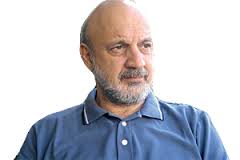
Ragip Duran is de correspondent in Turkije van het Franse dagblad Liberation. Duran werkte onder andere voor de Turkse krant Cumhuriyet, de Turkse afdeling van de BBC en voor AFP.
Ragip Duran:

Ragip Duran: “We hebben een sterke journalistenvakbond nodig in Turkije”.

In zijn blog Apoletli Medya (Media met Epauletten) analyseert en bekritiseert hij de Turkse media. Dat ‘epauletten’ sloeg op de periode dat de Turkse militairen de mediavrijheid beknotten. De regerende AK-partij heeft, volgens Duran, ten opzichten van journalisten, dezelfde autoritaire “jacobijnse” mentaliteit als het leger. Ik trof Duran tijdens de internationale conferentie voor Persvrijheid georganiseerd door de TGC (Turkse Journalisten Vereniging), EFJ (Europese Federatie van Journalisten) en IFJ (Internationale Federatie van Journalisten) in Istanbul op 17 september 2015.

“Turkije heeft een grondwetsartikel nodig zoals het first amendment in de VS. In de Turkse wetgeving wordt wel gesproken over persvrijheid, maar er volgt altijd een maar. En dan komen er allerlei voorwaarden die neerkomen op rechtvaardiging van censuur en beperkingen van persvrijheid.”

“Als vrijheid van meningsuiting en persvrijheid in de Turkse grondwet zou worden gegarandeerd zou het onmogelijk zijn voor de president, de premier of zelf de provinciale gouverneurs om allerlei beperkingen op te leggen. Turkije is jammer genoeg geen rechtstaat. Tijdens de verkiezingsstrijd eerder dit jaar stelde de president van de republiek, die onpartijdig hoort te zijn, zich zeer partijdig op. De president hoort boven de partijen te staan maar Erdogan deed uitlatingen ten gunste van de AK en tegen de oppositiepartijen CHP en DHP.”

“De rechtspraak in Turkije is evenmin onafhankelijk. Voor de eerste keer in de Turkse geschiedenis zijn er nu twee rechters en drie openbare aanklagers tot gevangenisstraf veroordeeld omdat ze besluiten namen die de regering niet welgevallig waren. De rechterlijke macht is bang voor het paleis, bang voor Erdogan, bang om beslissingen te nemen waar de regering het niet mee eens is. De rechterlijke macht wordt gebruikt als repressiemiddel tegen de oppositie.”

“De Turkse regering begrijpt helaas niet wat de rol van journalisten is en waarom persvrijheid zo belangrijk is. Erdogan belde bijvoorbeeld met met de hoofdredacteur van de krant Milliyet om hem te vragen waarom hij journalisten in dienst had die hem bekritiseerden. Wat voor hoofdredacteur ben jij? Je moet die lui ontslaan, zei hij, waarom blijf je ze betalen? Erdogan heeft een erg Midden-Oosterse mentaliteit. Hij heeft de antidemocratische opvatting dat journalisten de regering horen te dienen of zelfs hem persoonlijk.”

De Turkse samenleving, de politiek en ook de media zijn erg gepolariseerd. Dit stelt Turkse journalisten voor dilemma’s… Is er iets tegen die polarisatie te doen?

“De polarisatie is helaas aanwezig op verschillende niveaus. Turken tegen Koerden. Secularisten tegen religieuze mensen. Soennieten tegen alevieten. Velen in Turkije hebben een erg zwart-witte manier van denken. Ze vergeten dat in het echte leven er ook andere tinten zijn. We kunnen de polarisatie in Turkije doorbreken als we iets doen tegen de mentaliteit van de pensee unique, als we het idee van diversiteit, van een veelkleurige maatschappij accepteren.”

“D’r is helaas ook een religieus aspect. De islam is een religie die niet alleen gaat over de verhouding tussen God en het individu maar een project heeft voor de hele maatschappij. Vooral de aanhangers van de politieke islam, de islamisten, hebben een erg eenzijdige, intolerante manier van denken.”

De Turkse journalist en schrijver Mustafa Akyol stelt dat islam wel degelijk te verenigen is met een tolerant mensbeeld, mensenrechten en persvrijheid.

“Ik heb z’n boek niet gelezen maar ik ken hem en z’n theorie. Ik denk dat de feiten zijn theorie weerspreken. Neem de regerende AK Partij in Turkije. Een parlementslid van die partij zei gisteren dat iedereen die op de oppositie, op de HDP gaat stemmen geen moslim is. Dit is toch ongelooflijk? In een democratie kun je zoiets toch niet zeggen? Dit soort islam en democratie zijn onverenigbaar. We zien hetzelfde in de Arabische landen. Politieke islam en democratie gaan niet samen.”

De afgelopen maanden is het conflict tussen het leger en de PKK weer opgelaaid, vooral in Oost-Turkije. Als journalist die hierover bericht speel je, of je wilt of niet, een rol in dit conflict. Is het mogelijk dat te doen op een manier die het conflict niet verder aanwakkert, die geen schade aanricht?

“In 1987-‘88 was ik hoofdredacteur van het eerste Koerdische dagblad dat in Istanbul in het Turks werd gepubliceerd. We probeerden vredesjournalistiek te bedrijven. We probeerden bijvoorbeeld de familie van een Koerdische guerrillastrijder samen te brengen met de familie van een omgekomen Turkse soldaat. Beide families woonden in Izmir. De zoon van de Koerdische familie was in de bergen met de PKK en gesneuveld.“

“We dachten dat het een goed idee was beide families, die immers beide een zoon hadden verloren, bij elkaar te brengen. We wilden geen politiek verhaal. We wilden het niet over het politieke conflict hebben, maar vooral naar de menselijke kant kijken. We wilden benadrukken dat er niets belangrijkers is dan vrede, dan het menselijk leven, zowel van Turken als van Koerden. Maar het werkte helaas niet.”

“Een van onze journalisten werkte drie maanden aan dit project. Ons idee was dat beide families begrip voor elkaar zouden krijgen en dat ze een oproep zouden doen het doden te stoppen: zowel van Turkse soldaten als van Koerdische militie. Het ging redelijk goed totdat de vader van de omgekomen soldaat, vlak voor de ontmoeting plaats zou vinden, het had over die honden van de PKK die zijn zoon hadden vermoord. Als de verantwoordelijke van de publicatie kon ik die uitdrukking PKK-honden niet toestaan. Net zomin als ik zou kunnen toestaan om Turkse soldaten honden te noemen. Honden is een vreselijk scheldwoord in Turkije, een zware belediging. Vooral aan Turkse kant is de polarisatie ver doorgevoerd. Koerden zijn over het algemeen toleranter.”

“Vandaag de dag zijn de tegenstellingen nog meer op de spits gedreven. Onze collega-journalisten die bij TV- of radiostations werken, of bij een krant, worden van samenwerking met terroristen beschuldigd als ze alleen al HDP-politici interviewen. De HDP is een partij die in het parlement zit. Die tachtig zetels heeft. Meer dan zes miljoen burgers van de 53-miljoen Turkse stemgerechtigden hebben op deze partij gestemd. De HDP heeft geen organisatorische band met de PKK en hamert erop dat de Koerdische kwestie niet kan worden opgelost met geweld, maar alleen door onderhandelingen. Net zoals er in Noord-Ierland onderhandelingen zijn geweest tussen de Britse regering en de IRA.

De Turks-nationalistische en anti-Koerdische gevoelen zijn zo sterk dat het lastig is voor een gewone journalist om een positieve rol te spelen en objectief nieuws te brengen. Als je tegen het geweld, tegen de oorlog bent word je automatisch beschuldigd een vriend of collaborator van de PKK te zijn.“

“Onze werk als journalisten is echt heel moeilijk in dit land. Of je hoofdredacteur durft je verhalen niet publiceren en dan ben je dus geneigd zelfcensuur toe te passen, of de openbare aanklager stelt een onderzoek in naar de krant of het medium waar je voor werkt.”

Na de verkiezingen in juni worden er nu opnieuw (op 1 november) parlementsverkiezingen gehouden omdat de resultaten van juni de AK-regering niet aanstonden.

“Het is voor de eerste keer in de Turkse politieke geschiedenis dat dit gebeurt, voor de eerste keer sinds de creatie van de Turkse republiek in 1923. In een democratie vormen de winnaars van de verkiezingen de regering. Dat is een elementair democratisch principe. En in het verleden hebben we in Turkije ook die democratische wisseling van de macht gezien. Maar de AK-partij en vooral Erdogan hechten overdreven groot belang aan wat zij de volkswil noemen. De AK had in juni 41% van de stemmen. Dat is niet genoeg om een regering te vormen. Het kan heel goed zijn dat straks op 1 november de verkiezingen ongeveer hetzelfde resultaat laten zien. Moeten we dan een derde keer naar de stembus? Hebben we verkiezingen net zolang totdat het resultaat de AK-partij naar de zin is?”

“Erdogan vond een term uit die in geen enkele politicologie leerboek te vinden is: opnieuw-verkiezingen. In het Turks hebben we de uitdrukking: de worstelaar die verliest wil altijd opnieuw beginnen met het gevecht.”

“De internationale gemeenschap speelt een steeds positievere rol. Bijvoorbeeld: Erdogan was woedend toen de Verenigde Staten hulp stuurde naar de strijders in Kobane. De PYD, de Koerdische militie in Kobane, wordt gezien als de zusterorganisatie van de PKK. Voor de Turkse regering is de PKK een terroristische organisatie en de PYD dus ook. Maar voor de Amerikanen is de PYD niet op hun list van terroristische organisaties.

Recentelijk toen het Turkse leger Cizre belegerde en gedurende negen dagen zelfs geheel van de buitenwereld afsloot was, deed de Europese Commissie een heel duidelijke uitspraak: antiterroristische strijd mag niet gericht zijn tegen burgers en de mensenrechten moeten worden gerespecteerd. Er werden in Gizre 17 burgers gedood door het Turkse leger. Twee dagen na die duidelijke uitspraak van de EC werd het beleg van Gizre opgeheven.”

Er zijn vijf journalisten organisaties. Is die verdeeldheid niet erg contraproductief?

“We hebben al een Platform ter Verdediging van Persvrijheid. Hier zijn zo’n tien organisaties en vakbonden bij aangesloten. Jammergenoeg zijn de afzonderlijke onderdelen van dit platform niet zo sterk en dus ook is het platform niet sterk. Het platform is aanwezig bij rechtszaken tegen journalisten en soms worden er demonstraties georganiseerd. Ik denk dat er geen alternatief is voor het versterken van de Turkse Journalistenbond. Een platform of samenwerkingsverband is ad-hoc. Ik geloof zelf dat de journalistenbond TGC een mooie toekomst heeft. Ze hebben nu een jong, dynamisch bestuur. Noemen zichzelf cool en trendy. (lacht) In minder dan twee jaar is het ledenaantal vervijfvoudigd.”

“Ik begon te werken als journalist in 1978 toen de vakbond erg sterk was. Als Turkse journalisten hebben we een geschiedenis, een traditie. Het gaat erom de bond te herbouwen. Het heeft ook te maken met het algemene politieke klimaat in Turkije. Als de AK-partij verslagen wordt in de verkiezingen en we een linksere regering krijgen zal er minder repressie zijn, minder beperkingen voor de pers.”

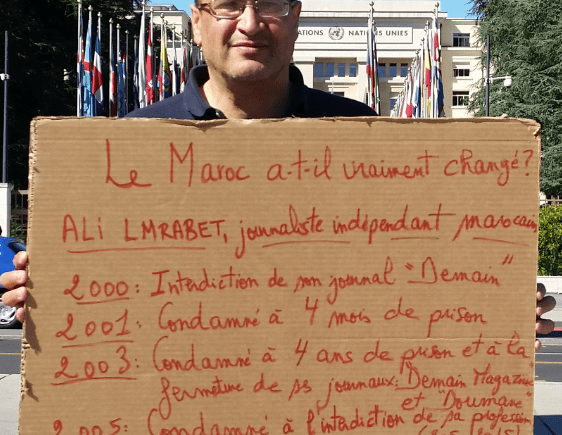
Ali Lmrabet asks Moroccan prime minister to intervene

In a long letter to prime minister Abdelilah Benkirane, journalist Al Lmrabet asked him to intervene in order to get his Moroccan passport and ID-card. According to Lmrabet the Moroccan authorities refuse to grant him the documents. “If you don’t intervene I will be a ‘sans-papier’ in my own country”, Lmrabet wrote. Lmrabet has been on hunger strike since June 24. He tried for months to get his documents in his city of birth Tetouan.

“Morocco is a state of law,” said Mohamed Aujjar, Morocco’s ambassador to the United Nations in Geneva, insisting the journalist had “every right to contest the administrative decision” not to provide him with a certificate needed to renew his passport. “But you don’t get your papers by staging a hunger strike,” he told the French news agency AFP. Aujjar said that if Lmrabet disagreed with the administrative decision he could challenge it, but not in Geneva.

Lmrabet flatly rejected Aujjar’s suggestion to return to Morocco and pursue the case in court, insisting he would then be stuck in the country with no papers and no possibility to work or leave. He is still in front of the UN’s offices in Geneva pursuing his hunger strike. Remy Pagani, one of the five members of Geneva’s Administratice Council, has written a letter to king Mohammed VI insisting that “Ali could obtain his ID-documents as soon as possible and resume his professional activities in his country, the kingdom of Morocco”.

Ambassador Aujjar denied to Moroccan news agency MAP that there was any legal decision to deprive the journalist from his ID documents. Lmrabet simply could not get his residence permit from the authorities in Tetouan because he was not actually living there. “He could have resorted to a legal procedure if there is a conflict between him and the local administration, like any other citizen”, according to Aujjar, who accused Llmrabet to turn a simple administrative dispute in a political and media campaign against Morocco.

Remains the question why the Moroccan authorities permitted this conflict to get out of hand. Llmrabet is no “ordinary citizen” but a journalist with a long record of confrontations with the Moroccan authorities over human rights and media freedom issues. Putting obstacles in Mr Llmrabet’s return to journalistic activity cannot be explained otherwise –in the Moroccan context- than blunt political insensitivity or a clear red line against the freedom of expression of certain “troublesome” critics.

further reading:

http://www.menara.ma/fr

http://www.demainonline.com

http://www.maghrebemergent.com/actualite/maghrebine/49292-maroc-le-journaliste-ali-lmrabet-a-benkirane-je-suis-un-sans-papier-dans-mon-propre-pays.html

Moroccan journalist Lmrabet on hunger strike

Moroccan journalist Ali Lmrabet has gone on hunger strike Wednesday 24th of June. Lmrabet started a sit-in in front of the UN headquarters in Geneva. Reason of his protest is the refusal by the Moroccan authorities to renew his passport and ID-document. He claims Morocco wants to silence him by turning him into an undocumented person.

Ali Lmrabet on hunger strike in front of the UN Palace of Nations in Geneva

Ali Lmrabet on hunger strike in front of the UN Palace of Nations in Geneva

Earlier Lmrabet, who has dual French and Moroccan nationality, was denied a Moroccan residence certificate in the city of Tetuan, where he was born. Without these documents Lmrabet is not allowed to restart working as a journalist in Morocco and relaunch his two satirical weeklies (one in Arabic and one in French).

This is not Lmrabet’s first hunger strike. Twelve years ago he refused to eat during 50 days. At the time he was in prison, condemned to three years for “insulting” king Mohamed VI. After an international campaign calling for his release he was pardoned in January 2004.

In April 2005 the Moroccan authorities forbade him to exercise the journalistic profession for ten years. This “Berufsverbot” has expired now, but Lmrabet can still not return to journalism is in his home country. For his on-line publication Demain (in French, Spanish and Arabic) see: http://www.demainonline.com/

For an account in French in the Tribune de Geneve see:

http://www.tdg.ch/news/standard/journaliste-marocain-greve-faim/story/17741203?track

Media Freedom under Pressure in Turkey

Human Right Watch’ Emma Sinclair-Webb spoke via Skype from Istanbul to the hundred or so attendants of the Press Freedom event in Amsterdam. The meeting on June 4 (on the eve of the Turkish elections on June 7) was organized by Zaman vandaag newspaper in cooperation with the Dutch Association of Journalists (NVJ) and the writers’ association PEN-Nederland.

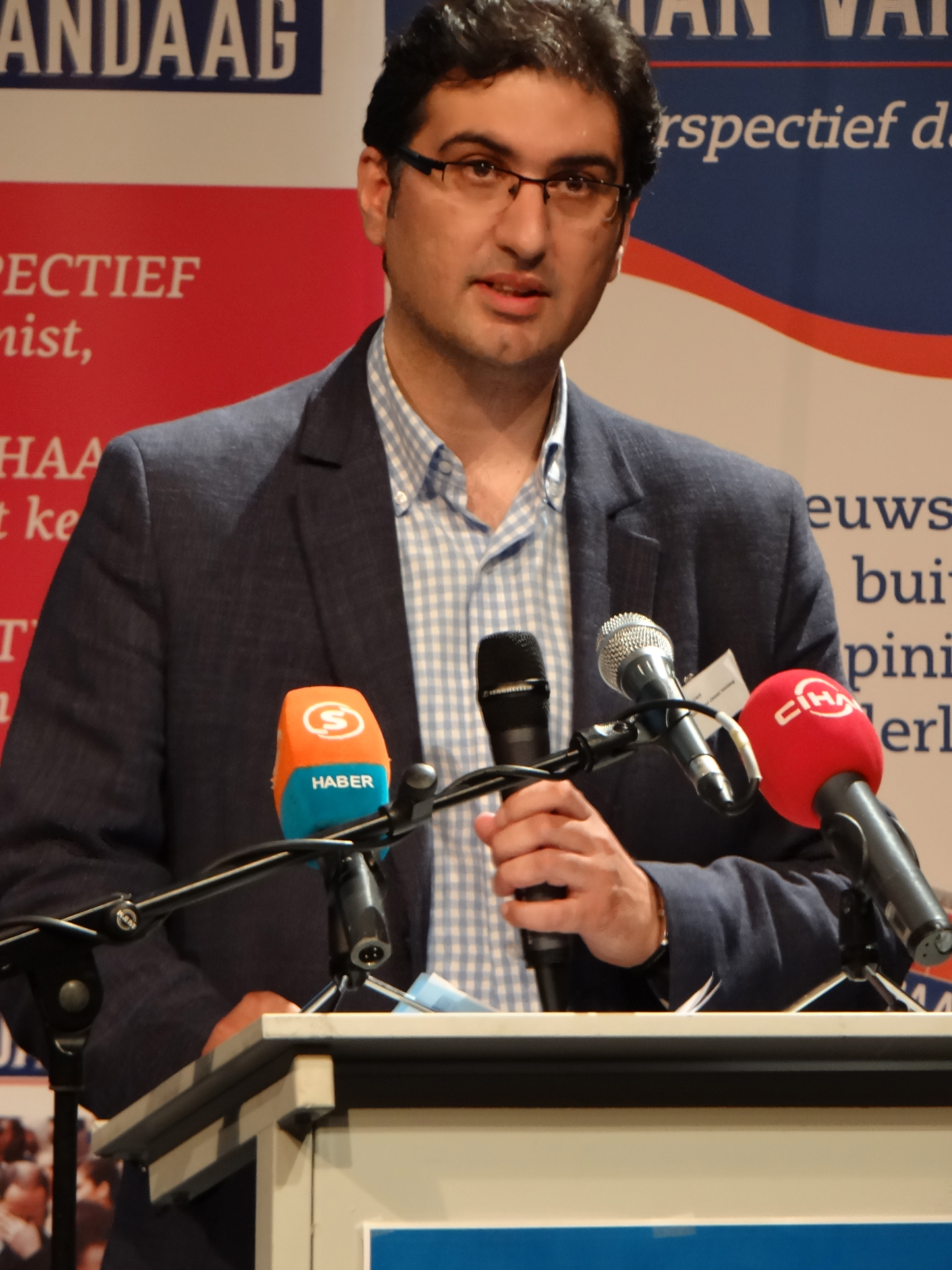
Zaman Vandaag editor-in-chief  Mehmet Cerit

Mehmet Cerit, editor-in-chief of Zaman Vandaag

Emma Sinclair-Webb stressed that Turkey has a vibrant civil society and the situation regarding media freedom and human rights is not as bad as in Russia or Egypt. However the public detentions in Turkey of journalists that appear to be without sufficient evidence they committed a criminal offense, will harm media freedom and chill free speech. In December last year, the editor of the daily Zaman newspaper was arrested, along with the head of Samanyolu broadcasting group and other media personnel.

DSC02026

Selçuk Gültaşlı, correspondent of Zaman in Brussels

Selçuk Gültaşlı, correspondent of Zaman in Brussels

Other speakers during the Amsterdam meeting were Selçuk Gültaşlı, correspondent of Zaman in Brussels; Sezin Öney, columnist for the Taraf newspaper and Ergun Babahan former editor-in-chief of Sabah. Babahan is threatened with a long prison sentence because of a publication about Bilal Erdogan, the presidents’ son.

Sezin Öney stressed the lack of ethical journalism in Turkey. Society and media are extremely polarized. According to Öney the tone of Turkish newspapers should be a bit more neutral. There is a lack of investigative journalism in Turkey. Most revelations about Turkish politics are coming from foreign media, not the local Turkish press.

DSC02022

Ergun Babahan, former editor-in-chief of Sabah newspaper

DSC02027

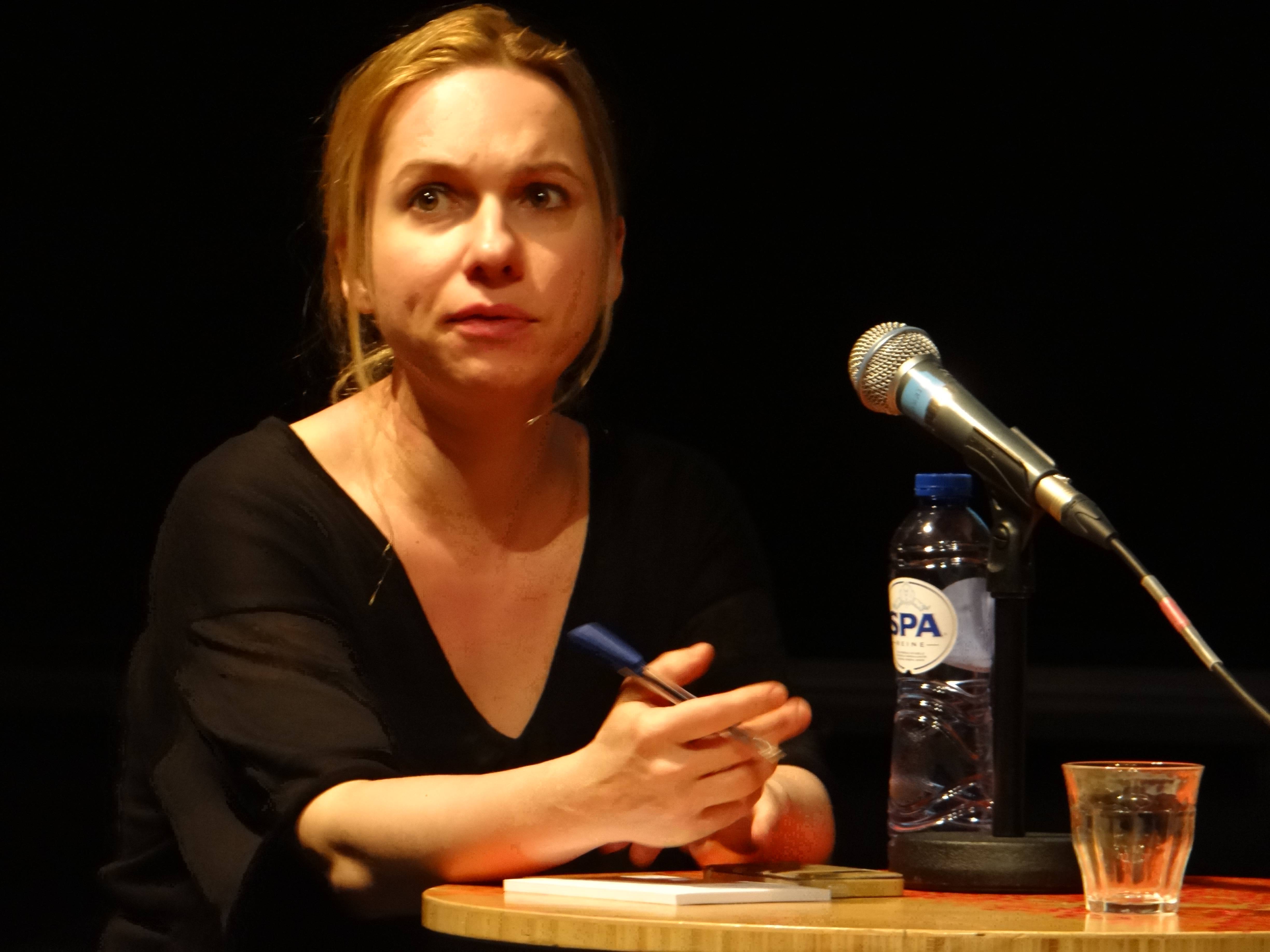
Marjanne de Haan, spokesperson Amnesty International Netherlands

All photo’s Jan Keulen

Yemeni journalists threatened; war underreported

yjs

In Yemen a humanitarian catastrophe is in the making. The war, which started in March, is getting uglier by the day. Daily air strikes and an air and naval blockade have disrupted normal life completely, caused enormous destruction and left about half of the 26 million Yemenis in need of food and other basic necessities.

We know all this because UN-organizations, humanitarian agencies like MSF and some international news agencies keep informing the world about the tragedy taking place in Yemen. But information is scarce. In fact Yemen has become hard to access for Arab and foreign journalists. Lack of electricity and poorly developed Internet infrastructure are hampering the citizens to use social media as alternative ways of covering the conflict.

The situation in Yemen has been underreported for years, but the current war has exercising journalism almost impossible. Foreign reporters are not allowed into the country since the Saudi-led campaign started. Yemeni journalists face the problem of finding reliable sources in this polarized country and are subjected to violence and mistrust. Saudi’s, their Yemeni allies nor the Houthi’s are open to the idea of independent reporting. All journalists who are not “on their side” are basically treated like enemies.

Last Friday (29th of May) Ali Saleh Sanhan, the manager of Saba News Agency office in Hajja governorate, was kidnapped. According to the Yemeni Journalists Syndicate Sanhan was taken to the Political Security prison in the governorate, a place that was targeted previously by the Saudi-led Arab coalition airstrikes. Ironically the syndicate called on the local and international rights organizations “to pressure the Houthis to find at least safe detention centres or release the detained journalists”. Earlier in May two Yemeni journalists were killed when the coalition bombed the Houthi locations where they were held.

The IFJ (International Federation of Journalists) has urged the Houthi kidnappers to release journalist Ali Saleh Sanhan as soon as possible. For more info see: http://www.ifj.org/nc/news-single-view/backpid/1/article/ifj-and-its-yemeni-union-urge-immediate-release-of-news-agencys-editor/

Prominent Omani blogger in solitary confinement

The Emirates State Security Apparatus has transferred prominent Omani blogger Muawiya Al-Rawahi to the Al Wathba prison, where he was placed in solitary confinement. This according to the Gulf Centre for Human Rights (GCHR). He had been detained incommunicado since February. Despite repeated attempts by his family and his colleagues, the UAE authorities have reportedly refused to disclose his whereabouts and refused to give any reason for his arrest, in addition to not revealing any specific charges against him.

On 24 February 2015, Muawiya Al Rawahi, was stopped by the UAE security intelligence agents at the border and was not allowed to return back to Oman. He managed to make contact with a fellow human rights defender and told him that he had been stopped. Since then he has remained in incommunicado detention and there are serious concerns for his safety.

In the last years Al Rawahi has been detained several times in his home country Oman. Last year he was held for almost a month in a psychiatric hospital in Muscat. For a recent report on the human rights violations in Oman see: http://en.alkarama.org/oman/1645-oman-alkarama-denounces-numerous-violations-in-view-of-the-state-s-upcoming-universal-periodic-review

Muawiya Al-Rawahi

Muawiya Al-Rawahi

Will Inter TV go off the air?

Is Ukraine rescinding the Inter Channel broadcasting license? On the 28th of May the Ukrainian Broadcasting Council had to take a decision. Inter is accused of “destructive behavior” by prominent members of Parliament and of not being patriotic enough. The station is also accused of taking a pro-Russian stance.

But the Ukraine’s government broadcasting licensing authority has postponed a hearing on whether to rescind the license of one of the country’s most popular TV channels. AP reports that “deliberations were canceled after two out of seven board members failed to attend.”

Inter television station has faced criticism from members of parliament for its purported pro-Russia stance. Along with the threat of its license being revoked, the station is facing criminal investigations.

Inter says it is victim of a political witch-hunt and says media freedoms are being curbed in Ukraine.

Any perceived sympathy for Russia has become acutely suspect in Ukraine, which is battling separatists in the east who the government says are being directed by Moscow.

Inter TV

http://www.timesunion.com/news/crime/article/TV-showdown-in-Ukraine-highlights-press-freedom-6288761.php

See also:

Updated list of political prisoners in Azerbaijan

A new list of political prisoners in Azerbaijan has just been published. The list now comprises of 80 names, as compared to the 98 which were included in the list published in August last year. Although this means that there have been some very welcome releases, the Government of Azerbaijan continues its policy of imprisoning what they consider opponents.

The last few weeks, prominent human rights defenders Rasul Jafarov and Intigam Aliyev were convicted to many years’ prison. In 2014, Political Prisoners in Azerbaijan received the Sakharov Freedom Award from NHC.

To draw attention to the growing number of political prisoners in Azerbaijan and the unprecedented wave of repression seen of late, civil society organizations operating within the country present this report. The number of politically motivated arrests, detentions, and imprisonments has increased sharply after the 26 January 2013 defeat of a Parliamentary Assembly of the Council of Europe (PACE) resolution on “The follow-up to the issue of political prisoners in Azerbaijan.”[1] Astonishingly, the situation has become even worse since Azerbaijan assumed presidency at the Council of Europe Committee of Ministers on 14 May 2014.

In April 2015, the report was updated; the names of the released political prisoners were removed from the list, as well as those new prisoners, who were arrested after the list of 98 political prisoners was prepared, were included in the report.

This report contains a list of cases of those currently detained or imprisoned on politically motivated charges. The list has been drawn up according to the criteria set out in PACE Resolution No. 1900, from 3 October 2012.[2]

To compile this report, a series of consultations were conducted with local human rights defenders who: 1) studied relevant reports of local and international human rights organizations; 2) examined documents from influential international organizations that Azerbaijan is member of, and has commitments to – in particular, the Council of Europe; 3) monitored the press; 4) monitored court cases; 5) examined court verdicts and other legal documents; 5) and interviewed the families, lawyers, and defense committees of the political prisoners included in this report.

The report provides detailed information about each of the political prisoners, including the facts and circumstances of their arrests, political motivations, and photos. (Photos were not available for every prisoner.)

Cases included in the report are divided into seven categories:

  1. Journalists and bloggers
  2. Human rights defenders
  3. Youth activists
  4. Politicians
  5. Religious activists
  6. Life term prisoners
  7. Other cases

The last three categories are divided into subcategories, which are detailed in the report.

The full list can be found attached here.

From Den Norske Helsingforskomite (DNH) 19-5-2015


[1]              http://bit.ly/P8Z2Qy

[2]              http://bit.ly/1piq992

Azeri President should release seven jailed journalists

In a letter sent today, the International Federation of Journalists (IFJ) and the European Federation of Journalists (EFJ) call on Azerbaijan President, Ilham Aliyev, to release all seven journalists who are currently behind bars.

Download the full letter.

In recent years Azerbaijan has developed a reputation as one of the world’s worst jailers of journalists. In the past 12 months numerous journalists and human rights activists have fallen victim of what appears to be a deliberate campaign to silence critical voices in the build up to the first ever European Olympics to take place in Azerbaijan in June 2015.

The imprisoned journalists include:

  1. Nijat Aliyev, arrested 20 May 2012
  2. Araz Guliyev, arrested 8 September 2012
  3. Parviz Hashimli, arrested 17 September 2013
  4. Seymur Hazi, arrested 29 August 2014
  5. Khadija Ismayilova, arrested 5 December 2014
  6. Hilal Mamedov, arrested 21 June 2012
  7. Rauf Mirkadyrov, arrested 19 April 2014

Full details of the charges against them can be found on the Council of Europe’s Platform to promote the protection of journalism and safety of journalists developed in co-operation with the IFJ and EFJ.

IFJ president, Jim Boumelha, said:

“We are alarmed at the scale of attacks against press freedom in a country that is a member of the Council of Europe and should abide by its principles on freedom of expression as laid down in article 10 of the European Convention on Human Rights.

“Our colleagues should be released immediately without condition.”

Most prominent among these is the case of Khadija Ismayilova who was arrested in December 2014 initially on spurious charges of incitement to suicide and since replaced with charges of libel and tax evasion for which she risks up to 7 years imprisonment.

Mogens Blicher Bjerregård, EFJ president said:

“Given Azerbaijan’s record on press freedom, we fear that journalists travelling to report the European Olympics will face restriction and censorship. While we warn foreign journalists to take extra precaution during the coverage of the Olympics, we urge the government to ensure that both national and foreign journalists can exercise their rights to freedom of expression and conduct any journalistic activities freely and independently.”

In February it was revealed that Emin Huseynov, Director of Institute for Reporters’ Freedom and Safety (IRFS) has been holding up in the Swiss embassy since August 2014 fearing arrest following a raid on the IRFS offices. Huseynov was recently awarded €15.000 compensation by the European Court of Human Rights for abuse in police custody that he suffered in 2008.

In addition to jailing journalists on trumped up charges the government has successfully squeezed what remains of ‘independent’ press through a range of mechanisms, including excessive financial penalties imposed on media, government control over the advertising market and restrictions of the national distribution and printing systems. Newspapers Zerkalo and Azadliq are on the point of closure, while Radio Free Europe / Radio Liberty has been closed since December.

Last month the Azeri media reported that the government was issuing warnings to journalists applying for visas to attend the European Olympics. While acknowledging the right to engage in journalistic activities the rules threaten “any media person found spreading distorted information on Azerbaijan, thus unfairly representing the country’s interests will face the full force of the law.”

The IFJ/ EFJ warned that the “continued incarceration does great damage not only to the country’s reputation, but also to its aspirations of becoming a modern, stable democracy with international standards of human rights and respect for freedom of expression.”

The IFJ/EFJ have launched a joint campaign: Hands off press freedom in Azerbaijan.

See also the campaign for jailed Azeri journalist Khadija Ismailova:http://occrp.org/free-khadija-ismayilova/Donnelly_small