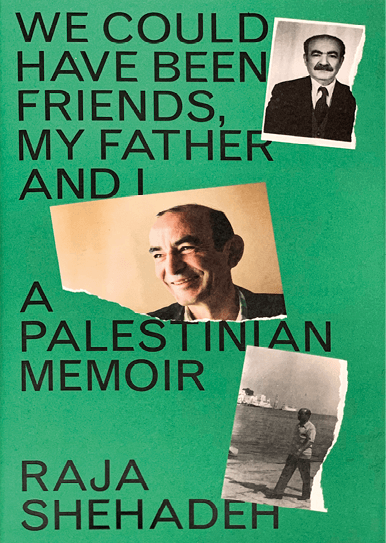
‘We hadden vrienden kunnen zijn’

Het is een ongebruikelijke mix van biografie, autobiografie en politieke geschiedschrijving. ‘We could have been friends, my father and I,’ is de lange titel die Raja Shehadeh zijn relatief dunne boek heeft gegeven, dat in 2022 werd gepubliceerd: ‘We hadden vrienden kunnen zijn, mijn vader en ik. Een Palestijnse memoires.’

Ik houd van de boeken van Ghada Karmi, Yusif Sayig, Mahmoud Darwish en andere Palestijnse auteurs, omdat ze je binnenlaten in een wereld die nog maar kortgeleden bestond maar nu snel aan het verdwijnen is. Hun memoires beschrijven praktisch altijd een gefragmenteerd leven: vluchten uit de geboorteplaats, ballingschap, bezetting, oorlog en heimwee naar de onbereikbare geuren en kleuren van het verloren land.

Het mooie aan het genre is dat bij de beschrijving van de herinneringen grote gebeurtenissen gekleurd worden door het persoonlijk perspectief: relaties, familieverhoudingen (verbroken) liefdes, angsten en teleurstellingen, tekortkomingen, verlangens en het vermogen turbulente gebeurtenissen in een snel veranderende wereld een plaats te geven.

Bij Raja Shehadeh gaat het om de vader-zoon relatie.

Raja’s vader Aziz was een prominent Palestijns advocaat die in 1948 uit Jaffa moest vluchten toen de stad werd ingenomen door de joodse Haganah-militie. Aziz Shehadeh en familieleden waren bij de 75.000 Palestijnen die de stad ontvluchtten. Slechts 2.000 Palestijnen die niet weg konden of wilden bleven achter en werden door de jonge joodse staat geïnterneerd in een getto; de met prikkeldraad omgeven wijk Ajami.

Aziz Shehadeh was ervan overtuigd dat zijn vlucht van korte duur zou zijn. Volgens het VN-verdelingsplan van 1947 was Jaffa immers toegewezen aan de Arabische staat die naast de joodse staat in het Britse mandaatgebied Palestina zou verrijzen. Jaffa was tot de oorlog van 1948 het Arabische politieke en culturele centrum van Palestina. Aziz kon zich eenvoudigweg niet voorstellen dat het Arabische Jaffa zou ophouden te bestaan. Hij was ervan overtuigd dat het Arabisch Legioen uit Transportatie, het bedoeinenleger geleid door de Britse officier Sir John Glubb, dat in felle gevechten was verwikkeld met de joodse strijdkrachten, net zolang met de strijd door zou gaan totdat in ieder geval het Arabische deel van Palestina niet in handen van de joodse staat zou vallen.

Hij vergiste zich. Aziz Shehadeh zou nooit terugkeren naar zijn woonhuis en kantoor in Jaffa. Hij was in zekere zin een fortuinlijke vluchteling want zijn familie had een zomerhuis in Ramallah waar het gezin in kon trekken, maar de kwestie van de Palestijnse vluchtelingen liet hem niet los.  Evenmin liet de kwalijke rol van de koloniale Ingleezi -de Engelsen- bij de stichting van de staat Israël hem los. De Israëli’s erfden een repressieve wetgeving van de Britten die nu werd ingezet tegen de autochtone Palestijnse bevolking.

In mei 1948 vonden felle gevechten plaats om Jeruzalem waarbij het oostelijk deel van de stad veroverd werd door het Arabisch Legioen. Het westelijk deel werd Israëlisch. Na een staakt-het-vuren besloot de regering in Londen dat Glubb z’n bedoeïenen terug moest trekken naar het oosten. Het gevolg was dat het Israëlische leger de steden Lydda en Ramle kon ontvolken en innemen. En Jaffa was definitief verloren.

Twee jaar na deze tragische gebeurtenissen werd in Ramallah -inmiddels onder Jordaans bestuur- zoon Raja geboren. Ook Raja Shehadeh werd jurist en stichtte 1979 de mensenrechtenorganisatie Al Haq. Als journalist bezocht ik in de jaren tachtig en negentig regelmatig het kantoor van Al Haq in Ramallah, en ontmoette Raja en zijn collega’s die hun moedige werk onder de meest zware omstandigheden moesten uitvoeren. Inmiddels is Al Haq, samen met vijf andere Palestijnse NGO’s, door Israël tot een “terreurorganisatie” verklaard. Desondanks wordt het belangrijke werk zo goed en zo kwaad als het kan voortgezet.

De veelzijdige Raja ontpopt zich behalve als advocaat en mensenrechtenactivist ook als een getalenteerd literair schrijver. Zijn tiende boek ‘We could have been friends, my father and I’ beschrijft Raja’s ontdekking, tientallen jaren na de moord op zijn vader in 1985, hoe heldhaftig deze eigenlijk was: een onafhankelijke geest die het zwaar te verduren kreeg van de Britten, de Israëli’s, de Jordaniërs en zijn eigen landgenoten de Palestijnen. Achteraf blijkt dat hij toch vaak gelijk had.

Vader en zoon waren zeker geen vrienden. Raja voelde altijd een zekere afstand tussen hen, soms zelfs rivaliteit. Pas tientallen jaren na zijn dood overwint Raja zijn weerzin om zijn vaders nagelaten archief te gaan uitpluizen. En dan blijkt ‘hoeveel strijd hij heeft geleverd tijdens zijn leven’ en hoe diep zijn droefheid en boosheid was over wat hem en zijn mede-Palestijnen overkomt.

In 1953 wint Aziz een rechtszaak in Londen tegen de Barclays Bank. De Israëlische autoriteiten hadden in 1948 de banktegoeden van Palestijnse vluchtelingen bevroren. Palestijnen in Jordanië, Libanon en elders mochten hun geld niet opnemen. De jarenlange juridische strijd, die uiteindelijk in zijn voordeel wordt beslecht, is een mijlpaal in Aziz’ leven. Maar zijn succes wekt de achterdocht van de Jordaanse autoriteiten, die dan nog onder directe Britse controle staan. Aziz ontloopt een arrestatie in Jordanië door tijdelijk in ballingschap naar Italië en Libanon te gaan.

Aziz Shehadeh tijdens de rechtszitting in Jeruzalem na de moord op de Jordaanse koning Abdallah (1951)

Niet lang na terugkomst in Jordanië komt hij opnieuw in de problemen en wordt alsnog gearresteerd. In juli 1958 vindt in Irak een staatsgreep plaats waarbij koning Faisal, oom van koning Hoessein, wordt afgezet en vermoord. Hoessein is bang dat de onrust overslaat naar Jordanië en laat een groot aantal nationalistische leiders arresteren, waaronder Aziz Shehadeh. Raja’s beschrijving van zijn vaders’ gevangenschap, ver weg in de Jordaanse woestijn, is aangrijpend. Aziz stelt vast dat er niet meer vrijheid van meningsuiting is in de jonge staat Jordanië dan destijds in het Britse mandaatgebied Palestina. Als Palestijns vluchteling voelt hij zich rechteloos en besluit zich te concentreren op zijn familie en advocatenpraktijk.

Maar de Israëlische bezetting van de Westelijke Jordaanoever in 1967 maakt de politieke activist weer in Aziz weer wakker. Dat jaar dient hij, gesteund door 50 prominente Palestijnse leiders uit de Westoever, Jeruzalem en Gaza, een plan in bij de Israëlische autoriteiten. Basis is het oorspronkelijke verdelingsplan waarbij, naast Israël, een Palestijnse staat wordt gesticht met Oost-Jeruzalem als hoofdstad. De PLO en Jordanië moeten niets van dit voorstel weten. De PLO bepleit op dat moment een ‘democratische, seculiere staat’ in heel Palestina. Yasser Arafat noemt Aziz’ voorstel ‘dwaas’.

Vader en zoon Shehadeh verschillen van mening. Raja verwijt zijn vader dat hij met dit voorstel komt terwijl ‘het Palestijnse volk bezig is met de gewapende strijd’. Vader Aziz gelooft echter niet in militaire oplossingen. Hij is ervan overtuigd dat vrede alleen kan worden bewerkstelligd als Israël en de Palestijnse staat elkaar erkennen en uiteindelijk ook samenwerken. Dat is in het belang van beide volkeren.

In 1985 wordt Aziz vermoord. De dader wordt nooit gepakt, het misdrijf blijft onopgelost. De Israëlische politie sloot het onderzoek 37 jaar geleden maar, zo blijkt uit het laatste hoofdstuk, een verzoek eind 2021 van Raja om het politierapport te mogen inzien wordt nog steeds niet ingewilligd.

Er zijn nog veel conversaties die Raja met zijn te vroeg overleden vader zou willen voeren. Raja concludeert dat meer dan een halve eeuw na de bezetting van de Westoever er 750.000 kolonisten wonen, in vijfhonderd nederzettingen. De tweestaten-oplossing is onmogelijk geworden, de enige alternatieven zijn: één staat of apartheid. Raja zou zijn vader willen vertellen dat Israëlische kinderen nu op school leren dat heel Groot Israël van hen is en dat de Palestijnen in het land geen rechten hebben.

‘Jij zegt dat Israël gewonnen heeft,’ zou zijn vader antwoorden. ‘Maar besef je niet dat alleen vrede tussen onze twee volken een echte overwinning zou betekenen?’

Dit artikel is geschreven voor de Nieuwsbrief Groningen-Jabalya, mei 2023

Voor informatie over mijn boek De oorlog van gisteren zie: https://oorlog.blog/

Gaza: een apart geval van misdaden tegen de menselijkheid

Een Groninger hoef je niet uit te leggen waar Wadapartja voor staat. Nee, het is geen Javaans restaurant of winkel met Nepalese nepantiek. Wadapartja is de Groningse benaming voor een uitzonderlijke –aparte– eet- en drinkgelegenheid, waar ook aparte spulletjes kunnen worden gekocht. 

In het Groninger dialect heeft apart zijn oorspronkelijke betekenis behouden van origineel, uitzonderlijk. In het aan het Nederlands verwante Afrikaans hebben apart en apartheid een meer sinistere betekenis gekregen. Apartheid in Zuid-Afrika groeide uit tot een perverse vorm van geïnstitutionaliseerde rassenscheiding. Aan die segregatie tussen zwarten, kleurlingen en blanken lag het waanidee ten grondslag dat de laatsten superieur waren. Het zogenaamde baasskap, ook al zo’n Afrikaans woord wat we in Nederland maar al te goed begrijpen. 

Gelukkig werd in 1994 het apartheidssysteem in Zuid-Afrika, na jaren van binnenlandse strijd, mondiale protesten en diplomatieke druk, formeel opgeheven. In 1973 werd het Internationaal Verdrag voor de Bestrijding en Bestraffing van de Misdaad van Apartheid gesloten, de zogenaamde Apartheidsconventie. Dit verdrag, dat in 1976 van kracht werd, maakte apartheid volgens het internationaal recht een misdaad. In 1998 werd in het Statuut van Rome, dat ten grondslag ligt aan de oprichting van het Internationaal Strafhof (ICC), eveneens bepaald dat apartheid een misdaad is tegen de menselijkheid.

In november publiceerde de Palestijnse mensenrechtenorganisatie Al Mezan, die gevestigd is in Gaza, een document onder de titel The Gaza Bantustan—Israeli Apartheid in the Gaza Strip’. In het rapport, gebaseerd op het werk van Palestijnse, Israëlische en internationale mensenrechtenexperts, wordt duidelijk in hoeverre Gaza op zo’n Zuid-Afrikaans Bantustan lijkt. 

Het gaat om een door het Israëlische leger nu al veertien jaar geïsoleerd gebied, hermetisch afgesloten van Israël en de rest van de bezette Palestijnse gebieden. De tweemiljoen inwoners van Gaza worden blootgesteld aan herhaaldelijk excessief geweld. Duizenden burgers werden gedood, hun huizen verwoest en kinderen, patiënten en vissers werden arbitrair gearresteerd en gevangengezet.  

Al Mezan concludeert dat het Israëlisch beleid ten aanzien van Gaza neerkomt op de “onmenselijke daden”, zoals die gedefinieerd zijn in de Apartheidsconventie. Het gaat om moord, het toebrengen van psychisch en lichamelijk letsel, illegale arrestaties, strafmaatregelen en het ontnemen van het recht om vrijelijk het gebied te verlaten en ernaar terug te keren. 

Deze onmenselijke politiek van de Staat Israël is er, volgens Al Mezan, op gericht de overheersing van één etnische groep, Israëlische joden, ten opzichte van een andere etnische groep, de Palestijnen, te vestigen en te bestendigen. Een soort Israëlische baasskap dus, onder het voorwendsel van veiligheid maar in feite vanuit een misplaatst idee van superioriteit. 

In het rapport wordt eraan herinnerd dat de staat Israël de levens van ongeveer zeven miljoen joodse Israëli’s controleert en van zeven miljoen Palestijnen, in Israël zelf en in de bezette Palestijnse gebieden. De staat Israël maakt gebruik van allerlei wetten en maatregelen die erop gericht zijn de Palestijnse bevolking te onderdrukken en territoriaal te verdelen en te scheiden, om het ‘joodse karakter’ en superioriteit van Israël te waarborgen. 

Al Mezan roept de internationale gemeenschap op zijn verplichtingen na te komen en een einde te maken aan Israëls onrechtvaardige apartheidsregime, zoals ook gebeurde met de apartheid in Zuid-Afrika. Herinnerd wordt aan een uitspraak van Nelson Mandela in 1997: “De Verenigde Naties hebben een duidelijk standpunt ingenomen tegen apartheid. Er ontstond een internationale consensus die hielp om een einde te maken aan het onrecht. Maar we weten heel goed dat onze vrijheid onvolledig is zonder de vrijheid van de Palestijnen”. 

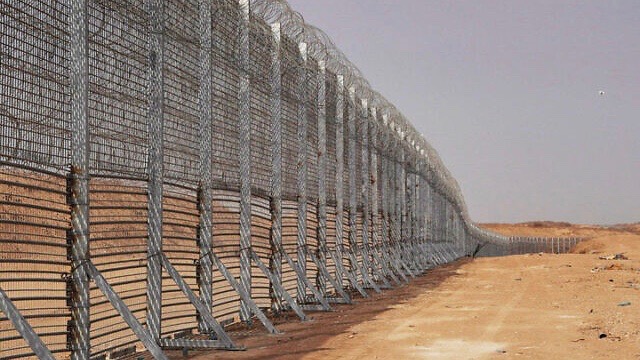
De muur rond Gaza. Foto: Israëlisch Ministerie van Defensie

Enkele dagen na publicatie van het rapport van Al Mezan leidden de Israëlische minister van defensie Benny Gantz en opperbevelhebber generaal Aviv Kochavi een plechtigheid om de gereedkoming te vieren van de ijzeren afscheidingsmuur. Kosten noch moeite waren gespaard om de muur, volgens de Israëli’s ‘enig in zijn soort in de wereld’, te bouwen en van Gaza definitief een Bantustan te maken. Of erger…

Drie en een half jaar was eraan gewerkt, 140.000 ton ijzer en staal was ervoor verwerkt en de monstermuur had haast een miljard euro gekost. Het bouwwerk is 65 kilometer lang, zes meter hoog en nog enkele meters ondergronds. Overal op de fortificatie werd elektronische apparatuur aangebracht. Antennes, sensoren, radars en camera’s moeten ervoor zorgen dat Gaza rigoureus en tot nader order afgescheiden is van Israël, Jeruzalem, de Westelijke Jordaanoever en de rest van de wereld.  

De rechtvaardiging voor de afscheidingsmuren is onveranderlijk dat ze voor Israëls veiligheid nodig zijn. Zo werd triomfantelijk aangekondigd dat Israël in de naaste toekomst ook langs de grens met Libanon een muur met technologische hoogstandjes wil bouwen. Maar de vraag is of op den duur muren en apartheid echt voor veiligheid zullen zorgen. 

Het is een cliché Gaza een openluchtgevangenis te noemen, maar dat is helaas in 2021 meer dan ooit een feit. De Gaza-muur doodt de hoop, maakt dat jongeren geen perspectieven zien en is, deep down, een symbool van arrogantie, ongelijkheid en onrecht.

Wadapartja dat vandaag de dag nog steeds muren worden gebouwd om mensen van elkaar te scheiden…

Geschreven voor Nieuwsbrief Groningen – Jabalya, december 2021 (https://www.groningen-jabalya.com/?p=5675)

De Panama papers, Khadija en persvrijheid

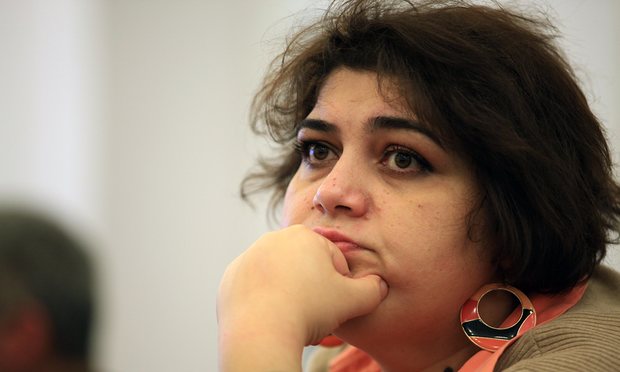
Fantastisch! De UNESCO/Guillermo Cano Persvrijheidsprijs 2016 is toegekend aan de Azerbeidjaanse onderzoeksjournalist Khadija Ismaiylova. Ze zal de prijs –een geldbedrag van $25.000- niet zelf in ontvangst kunnen nemen op persvrijheidsdag 3 mei, want ze zit in de gevangenis. Khadija is tot zevenenhalf jaar veroordeeld wegens “zwendel, belastingfraude en machtsmisbruik”.

4200

De UNESCO-prijs, de belangrijkste internationale onderscheiding op het gebied van persvrijheid en genoemd naar de in 1986 vermoorde Colombiaanse journalist Guillermo Cano, is dik verdiend. Niet alleen voor Khadija maar het is ook een opsteker voor alle dappere onderzoeksjournalisten in ’moeilijke landen’.

Ik was diep onder de indruk van Khadija toen ik haar meemaakte tijdens de internationale persvrijheidsdag in Parijs, 3 mei 2013. Ze stelde lastige vragen. Brutaal. Humoristisch. Nam geen blad voor de mond en bleek niet bereid compromissen te sluiten als het om het zoeken naar waarheid gaat.

Recentelijk werden, via de Panama Papers, details bekend gemaakt over de corrupte praktijken van Azerbeidjaans’ president Ilham Aliyev en zijn familie. Aliyev’s twee dochters blijken 56% van de aandelen te bezitten van een consortium van goudmijnen in het land. Het consortium mag 70% van de winst houden, 30% is voor de staatskas. Fijne regeling…

Ook andere leden van Aliyev’s familie en entourage blijken betrokken te zijn bij schimmige zakendeals. De presidentiele offshore family heeft grote delen van Azerbeidjaans’ mijnbouw, banken, toerisme, media en hoogwaardig vastgoed in handen.

De Panama Papers bevestigden eerdere publicaties van onder andere het OCCRP en de organisator van het Panama-consortium, het International Consortium of Investigative Journalists (ICIJ). Sterreporter bij al dat graaf- en speurwerk in Azerbeidzjan de afgelopen jaren was freelance journalist Khadija Ismayilova.

Een van de interessantste aspecten bij de reuze scoop van de Panama papers is de deelname aan het consortium van veel media organisaties uit dictatoriale of autoritaire landen in het Midden-Oosten, Oost-Europa, Centraal-Azië en Afrika. Onderzoeksjournalistiek in die landen brengt enorme risico’s met zich mee maar het gebeurt en wordt steeds professioneler. Publicatiemogelijkheden op online platforms, grotere kennis van datajournalistiek en nieuwe onderzoekstechnieken en vooral ook het regionaal en internationaal netwerken van onderzoeksjournalisten, heeft aan de hausse bijgedragen.

Die betere en agressievere (onderzoeks-)journalistiek is, denk ik, een zegen voor meer persvrijheid in de wereld. Je kunt Khadija en haar collega’s in de gevangenis zetten maar –zo blijkt- steeds moeilijker de mond snoeren.

Eerder gepubliceerd in Villamedia mei 2016

2015: mes op de keel van onafhankelijke journalistiek

De jaarwisseling is traditioneel aanleiding voor lijstjes. De donkerste dagen van het jaar zijn kennelijk geschikt om de balans op te maken. Van de beste oliebollenbakkers van het AD, de Top 2000 van Radio 2, tot de landen die in de ogen van the Economist er het beste van afbrachten in 2015.

Dat was Myanmar overigens. Vijf jaar geleden mochten media zelfs geen foto van Aung San Suu Kyi publiceren, maar in november 2015 won zij de verkiezingen met 77% van de stemmen. Er is dus licht in de duisternis. Heel soms.

violence-against-journalists

Dat geldt niet voor het geweld tegen journalisten. De Internationale Federatie van Journalisten (IFJ) en andere persvrijheidsorganisaties publiceerden hun macabere lijstjes van journalisten die in 2015 werden gedood bij de uitoefening van hun beroep. De IFJ telde 109 journalisten die werden vermoord of die omkwamen bij gewelddadige incidenten die ze fotografeerden, filmden of anderszins versloegen. Volgens de IFJ, waar journalistenbonden uit de hele wereld bij zijn aangesloten, waren in 2015 Zuid-Amerika en het Midden-Oosten de gevaarlijkste regio’s met respectievelijk 27 en 25 gedode journalisten.

Andere organisaties publiceerden eveneens hun statistieken, die lichtjes van elkaar verschillen, maar uiteindelijk wel dezelfde trends bevestigen: 2015 was een bloedig jaar voor de journalistiek en met name het jihadistisch geweld van IS en aan al Qaeda verbonden groepen eisten een hoge tol.

Het Committee for the Protection of Journalists telde 69 journalisten en drie andere mediawerkers die vanwege hun beroep waren gedood; 25 gevallen van gedode journalisten waren nog in onderzoek. Reporters Without Borders heeft een ‘barometer’ die eind 2015 op 64 bevestigde gevallen van gedode journalisten stond, zes andere mediawerkers (bijvoorbeeld tolken, chauffeurs, fixers) en 18 bloggers en burgerjournalisten werden eveneens vermoord. De Death Watch van International Press Institute telde 98 bevestigde gevallen van moord, waarvan 39 journalisten die door extremistische moslimgroepen waren gedood.

De verschillen in de cijfers worden verklaard doordat de organisaties niet exact dezelfde criteria hebben, niet overal ter wereld even actief en aanwezig zijn (met uitzondering van de IFJ) en journalisten pas toegevoegd worden aan de treurige statistieken als onomstotelijk is vastgesteld dat ze inderdaad bij de uitoefening van hun beroep zijn overleden.

De bij de jaarwisseling gepubliceerde lijstjes zijn nog niet definitief. Volgens IPI is er gerede kans dat het dieptepunt van 2012, toen 133 journalisten vanwege hun werk werden gedood, ook in 2015 wordt gehaald of dat de eindbalans zelfs nog dramatischer wordt.

Het spreekt haast vanzelf dat de IFJ en andere organisaties eind december een beroep deden op regeringen overal ter wereld en op de VN om een einde te maken aan de straffeloosheid. De meeste moorden van journalisten in bijvoorbeeld de Filipijnen en Latijns-Amerika blijven onbestraft. Ook klonk de roep om nationale en internationale wet- en regelgeving toe te passen, die journalisten bescherming moeten bieden. Journalisten zijn burgers die gewoon hun werk doen en ze zijn wel een heel gemakkelijke prooi voor malafide lokale autoriteiten, drugsbaronnen en milities die meestal nog vrijuit gaan ook.

Wat ik de meest beangstigende ontwikkeling vind is de toename van gerichte aanvallen op (burger-) journalisten door organisaties die met al Qaeda verbonden zijn en door de Islamitische Staat-groep. Regimes die weinig op hebben met persvrijheid zijn niets nieuws. Lakse, corrupte bestuurders of criminelen die de pest hebben aan openbaarheid zijn sinds jaar en dag de vijanden van het vrije woord. Maar een jihad tegen de medewerkers van Charlie Hebdo of het gericht vermoorden van Syrische of Iraakse journalisten en media-activisten die de misdaden van IS aan de kaak stellen: dat is relatief nieuw, althans in de omvang van 2015.

Deze jihad belichaamt niet alleen een kolossaal, fysiek gevaar voor kritische journalisten, maar belemmert ook de vrije nieuwsgaring in grote delen van het Midden-Oosten. En dat heeft weer tot gevolg dat de publieke opinie, zowel de lokale en de internationale, minder goed geïnformeerd is.

Onafhankelijke journalistiek die simpelweg wil vertellen wat er gebeurt en waarom, wordt –vergeef mij de morbide metafoor- het mes op de keel gezet. Er is sprake van een fanatieke, ideologische stroming die trots is op het vermoorden van kritische geesten, die vijandig staat ten opzichte van journalistiek, absoluut in zijn eigen propaganda gelooft en op geen enkele manier andersdenkenden duldt.

In de confrontatie met deze stroming staan (burger-) journalisten in de voorste linies. Misschien nog wel meer dan de bommenwerpers van de coalitie. Want uiteindelijk is informatie essentieel en is het vooral een ideeën strijd die gewonnen moet worden.

IFJ CALLS FOR INTERNATIONAL PROTECTION FOR JOURNALISTS AFTER 109 KILLINGS IN 2015

05 January 2016

2015 has been another deadly year for journalists, with at least 109 journalists and media staff killed in targeted killings, bomb attacks and cross-fire incidents, according to the International Federation of Journalists (IFJ).

The IFJ 2015 List names the 109 journalists and media staff killed across 30 countries, together with 3 who died of accidental deaths. It marks a small drop from last year when 118 killings and 17 accidents were recorded.

This year, the killing of journalists in the Americas topped the toll, at 27 dead. For the second year in a row, the Middle East comes second, with 25 deaths. Asia Pacific comes third, with 21– a drop on last year due to the big fall in violence in Pakistan. Africa is in fourth place with 19 dead, followed by Europe with 16.

2015 was marked, in particular, by an increase in targeted terrorist attacks against journalists. French journalists paid a disproportionately high price when terrorists gunned down media workers at the French satirical magazineCharlie Hebdo in Paris. In the United States, the killing by a disgruntled ex-employee of two former colleagues at US TV WDBJ in Virginia took place in front of a global TV audience during a live transmission.

“I reiterate once again my call to UN Secretary General Ban Ki-moon and the heads of UN agencies to enforce international laws protecting journalists. The attacks in Paris shocked the world and put on the world stage the tragedy of the drip-drip slaughter of journalists worldwide, which are today the only professional group that pays so dearly for just doing the job,” said Jim Boumelha, IFJ President. “Sadly, there were scores of unreported killings and unless the journalist is a well-known by-lined correspondent the world barely notices. Journalism is put daily to the sword in many regions of the world, where extremists, drug lords and reckless warring factions continue murdering journalists with impunity.”

In the Middle East, the IFJ has recorded an escalation of violence targeting media professionals by extremists in Iraq and Yemen, where there was a spike in killings and kidnappings, mainly of local journalists covering their cities, communities and countries.

In Latin America, the killings are mostly at the hands of drug lords who operate across borders, particularly in Mexico, putting journalists who investigate drug trafficking in the region at greater risk.

In the Asia Pacific, the IFJ has witnessed a spiraling climate of hostility toward media workers in the Philippines that has seen 7 journalists killed across the country and makes Philippines the deadliest place in the region. The Federation is particularly concerned over the state of impunity that surrounds killings of media workers in the country.

The Federation, which will publish its 25th full report on journalists and media staff killed in January 2016, says the momentum in recent years to promote greater media protection must lead to genuine steps to curb violence on media professionals. The Federation is urging the UN to take concrete measures and a strong stand against impunity for crimes targeting journalists.

The Federation has also been one of the main initiators of the Council of Europe’s Online Platform for the promotion of journalism and the safety of journalists, which has now become one of the most trusted observatories to record violations of journalists’ rights across Europe, with a view to promoting their safety.

“The IFJ reports over the last 25 years have clearly shown that journalists and media staff have become easy targets because there is very little respect for national and international laws that are supposed to protect them,” added Anthony Bellanger, IFJ General Secretary. “The current levels of violence against media workers have served as a wake-up call. They have opened a small window of opportunity to take drastic action to enforce these legal provisions, which should not be missed.”

The statistics on journalists and media staff killed in 2015 are as follows

As of 31 December 2015, the IFJ has recorded the following cases of killings:

– Targeted, bomb attacks and cross-fire killings: 109

– Accidents and Natural Disasters Related Deaths : 3

– Total Number of Deaths: 112

Among countries with the highest numbers of media killings are:

France: 11

Iraq: 10

Yemen: 10

Mexico: 8

India: 7

Philippines: 7

Honduras: 6

South Soudan: 6

Syria: 5


Updated list of political prisoners in Azerbaijan

A new list of political prisoners in Azerbaijan has just been published. The list now comprises of 80 names, as compared to the 98 which were included in the list published in August last year. Although this means that there have been some very welcome releases, the Government of Azerbaijan continues its policy of imprisoning what they consider opponents.

The last few weeks, prominent human rights defenders Rasul Jafarov and Intigam Aliyev were convicted to many years’ prison. In 2014, Political Prisoners in Azerbaijan received the Sakharov Freedom Award from NHC.

To draw attention to the growing number of political prisoners in Azerbaijan and the unprecedented wave of repression seen of late, civil society organizations operating within the country present this report. The number of politically motivated arrests, detentions, and imprisonments has increased sharply after the 26 January 2013 defeat of a Parliamentary Assembly of the Council of Europe (PACE) resolution on “The follow-up to the issue of political prisoners in Azerbaijan.”[1] Astonishingly, the situation has become even worse since Azerbaijan assumed presidency at the Council of Europe Committee of Ministers on 14 May 2014.

In April 2015, the report was updated; the names of the released political prisoners were removed from the list, as well as those new prisoners, who were arrested after the list of 98 political prisoners was prepared, were included in the report.

This report contains a list of cases of those currently detained or imprisoned on politically motivated charges. The list has been drawn up according to the criteria set out in PACE Resolution No. 1900, from 3 October 2012.[2]

To compile this report, a series of consultations were conducted with local human rights defenders who: 1) studied relevant reports of local and international human rights organizations; 2) examined documents from influential international organizations that Azerbaijan is member of, and has commitments to – in particular, the Council of Europe; 3) monitored the press; 4) monitored court cases; 5) examined court verdicts and other legal documents; 5) and interviewed the families, lawyers, and defense committees of the political prisoners included in this report.

The report provides detailed information about each of the political prisoners, including the facts and circumstances of their arrests, political motivations, and photos. (Photos were not available for every prisoner.)

Cases included in the report are divided into seven categories:

  1. Journalists and bloggers
  2. Human rights defenders
  3. Youth activists
  4. Politicians
  5. Religious activists
  6. Life term prisoners
  7. Other cases

The last three categories are divided into subcategories, which are detailed in the report.

The full list can be found attached here.

From Den Norske Helsingforskomite (DNH) 19-5-2015


[1]              http://bit.ly/P8Z2Qy

[2]              http://bit.ly/1piq992

Azeri President should release seven jailed journalists

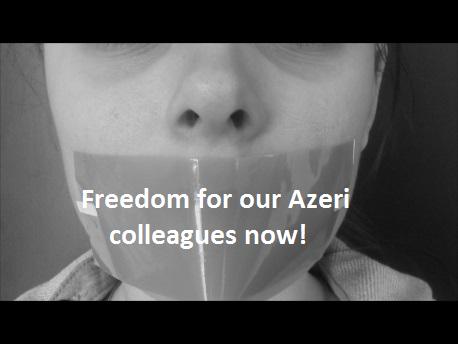
In a letter sent today, the International Federation of Journalists (IFJ) and the European Federation of Journalists (EFJ) call on Azerbaijan President, Ilham Aliyev, to release all seven journalists who are currently behind bars.

Download the full letter.

In recent years Azerbaijan has developed a reputation as one of the world’s worst jailers of journalists. In the past 12 months numerous journalists and human rights activists have fallen victim of what appears to be a deliberate campaign to silence critical voices in the build up to the first ever European Olympics to take place in Azerbaijan in June 2015.

The imprisoned journalists include:

  1. Nijat Aliyev, arrested 20 May 2012
  2. Araz Guliyev, arrested 8 September 2012
  3. Parviz Hashimli, arrested 17 September 2013
  4. Seymur Hazi, arrested 29 August 2014
  5. Khadija Ismayilova, arrested 5 December 2014
  6. Hilal Mamedov, arrested 21 June 2012
  7. Rauf Mirkadyrov, arrested 19 April 2014

Full details of the charges against them can be found on the Council of Europe’s Platform to promote the protection of journalism and safety of journalists developed in co-operation with the IFJ and EFJ.

IFJ president, Jim Boumelha, said:

“We are alarmed at the scale of attacks against press freedom in a country that is a member of the Council of Europe and should abide by its principles on freedom of expression as laid down in article 10 of the European Convention on Human Rights.

“Our colleagues should be released immediately without condition.”

Most prominent among these is the case of Khadija Ismayilova who was arrested in December 2014 initially on spurious charges of incitement to suicide and since replaced with charges of libel and tax evasion for which she risks up to 7 years imprisonment.

Mogens Blicher Bjerregård, EFJ president said:

“Given Azerbaijan’s record on press freedom, we fear that journalists travelling to report the European Olympics will face restriction and censorship. While we warn foreign journalists to take extra precaution during the coverage of the Olympics, we urge the government to ensure that both national and foreign journalists can exercise their rights to freedom of expression and conduct any journalistic activities freely and independently.”

In February it was revealed that Emin Huseynov, Director of Institute for Reporters’ Freedom and Safety (IRFS) has been holding up in the Swiss embassy since August 2014 fearing arrest following a raid on the IRFS offices. Huseynov was recently awarded €15.000 compensation by the European Court of Human Rights for abuse in police custody that he suffered in 2008.

In addition to jailing journalists on trumped up charges the government has successfully squeezed what remains of ‘independent’ press through a range of mechanisms, including excessive financial penalties imposed on media, government control over the advertising market and restrictions of the national distribution and printing systems. Newspapers Zerkalo and Azadliq are on the point of closure, while Radio Free Europe / Radio Liberty has been closed since December.

Last month the Azeri media reported that the government was issuing warnings to journalists applying for visas to attend the European Olympics. While acknowledging the right to engage in journalistic activities the rules threaten “any media person found spreading distorted information on Azerbaijan, thus unfairly representing the country’s interests will face the full force of the law.”

The IFJ/ EFJ warned that the “continued incarceration does great damage not only to the country’s reputation, but also to its aspirations of becoming a modern, stable democracy with international standards of human rights and respect for freedom of expression.”

The IFJ/EFJ have launched a joint campaign: Hands off press freedom in Azerbaijan.

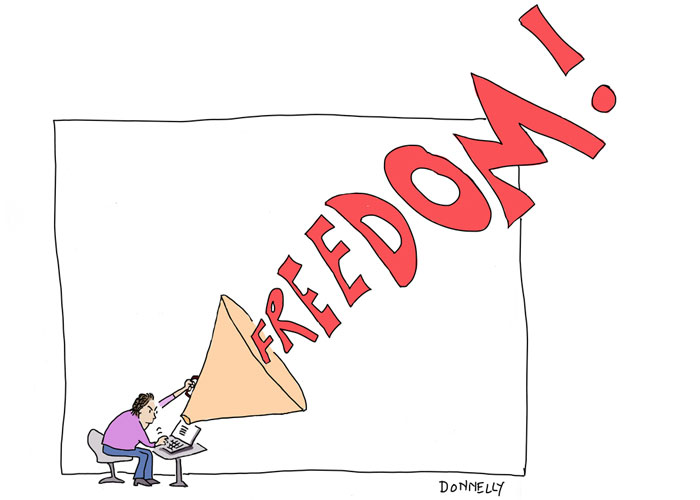
See also the campaign for jailed Azeri journalist Khadija Ismailova:http://occrp.org/free-khadija-ismayilova/Donnelly_small

Moroccan authorities persecute journalist Ali Lmrabet

Reporters Without Borders is appalled by the way the Moroccan authorities continue to persecute Ali Lmrabet, a satirical newspaper editor who wants to resume publishing newspapers in Morocco now that his ten-year ban on working as journalist has expired.

Ali Lmrabet, who has dual French and Moroccan nationality, is being denied the residence certificate he needs to get a new national ID card and to renew his passport, which expires on 24 June. Without these documents, he cannot move ahead with his declared intention to relaunch his newspapers.

A Reporters Without Borders “Information Hero” and winner of the Reporters Without Borders – Fondation de France Prize in 2003, Lmrabet used to edit Demain and Demain Magazine, publications that were banned in 2003.

Officially, he has been able to resume working as a journalist in Morocco since 11 April. He wasbanned from working for ten years after being convicted of libel.

But the authorities in the northern city of Tétouan have been refusing to give him a residence certificate since 20 April. In a statement issued on 5 May, quoting the interior minister, the Tétouan local administration said it had been established that Lmrabet does not live at the Tétouan address he gave, which is his father’s home.

The Tétouan 2nd district police station had nonetheless issued the certificate to Lmrabet on 22 April, only to demand it back the next day.

According to the information obtained by Reporters Without Borders, Lmrabet possesses all the documentation he needs to get a residence certificate. His address is indeed his father’s and it is the one that appears in his passport.

We are perplexed by the series of bureaucratic obstacles that are being imposed on Ali Lmrabet,” Reporters Without Borders deputy programme director Virginie Dangles said.

It is not clear why the Moroccan authorities are refusing to issue him this certificate. We urge them to provide him with the requested certificate so that he can renew his documents.”

Journalism blocked

The Moroccan Association for Human Rights (AMDH) – which is backing him and whose president testified on his behalf – has asked the Moroccan government to intercede at the national and local level but has not received an answer.

Lmrabet is convinced that the authorities are refusing him a residence certificate in order to prevent him from publishing again.

“I am going to become Morocco’s first undocumented Moroccan,” he told Reporters Without Borders. “I would like to think that, although this government does not like me, it cannot prevent me from having identity papers.”

His lawyer, Lahbib Mohamed Hajji, confirmed that Lmrabet’s papers had the same address as his fathers. Denying him a residence certificate is a violation of his right as a citizen, Hajji said.

Reporters Without Borders has repeatedly phoned and emailed the communication ministry in an attempt to get its version, but the ministry has not as yet responded.

Morocco is ranked 130th out of 180 countries in the 2015 Reporters Without Borders press freedom index.

See also: http://www.demainonline.com

Europe discusses migrant crisis: face-saving, not life-saving solutions

(26-4-2015) judithsargentini-cMartinPluimers-001European leaders agreed late on Thursday night on joint measures aimed at tackling the ever-rising number of migrant deaths in the Mediterranean, a crisis dubbed a “tragedy” by the European Union (EU).

At the end of a drawn-out crisis summit, the second they had held in a week, EU heads promised to mobilise all efforts at its disposal to prevent further loss of life at sea and to tackle the root causes of the human emergency.

At the summit in Brussels, EU leaders honoured the more than 1,000 dead so far this year with a moment’s silence, with EU President Donald Tusk saying that saving the lives of innocent people was the “number one priority”.

They agreed on Thursday to at least triple the funding for two border control operations run by Frontex, an EU co-ordination agency. Operation Triton is a sea-based mission in the central Mediterranean, while Operation Poseidon patrols Europe’s eastern borders, between Greece, Turkey and Albania.

Meeting the problem half way

However their promises of increased financial support for a Europe-wide sea border patrol mission have already come in for harsh criticism from campaigners, with a spokesperson for Amnesty International decrying the agreement as “a face-saving not a life-saving operation”.

“All the words and resources being thrown at this problem suggest that EU leaders are being serious about saving lives at sea. But the reality is they are still only meeting the problem halfway.”

Criticism also came from within the top levels of the EU, with politicians telling MEE that the devil of the announced plans is in the detail.

Judith Sargentini, a Dutch member of the European Parliament and migration spokesperson for the European Greens, said she was “disappointed” with the outcome of the meeting, which was hailed by EU heads of state as “historic”.

“This is really not an accurate response to the migrant crisis and will not prevent more people from drowning in the Mediterranean,” Sargentini said.

Despite the promised boost to funding for both Triton and Poseidon programmes, Sargentini says the missions will remain within the mandate of Frontex.

Border control not rescue mission

“It is important to note that this mandate is in the first place to protect European borders, not to search for and rescue drowning migrants.”

“If Frontex has more boats at its disposal, it will encounter more refugees at sea of course. That is positive. But the Frontex boats are not there to look for refugees. Their purpose is to stop migrants from coming to Europe. On the contrary, Mare Nostrum, the Italian operation which was stopped last year because European funding ended, did search pro-actively for refugees.”

Mare Nostrum, the Italian-led sea mission launched after 400 migrants drowned off the coast of the Italian island of Lampedusa in 2013, rescued tens of thousands of migrants from a certain death by drowning. During the year-long mission, Italian boats, helicopters and planes went very close to the Libyan coast to search for stricken ships. “That is outside Frontex’ area of operation,” said Sargentini. “So the precise wording of the statement is crucial. Frontex has a mandate to operate only 30 sea miles from the European coast.”

Mare Nostrum cost nine million euros [$9.78mn] per month. By tripling the funding for Triton from three to nine million, the new European operation will match the original Italian programme. But, according to Sargentini, “the really important issue is not just the budget, but also the mandate of Frontex. What are its prerogatives and where will it operate?”

She added that the rest of the plan appeared to be very repressive. “It is about capturing and destroying vessels. It is about the Common Security Defence Policy – in plain speak: European military cooperation. This has nothing to do with a new policy on refugees and migrants. I’m very concerned because there is an urgent need now to have large-scale rescue operations. That should really come first.”

EU’s broken migrant policy

The European leaders have yet to formulate a common policy on migration and postponed the discussion of a so-called European Agenda for Migration to June. Sargentini, like other European politicians, has no idea what such a European agenda would entail. “There are internal discussions and there are different opinions. Even if the European Commission would draw up a clear road map to regulate legal access to the EU for migrants and the settlement of refugees, you have to reckon with the reluctance of member states to comply.”

On the boats crossing from Libya there are broadly three categories of immigrants: political refugees; immigrants who are looking for better economic conditions; and – a smaller group – trafficked people. The refugees come mainly from Syria, Sudan, Somalia and Chad. Many of the economic migrants come from West Africa.

Instead of what some see as a piecemeal solution, Green and left politicians are demanding tough action. Firstly, they want 0.05 percent of the total EU budget to be spent on tackling the crisis. “You have to convince both groups not to board one of these vessels to cross the Mediterranean,” explains Sargentini.

“Secondly, we should discuss the need to improve European asylum and migration policy. But there is nothing concrete about that [in the statement]. Nothing is said about internal European solidarity. Nothing is said about the proposed pilot project to accept 5,000 refugees and to resettle them across several European countries. So they didn’t even agree [on accepting] 5,000 refugees; but 5,000 is peanuts considering the magnitude of the problem.”

Racist rhetoric

An increasingly racist rhetoric surrounding the issue has grown in EU countries including Italy, where the bulk of the boat-bound migrants are arriving, as reported in MEE this week. Two tweets in Italy following the sinking of the migrant boat with up to 800 drowned, included: “700 victims … too good to be true!” and “If only all of Africa would sink.” Newspaper columnists in Italy and the UK have responded to the crisis with inflammatory comments, with the UK’s Sun columnist Katie Hopkins describing the migrants as “cockroaches” and calling for gunboats to be sent to sink the boats.

United Nations High Commissioner for Refugees (UNHCR) Laurens Jolles said last week: “It wouldn’t have been possible in the past, the racist rhetoric, the rhetoric of intolerance. In the 60s, 70s and the 80s, we would never have accepted this.”

This leaves migrant organisations, Green and minority politicians to argue for an end to the Fortress Europe policies that have driven migrants to take the more dangerous route via Libya. Sargentini says: “I’m not arguing that you have to allow everybody into Europe. But Europe has to take away the need of would-be immigrants to resort to the dangerous and illegal sea journey. Labour migrants should be offered legal access to the European labour market. The EU does not offer legal access nowadays but millions of foreigners are working illegally in Europe.

Europe needs migrants

“They are doing work that apparently has to be done, at the bottom of the labour market as it is called, for instance in agriculture. Why don’t we legalise, regulate and facilitate this type of labour migration? Europe only facilitates migration for the top of the labour market. The consequence is that people are coming here unorganised and, once here, are often unable to leave.”

The European summit decided to reinforce the cooperation – both military and border patrol – with the countries of origin and transit, especially the countries around Libya. Sargentini questioned what kind of cooperation would be involved.

“In that case you are in fact shifting the European frontier to the South. Before the Arab spring, when the EU was still dealing with so called nice guys like Ben Ali, Mubarak and Gaddafi, we paid those regimes to patrol their own territorial waters to prevent migrants from leaving. We also paid Gaddafi to keep an eye on the border with Niger. I find that quite reprehensible and I’m not in favour to go back to such a situation.”

– See more at: http://www.middleeasteye.net/news/europe-discusses-migrant-crisis-face-saving-not-life-saving-solutions-1631760939#sthash.P51ld3TG.dpuf

Towards freedom in the Arab world, ten years on

The need for a special rapporteur

The Arab Human Development Report 2004 was published with as subtitle Towards Freedom in the Arab World. The report, published by UNDP, the Arab Fund for Economic and Social development and the Arab Gulf Programme for UN Development Organizations, concluded that freedoms, particularly those of opinion, expression and creativity, were under pressure in most Arab countries.

Journalists were repeatedly targeted for prosecution on the grounds of opinions they had expressed. Political activists and human rights defenders were attacked. There was censorship on literary and artistic works. It was not allowed to organize meetings and gatherings without explicit green light from the authorities.

The freedom to form associations was often violated by denying organisations permission to operate or by dissolving existing ones. Most restrictions had been directed against grassroots human rights organizations. The countries of the Gulf Cooperation Council GCC did and still do not allow the formation of political parties.

Ten years later (and an Arab spring later) the “freedom deficit” is still there. The deficit may even be bigger than 10 years ago.

Some people argue that lack of freedom; despotism is an inherent characteristic of the East and freedom a fundamental quality of the West. Some, like Geert Wilders and other right-wing-politicians in Europe, argue that Arabs or Muslims are not capable of being democrats and that there is a contradiction between Islam and Democracy. I think that the collective clamour for freedom and dignity during the Arab spring revolutions proved the opposite. Egyptians, Syrians, Palestinian, Tunisians, Moroccans, Yemeni’s, and Iraqi’s, people from the Gulf: millions and millions of Arabs called for freedom and dignity. Writers, poets, musicians and journalists in the Arab world yearn for freedom. Not only freedom in the sense of political or civil freedoms, but also the liberation from ignorance, fear, poverty, disease and hunger. Freedom in the narrow political sense and freedom in a more comprehensive form, defined as free from all factors that undermine human dignity, are –by the way- closely related. Good governance and political and civil liberties are very much linked, and without good governance the human dignity, the dignity of the individual, is compromised.

Disaster

Interestingly the Arab Human Development Report 2004 warned for a disaster scenario if the repressive situation in Arab countries would continue. The Report, written by Arab experts and intellectuals, warned for intensified societal conflict. “In the absence of peaceful and effective mechanisms to address injustice and achieve political alternation, some might be tempted to embrace violent protest, with the risk of internal disorder”, according to the Report.

Ten years later we do have bloody conflicts in large parts of the Arab world: in Libya, Egypt, Syria, Iraq and Yemen. It may be a simplification to blame the freedom deficit for all problems and conflicts in the region. But the lack of political and civil participation, the lack of accountability and the lack of fundamental freedoms have certainly contributed to the sorry state the Arab world is in now.

It is sad that a new term entered recently the vocabulary of Human Rights and Freedom of Expression defenders in the Middle East: ‘post Arab spring oppression’. Leaving aside countries in war like Libya, Syria, Iraq and Yemen, this oppression is maybe strongest felt in Egypt where the human rights situation is at its worst since more than 30 years. In the Gulf, especially Bahrain and the United Arab Emirates, freedom of expression is restricted, and human rights activists are frequently targeted. Activists have been imprisoned and in some cases stripped of citizenship.

The anti terror operations against ISIL served in some cases as a pretext to clamp down on political dissent, while the alliance with the US, the EU and other Western powers made it harder for these countries to criticize human right abuses of their Arab allies.

Special Rapporteur

One of the ideas I discussed earlier with Arab press freedom and human rights NGO’s, is the creation of the institution of an Independent Special Rapporteur on Freedom of Expression and Media Freedom in the Arab World. Similar institutions do exist in other parts of the world. There is for instance the OSCE-representative on Freedom of the Media in Europe. There is the Special Rapporteur on Freedom of Expression of the Organization of American States. (OAS) In Africa there is the African Commission on Human and Peoples’ Rights (ACHPR) Special Rapporteur on Freedom of Expression and Access to Information. And the UN-Special Rapporteur on Freedom of Opinion and Expression monitors developments in this field globally.

The question is: why not an Independent Special Rapporteur on Freedom of Expression and Media Freedom in the Arab World, using standardized agreed upon monitoring criteria? Most Arab governments are not keen to have such an institution. But it could be a very useful mechanism for independent human rights and press freedom groups. It could empower them in monitoring and denouncing violations. It could arm them against accusations that they are politicised or serving certain political interests.

I’m aware that the Arab Special Rapporteur on Freedom of Expression and Media Freedom still needs a lot of discussion; a lot of work and maybe this institution will remain unfeasible and unachievable in the coming years. But in the meantime Arab NGO’s could join forces by working on projects like the publishing of a joint annual report about the state of Freedom of Expression and Media Freedom in the Arab world.

(Summary of presentation during Workshop on Freedom of Opinion and Expression and Freedom of Association and Peaceful Assembly, 20-22 April 2015 European Union / League of Arab States, Brussels)