Staakt-het-vuren kan niet snel genoeg komen

Voor Mohammed Abu Afash kan zondag niet snel genoeg komen. Zondag 19 januari zal in principe het akkoord tussen Israël en Hamas in werking treden. De Israëlische aanvallen zouden dan in principe moeten stoppen, de eerste gijzelaars vrijkomen en de Rafah-grensovergang tussen Egypte en Gaza heropenen. Dat betekent dat de eerste zieken en zwaargewonden, die urgent medische hulp nodig hebben, Gaza kunnen verlaten en dat er meer humanitaire hulp Gaza binnengelaten kan worden.

‘Beste Jan, ondanks alle pijn en verwoestingen ben ik erg blij,’ schrijft Mohammed me vrijdagochtend. Dit is het staakt-het-vuren waar de bevolking in Gaza al zo lang naar uitkeek. Mohammed verloor zijn huis en zijn winkel tijdens de oorlog. Zijn drie dochtertjes Eiaa, Aliaa en Layan konden niet naar school. De familie moest verschillende keren vluchten en leefde de afgelopen maanden in Mawasi, een tentenkamp in het zuiden van Gaza voor ontheemde Palestijnen. Het kamp was door Israël aangewezen als ‘veilige zone’, maar echt veilig was het er niet. Verschillende keren waren er luchtaanvallen op het kamp, in sommige gevallen gevaarlijk dicht bij de tent van de familie Abu Afash. Daags voor kerst was er nog een aanval waarbij granaatsplinters hun tent beschadigde. Gelukkig kwam het gezin met de schrik vrij, maar enkele meters verderop vonden zeven Palestijnen de dood in brandende tenten.

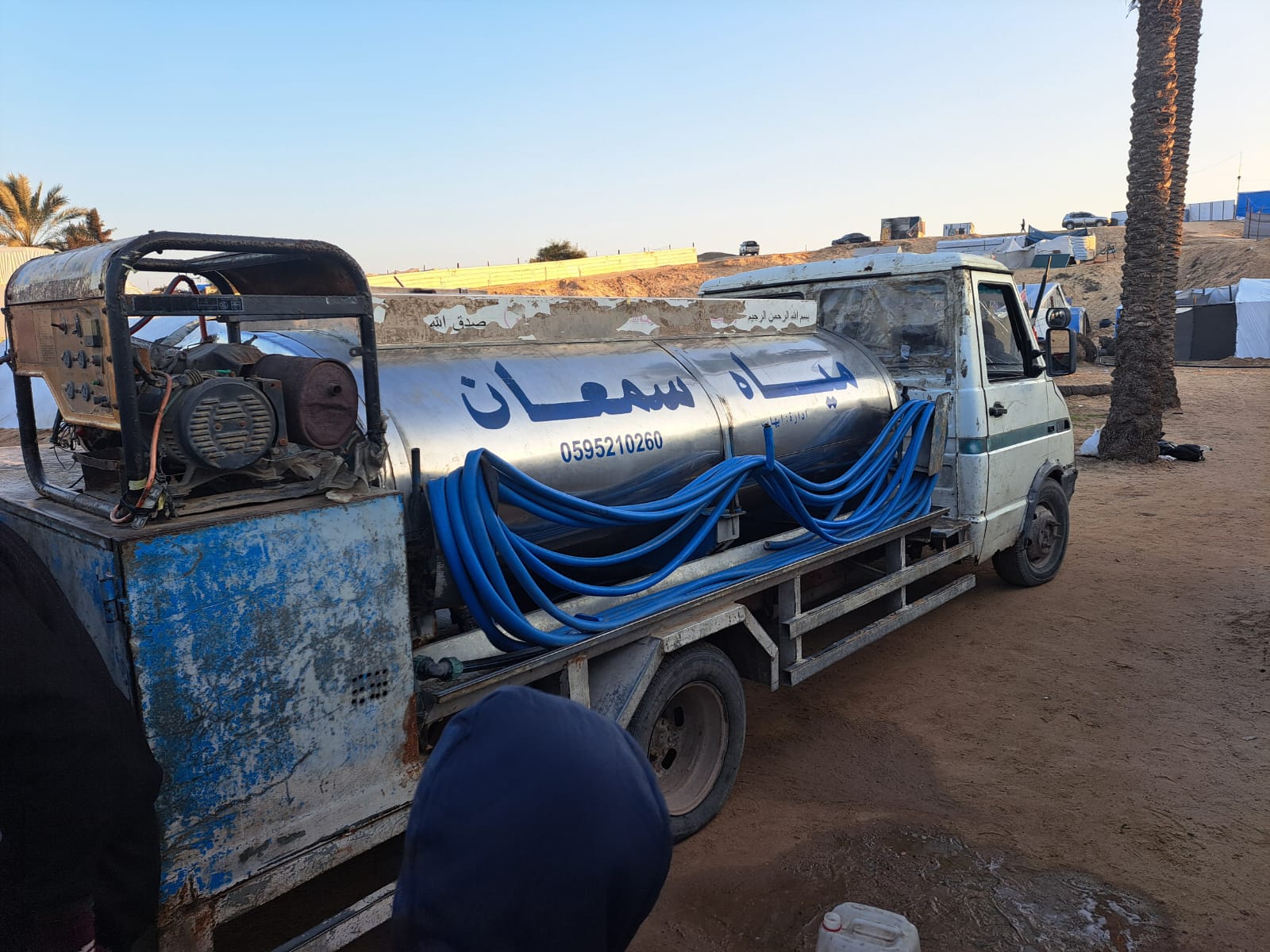
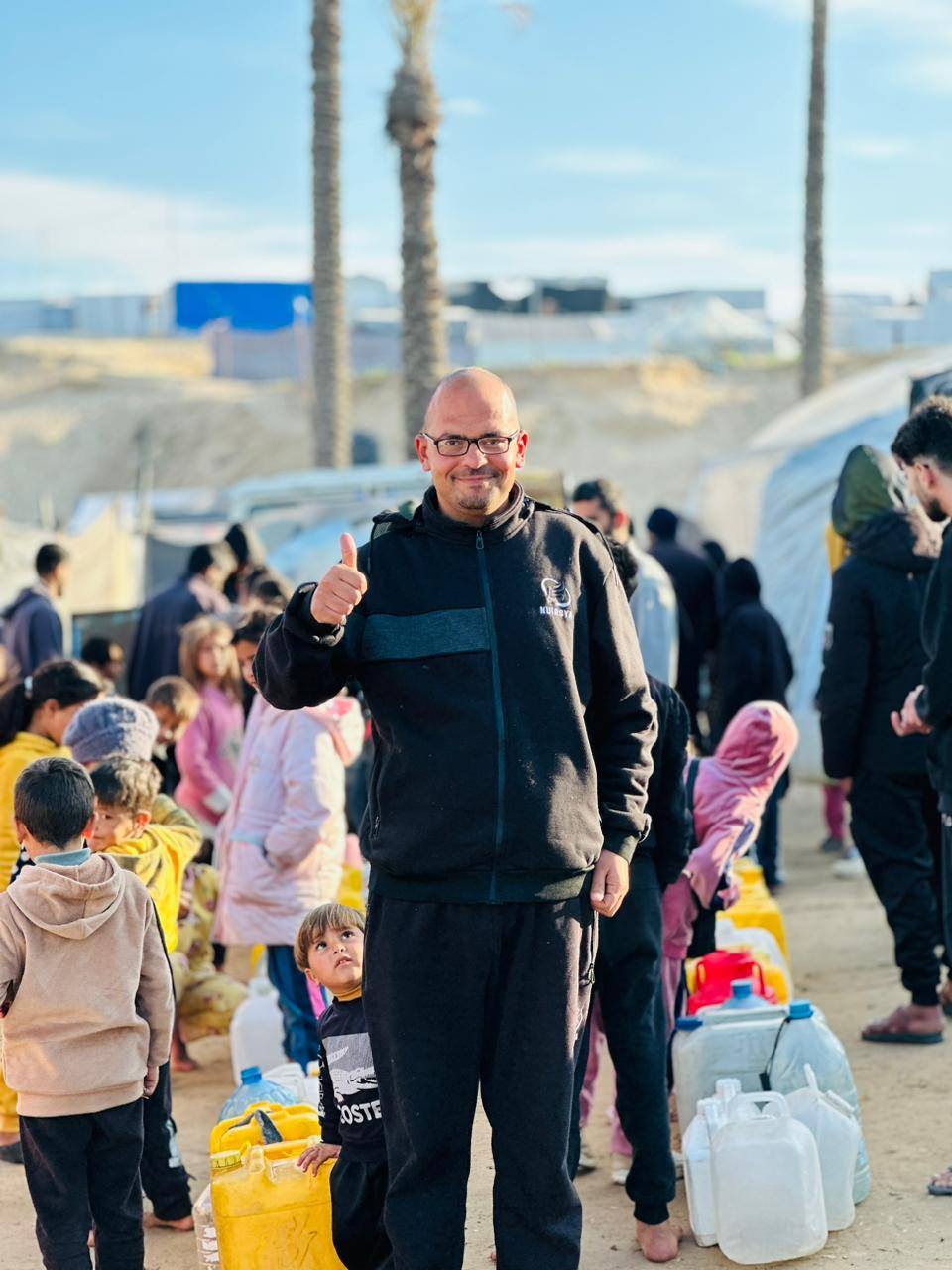
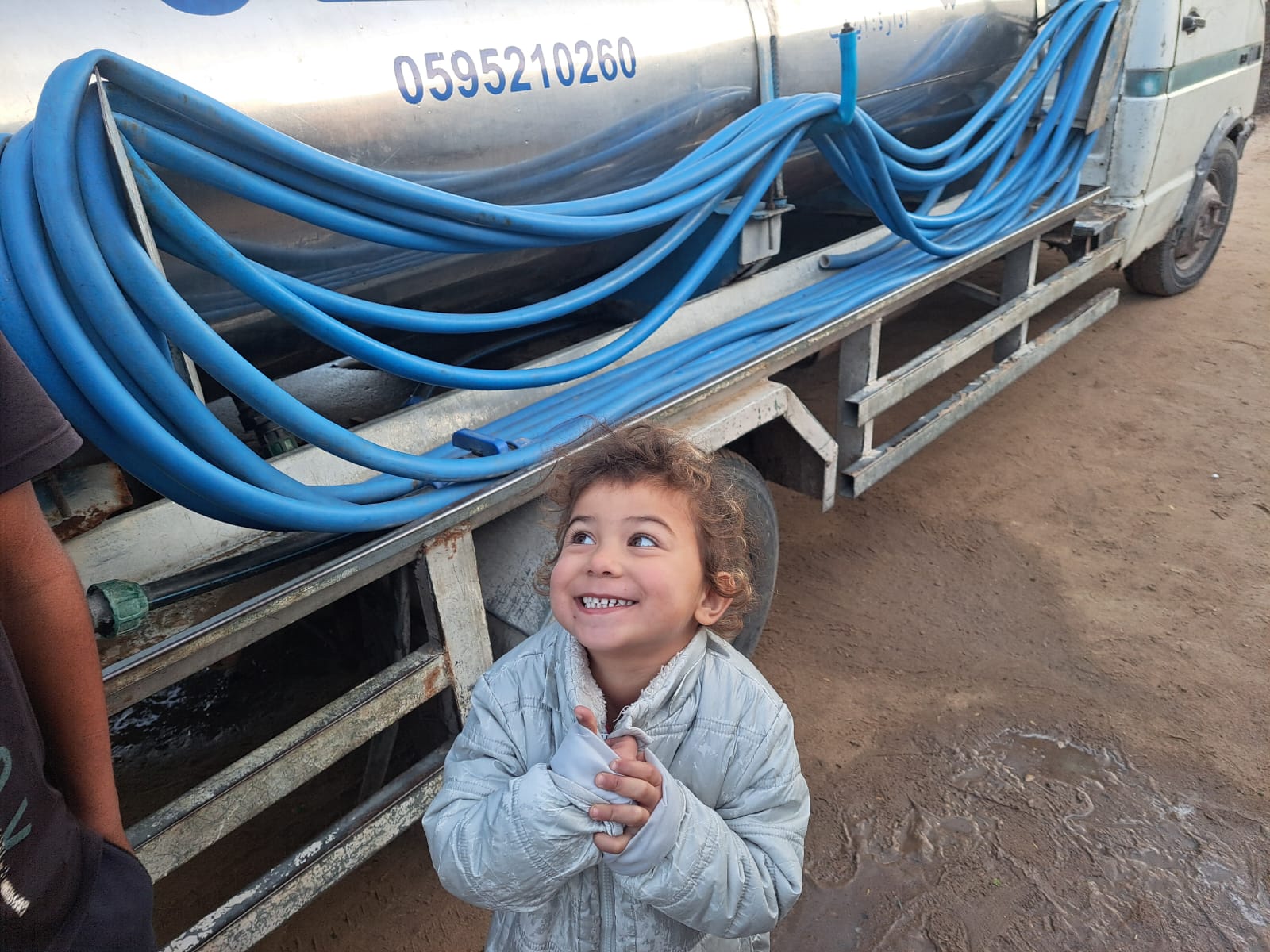
Sinds maart loopt onze crowdfunding voor de familie van Mohammed. Als zijn telefoon bereik had hield hij me, via Whatsapp, op de hoogte van het leven in het vluchtelingenkamp: van de ontberingen, de kou, de vermoeidheid, de onzekerheid en het geweld. Een paar weken geleden liet Mohammed een tankwater met drinkwater komen voor zijn sectie van het kamp (zie de foto’s). Het ingezamelde geld was niet alleen voor hem en zijn gezin, maar ook voor de mensen om hem heen.

Hoe het nu verder gaat is onduidelijk. Al in april hebben we, met de opbrengst van deze crowdfunding, “coördinatiegeld” betaald in Cairo zodat de familie kan uitreizen naar Egypte. Of en wanneer het vertrek naar Egypte alsnog zal plaatsvinden moet in de komende tijd duidelijk worden. Voorlopig blijft de familie in Mawasi en is het gevaar nog niet geweken. In de uren na de bekendmaking van het akkoord voerde Israël nog aanvallen uit waarbij 73 Palestijnse doden vielen. Het akkoord is nog niet van kracht en er zijn nog een aantal losse eindjes, waarbij beide partijen elkaar beschuldigen van kwade trouw.

Op verzoek van Mohammed gaan we door met de crowdfunding. Het ingezamelde geld blijft hij gebruiken voor de aankoop van voedsel, water, dekens enzovoorts, voor zijn gezin en naaste omgeving. En hopelijk blijft er geld over om straks, in een nieuwe, onzekere fase als de wapens eindelijk zwijgen, een nieuw leven op te bouwen.
https://gofund.me/15bf945e (klik voor donaties)

Ceasefire Can’t Come Soon Enough

For Mohammed Abu Afash, Sunday can’t come soon enough. In principle, the agreement between Israel and Hamas will come into effect on Sunday, January 19. The Israeli attacks should then stop, the first hostages should be released and the Rafah border crossing between Egypt and Gaza should reopen. This means that the first sick and seriously injured people who urgently need medical care can leave Gaza and that more humanitarian aid can be allowed into Gaza.

‘Dear Jan, despite all the pain and destruction, I am very happy,’ Mohammed wrote to me on Friday morning. This is the ceasefire that the people of Gaza have been looking forward to for so long. Mohammed lost his home and his shop during the war. His three daughters Eiaa, Aliaa and Layan could not go to school. The family had to flee several times and in recent months they lived in Mawasi, a tent camp in the south of Gaza for displaced Palestinians. The camp had been designated by Israel as a ‘safe zone’, but it was not really safe there. There were several air raids on the camp, in some cases dangerously close to the Abu Afash family’s tent. The day before Christmas there was another attack in which shrapnel damaged their tent. Fortunately, the family escaped unscathed, but a few meters further on seven Palestinians were killed in burning tents.


Our crowdfunding for Mohammed’s family has been running since March. When his phone had reception, he kept me informed, via WhatsApp, about life in the refugee camp: about the hardships, the cold, the fatigue, the uncertainty and the violence. A few weeks ago Mohammed had a tank of drinking water delivered to his section of the camp (see the photos). The money raised was not only for him and his family, but also for the people around him.
It is unclear what will happen next. In April, we already paid “coordination money” in Cairo with the proceeds from this crowdfunding so that the family can travel to Egypt. Whether and when the departure to Egypt will still take place will have to become clear in the coming period. For the time being, the family will remain in Mawasi and the danger has not yet passed. In the hours after the announcement of the agreement, Israel carried out further attacks that killed 73 Palestinians. The agreement has not yet entered into force and there are still a number of loose ends, with both parties accusing each other of bad faith.
At Mohammed’s request, we will continue with the crowdfunding. He will continue to use the money raised to buy food, water, blankets, etc. for his family and immediate surroundings. And hopefully there will be money left over to build a new life in a new, uncertain phase when the guns finally fall silent.

Herfstregens in Gaza vergroten ellende van de ontheemde Palestijnen

English below

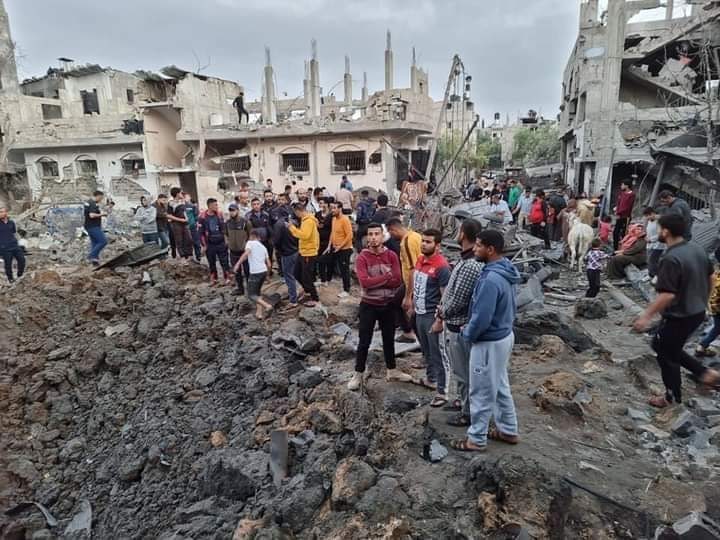
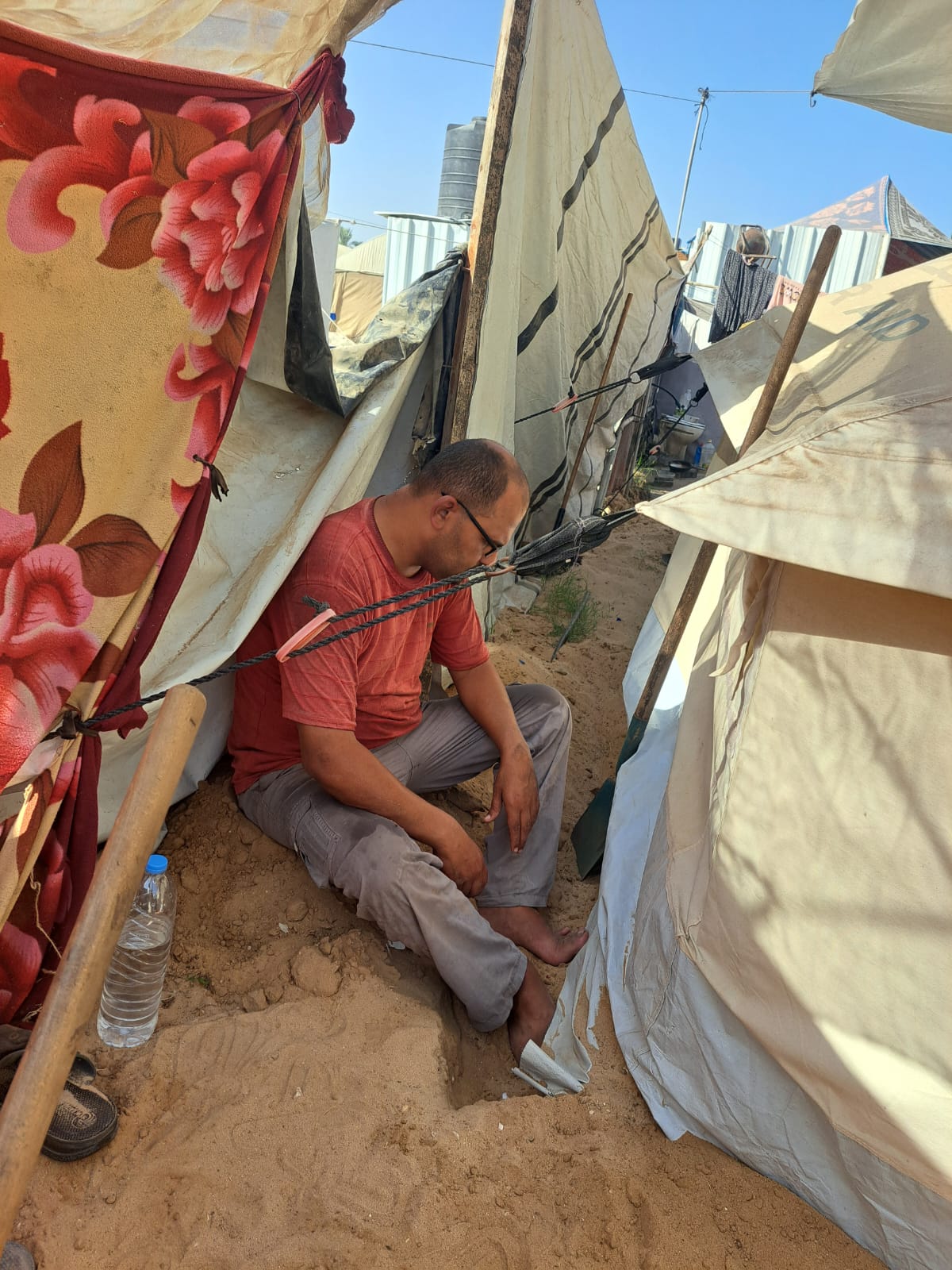
Door de buitensporige militaire actie van Israel in Libanon zou je haast vergeten dat de genocidale aanval in Gaza doorgaat. Nu al haast een jaar. Er gaat geen dag voorbij zonder dat er burgerslachtoffers vallen. Over een staakt-het-vuren wordt al niet meer gesproken. Voor de 1,9-miljoen ontheemde Palestijnen wordt het leven in de tentenkampen met de dag grimmiger en vooral meer uitzichtloos. Ook in Gaza is de herfst aangebroken en zware regens veroorzaakten nog meer ellende. De vaak aan elkaar genaaide meelzakken, lappen plastic en oude dekens zijn niet bestand tegen de zware herfstregens. Mohammed Abu Afash had uit voorzorg een geultje gegraven rond zijn tent en alle touwen nog eens stevig vastgebonden. Dit voorkwam deze week niet dat de tent vol water liep en de matrassen en kleren nat werden. De tenten zijn niet bestand tegen de regenbuien. “Wat er met ons gebeurt doe je zelfs een beest niet aan,’ schreef Mohammed mij. Hij en zijn vrienden zijn doodmoe en voelen zich hulpeloos. Zonder huis, werk, geld en perspectief.

Ik houd jullie nu al acht maanden op de hoogte van het wel en wee van de familie Abu Afash, die ik blijf steunen. Als je mee wilt helpen: graag! Mohammed op zijn beurt deelt het beetje geld -als hij er over kan beschikken- en eten met zijn buren, vrienden en bekenden in het kamp.

Support: https://gofund.me/afc1cc6e

Israel’s excessive military action in Lebanon makes you forget that the genocidal attack in Gaza continues. For almost a year now. Not a day goes by without civilian casualties. There is no more talk of a ceasefire. For the 1.9 million displaced Palestinians, life in the tent camps is becoming grimmer and more hopeless by the day. Autumn has arrived in Gaza and heavy rains have caused even more misery. The often sewn-together flour sacks, sheets of plastic and old blankets are no match for the heavy autumn rains. Mohammed Abu Afash had dug a small trench around his tent as a precaution and tied all the ropes firmly. This did not prevent the tent from filling up with water this week and the mattresses and clothes from getting wet. The tents are no match for the rain showers. “What is happening to us, you wouldn’t even do to an animal,” Mohammed wrote to me. He and his friends are exhausted and feel helpless. Without a home, work, money and perspective. I have been keeping you informed for eight months now about what happens to my friends in Khan Younis, whom I continue to support. If you want to share supporting them: please do! Mohammed in turn shares the little money (if he has it) and food with his neighbours, friends and acquaintances.

Een tent in Khan Younis: 8e verblijfplaats van het gezin Abu Afash

English below

Veel mensen hebben mij gevraagd: hoe is het nu met Mohammed en zijn familie? Ik moet mij verontschuldigen dat ik meer dan een maand geen updates heb gestuurd. Misschien heeft het te maken met het feit dat er weinig opwekkends te melden valt. Het gezin heeft verschillende keren moeten vluchten sinds ze uit Rafah vertrokken. En in Rafah leefden ze ook al als vluchtelingen in een tent.

Op het ogenblik verblijven ze in een tent in Khan Yunis, 300 meter van het Mawasi kamp. Die tent heeft Mohammed moeten kopen van het met onze actie ingezamelde geld. Het is hun achtste verblijfplaats sinds hun huis verwoest werd in Gaza Stad.

Er is ook goed nieuws: het is sinds kort mogelijk om geld over te maken naar Mohammeds bankrekening in Gaza. Eerder tijdens de oorlog kon dat niet en kreeg ik het overgemaakte geld teruggestort op mijn rekening. Geregeld maak ik nu geld over van de door jullie geschonken donaties. Mohammed koopt daar eten mee: basisvoedsel als rijst en brood, maar ook groenten en soms vlees. Het eten is erg duur vertelt hij mij: een kilo tomaten voor 4 euro, een kilo komkommers 5 euro, een kilo aardappels 6 euro en een kilo uien 6 euro. Een kilo kip kost zo’n 20 euro. Maar er is toch voedselhulp? Nou nee, geen enkele vorm van hulp heeft het gezin van Mohammed tot dusver bereikt. De vluchtelingen in Khan Younis/Mawasi zijn op zichzelf aangewezen. Gelukkig maar dat Mohammed niet rookt want sigaretten zijn peperduur. Voor een enkele sigaret moet je wel 30 euro neertellen.

Het is belangrijk te vermelden dat Mohammed niet alleen eten voor zichzelf koopt. Hij is begonnen voedselpakketten samen te stellen voor de mensen in zijn naaste omgeving. Hij wordt daarbij geholpen door familieleden, die er ook op toezien dat de voedseluitdeling eerlijk verloopt. Ze kopen bijvoorbeeld een grote hoeveelheid groente in en verdelen die over verschillende tenten.

De hoop om Gaza via Rafah te verlaten om naar Egypte te reizen is nog niet geheel vervlogen. Mohammeds zuster in Cairo heeft geïnformeerd of we het geld terug kunnen krijgen dat betaald werd om de reis naar Egypte mogelijk te maken. Dat kan inderdaad. Maar de familie heeft nog geen verzoek tot terugbetaling ingediend. Er wordt nog steeds gehoopt op een staakt-het-vuren en heropening van de grens met Egypte. Misschien is het wel ijdele hoop maar hoop doet leven. In de tussentijd wordt het ingezamelde geld goed besteed aan eten en overleven in het vluchtelingenkamp, niet allen door het gezin van Mohammed maar ook door tientallen mensen om hem heen.

Many people have asked me: how are Mohammed and his family doing now? I have to apologize for not sending any updates in over a month. Perhaps it has to do with the fact that there is little exciting to report. The family has had to flee several times since leaving Rafah where they lived as refugees in a tent. They are currently staying in a tent in Khan Yunis, 300 meters from the Mawasi camp. Mohammed had to buy that tent with the money raised through our campaign. It is their eighth place of refuge since their home was destroyed in Gaza City.

There is also good news: it has recently become possible to transfer money to Mohammed’s bank account in Gaza. Earlier during the war, this was not possible and the money transferred was refunded to my account. I now regularly transfer money from the donations you have made. Mohammed buys food with it: basic food such as rice and bread, but also vegetables and sometimes meat. The food is very expensive, he tells me: a kilo of tomatoes costs 4 euros, a kilo of cucumbers 5 euros, a kilo of potatoes for 6 and a kilo of onions 6 euros. A kilo of chicken costs about 20 euros. But there is food aid, right? Well no, no form of help has reached Mohammed’s family so far. The refugees in Khan Younis/Mawasi are on their own. It’s a good thing Mohammed doesn’t smoke because cigarettes are extremely expensive. You have to pay 30 euros for a single cigarette.

It is important to note that Mohammed does not just buy food for himself. He has started putting together food parcels for the people in his immediate environment. He is helped by family members, who also ensure that the food distribution is fair. For example, they buy a large quantity of vegetables and divide them among different tents.

The hope of leaving Gaza via Rafah to travel to Egypt has not yet completely disappeared. Mohammed’s sister in Cairo has inquired whether we can get a refund of the money paid to make the trip to Egypt possible. That is indeed possible. But the family has not yet submitted a request for reimbursement. There are still hopes for a ceasefire and reopening of the border with Egypt. Perhaps it is a vain hope, but hope gives life. In the meantime, the money raised will be well spent on food and survival in the refugee camp, not only by Mohammed’s family but also by dozens of people around him.

You want to help? Please donate: https://gofund.me/d6e5f646

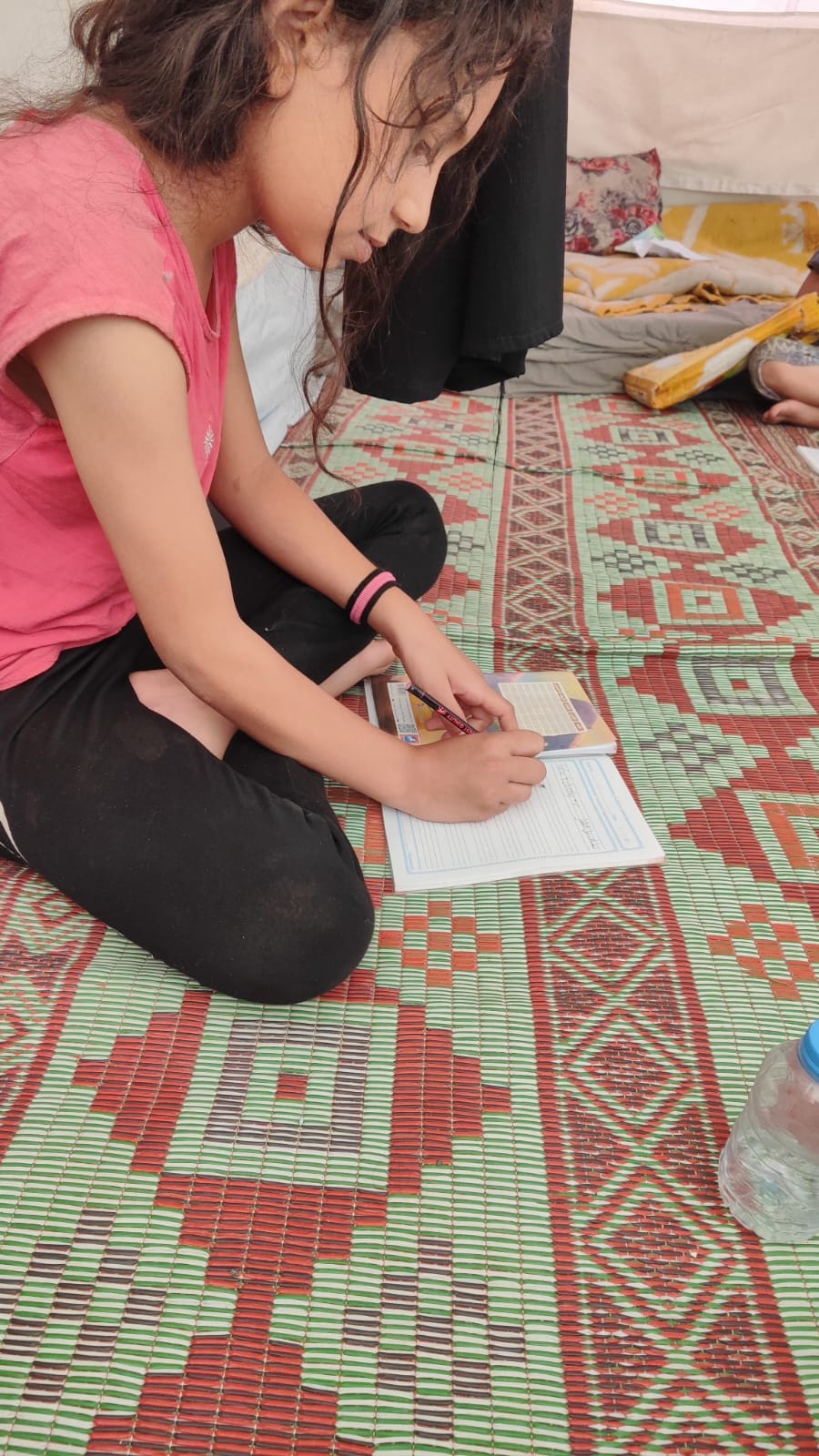
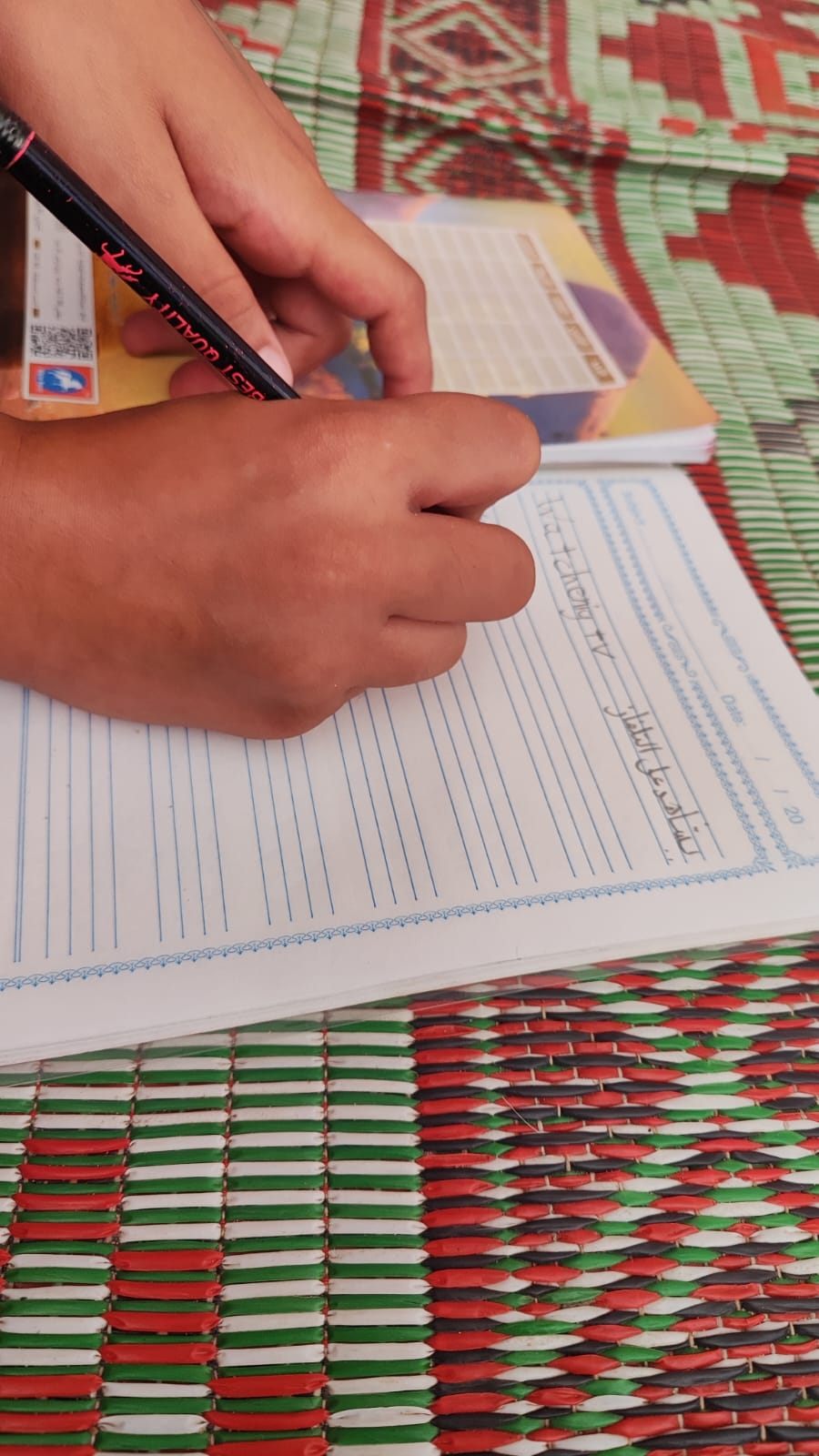
Kinderen van Mohammed Abu Afash maken huiswerk in de tent in Khan Younis

Algeria and Morocco on collision course

In recent months, North Africa has seen a crescendo of accusations, moves and measures that leave no doubt: Morocco and Algeria are on a collision course. The big question is whether the cold war in the Maghreb will end in an armed conflict. Both neighboring countries have engaged in an arms race and are armed to the teeth.

In August, Algeria broke off diplomatic relations with Morocco. A month later, Algerian airspace was closed to all Moroccan aviation and on November 1, the Europa-Maghreb gas pipeline, which transports Algerian gas through Moroccan territory to Spain, was closed.

The steps were taken after the Moroccan ambassador to the United Nations publicly expressed his support for “the right of self-determination for the heroic people of Kabylie” in July. Earlier, the Algerian authorities had accused Morocco of “sowing discord among the Algerian population” by supporting the MAK, the Mouvement pour l’autodétermination de la Kabylie.

Algiers was not amused (to say the least) when in July an international consortium of investigative journalists revealed in the Pegasus Papers that the Moroccan intelligence service, using Israel’s NSO software, had bugged thousands of Algerian politicians, activists, journalists, diplomats and army officers.

Issue of the Western Sahara is biggest bone of contention between Morocco and Algeria

The biggest bone of contention between Morocco and Algeria, however, is the issue of Western Sahara, an immense desert area the size of the United Kingdom. Morocco has controlled about 85% of the territory of this former Spanish colony since the late 1970s. The Saharawi liberation movement, the Front Polisario, controls the remainder east of the Berm, the 2,700-kilometer-long “defensive wall” Morocco has erected to keep out the Saharawi independence fighters.

Since 1991, when Morocco and the Polisario Front agreed to a United Nations plan to hold a referendum and a ceasefire came into effect, the conflict has been more or less dormant. But that changed at the end of 2020 when the ceasefire, which had lasted for almost thirty years, was broken by the Moroccan army. 

The referendum envisaged in the UN plan whereby the Saharawi could exercise their right to self-determination was never held and Morocco established more and more facts on the ground in its “southern provinces”.

The final blow to a diplomatic solution to the conflict was inflicted in December 2020 by US President Donald Trump. In a tweet, he announced that the United States recognized Moroccan sovereignty over Western Sahara. In return, Morocco normalized its diplomatic relations with Israel and awarded a massive $1 billion arms deal to the US. The Americans were going to supply drones and other high-quality military equipment to Morocco.

The Trump deal marked a major diplomatic victory for Morocco. No significant country had so far recognized Moroccan sovereignty over Western Sahara. After all, according to international law, the area still had to be decolonized and the local Saharawi population had to be given a chance to determine its own future.

That, much to Rabat’s anger, also remained the view of European countries and sparked a series of conflicts with Spain, Germany and the EU in 2021. The stance of Morocco’s European allies, who continued to look at the issue of Western Sahara through the prism of international law and did not align themselves with Trump’s recognition of the “Moroccan Sahara”, was seen in Rabat as an insult. “It was like a wedding where none of the friends and acquaintances showed up,” said an observer.

While Trump’s move was criticized by quite a few Democrats and Republicans alike, his recognition of the “Moroccan” Sahara was not reversed after he left the presidency. The Biden administration did not want to jeopardize its relations with either Israel or Morocco.

These relations were apparently more important than the letter of international law and the Saharawi’s right to self-determination. 

In addition, a withdrawal of the recognition of the Sahara as Moroccan could open the door to the cancellation of other questionable Trump decisions, such as his recognition of the Israeli sovereignty over the occupied Golan and East Jerusalem. 

The formal ties between Morocco and Israel forged by the Trump administration had a number of far-reaching implications, not least for relations between Morocco

and Algeria.

First, it strengthened Morocco’s international diplomatic position, which could now rely on the influential pro-Israel lobby, especially in the United States. The assertive, almost aggressive attitude towards Europe seems to have everything to do with the Moroccan self-awareness supported by the Israel lobby.

Second, and more importantly, the Trump deal launched Israel as a heavyweight player on the North African chessboard, both politically and militarily. The ever-closer cooperation between the Israeli and Moroccan intelligence services is also seen as threatening by Algeria. Israeli Foreign Minister Yair Lapid added fuel to the fire on his first official visit to Morocco this year by strongly criticizing Algeria. According to Lapid, Algeria is dangerously close to Israel’s nemesis Iran. For the Algerians, enough was enough: it was unheard of for an Israeli minister to criticize them from their Arab neighbor Morocco.

The Israeli factor has heightened distrust between Algeria and Morocco and disturbed the precarious status-quo in Algerian-Moroccan relations of recent decades. Those relations have been problematic since Algerian independence in 1962. The neighboring countries fought a short border war in 1963. Moroccan troops invaded Algeria during the “sand war” and attempted to capture parts of Algeria’s western provinces of Bechar and Tindouf.

In the end, the attempt to take a part of “historic Morocco” by force turned out to be a huge political and military blunder. Arab countries and Cuba came to the aid of Algeria and the Algerian population condemned the Moroccan aggression. Morocco’s traditional allies France and the United States also had little understanding for the expansionist adventure of the then young King Hassan II.

This military adventure of Morocco was ultimately based on the same irredentist delusion of Greater Morocco, which would lead to the conflict over the Spanish Sahara in the 1970s. Nationalist leaders such as Allal al-Fassi were not satisfied with the territory of the Kingdom of Morocco as it emerged in 1956 after independence from France. Fassi included the Spanish Sahara, parts of Algeria, Mauritania and Mali in his Greater Morocco.

According to independent historians, it is a myth that the Western Sahara was once part of the sultanate of Morocco. In 1975, the International Court of Justice found that while a number of tribes in the area had historical ties to Morocco, there were no ties of territorial sovereignty between Western Sahara and Morocco.

Mauritania gained independence in 1960, but it was only recognized by Morocco nine years later. Since then, there have been ups and downs in Moroccan Mauritanian relations, not least because Nouakchott recognizes the Sahrawi Arab Democratic Republic, proclaimed by the Front Polisario.

Almost sixty years after the ‘sand war’, it can be concluded that things have never really worked out between Morocco and Algeria. Although there were periods of relative relaxation and even a friendship treaty was signed in 1969, mutual mistrust persisted, and neighbor disputes continued to flare up. The Algerian-Moroccan border has been closed since 1994 and the government-controlled media of both countries never tire of taunting the regime on the other side of the border.

The tension in the North African region has meanwhile led to an increasingly intense arms race. In addition to the United States, Israel and France, Morocco has also placed large military orders in Turkey, including drones. Algeria is a major buyer of Russian, Chinese and German weaponry. It is expected that the strategic marriage of convenience between Morocco and Israel will prompt Algeria to further increase military cooperation with the Russian Federation.

If it really comes to war, it will mostly produce losers. War would further strain the perspectives of young people in the Maghreb and lead to further emigration and brain drain. Already, the geopolitical tension is a pretext to curtail civil liberties, including freedom of expression and press freedom. For example, it is a taboo in the Moroccan media to report critically about the Sahara issue or about the royal family.  In Algeria, the Hirak movement, which aims to democratize the Algerian political system, is under heavy pressure.

An armed conflict would be catastrophic for the peoples of the region. Wars have ravaged the economies of Libya, Syria, Iraq and Yemen over the past decade. Morocco and Algeria could then be added to that infamous list of Arab countries.

https://www.getrevue.co/profile/jan_keulen?via=twitter-profile-webview

Gaza can’t wait

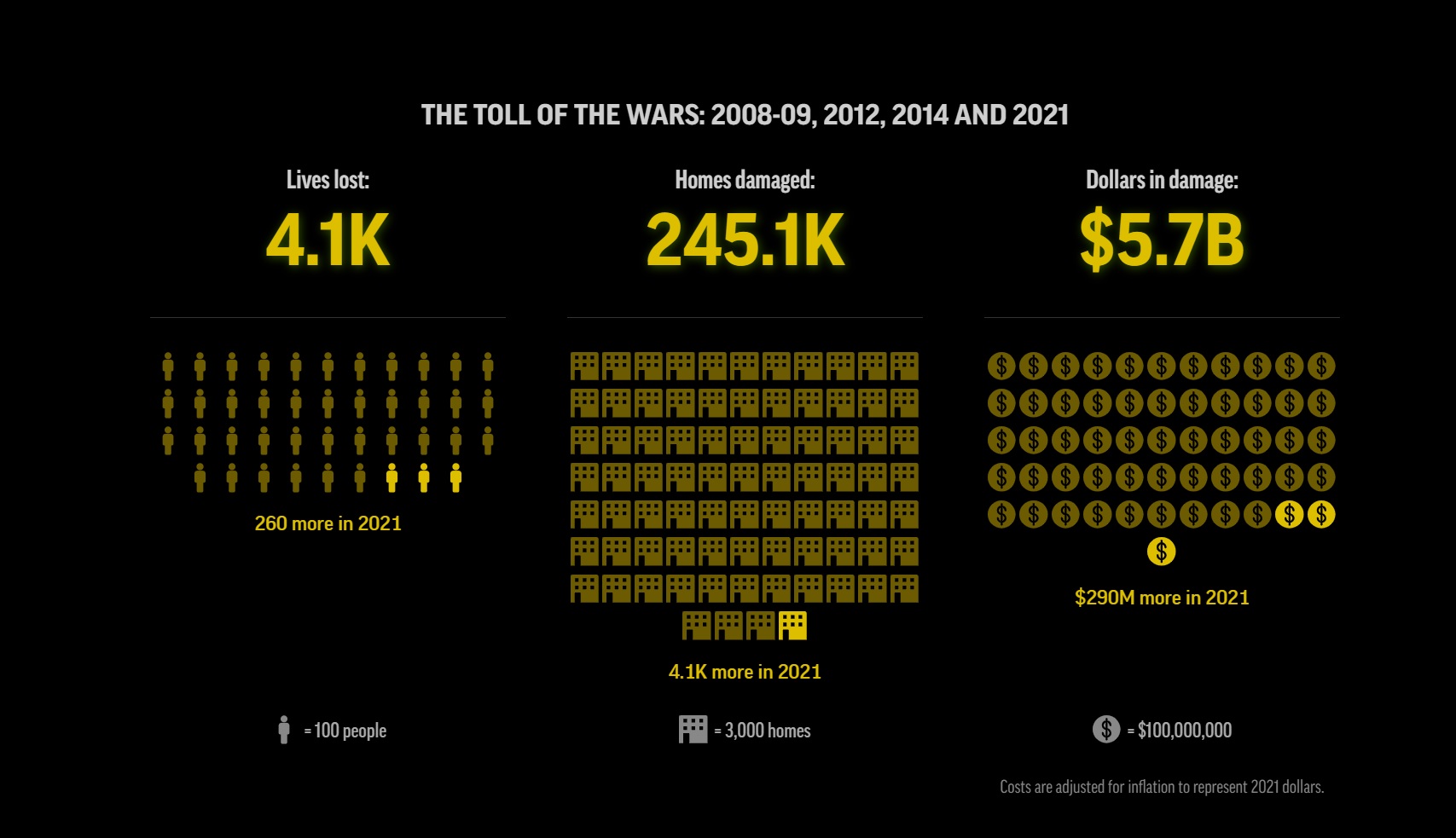
It is like a movie that is repeated over and over again. In 2008-09, 2012, 2014 and May 2021, there were large-scale Israeli attacks on Gaza. More than 4,000 people lost their lives, 260 of them in May; a quarter of a million homes were damaged, of which 4,000 this year and the total damage is in the billions of euros.

The toll was enormous.

Ap infographic

It is also no small matter to subject some two million people in an area of ​​365 square kilometers to a land, sea and air blockade for years. In comparison: the municipality of Emmen in the province of Drenthe covers 346 square kilometers and has 20 times fewer inhabitants. And Emmen is of course not cut off from the rest of the world. The living conditions in Gaza are now inhumane, the humanitarian situation unacceptable. In fact a UN expert declared Gaza to have become unlivable “with an economy in free fall, 70 per cent youth unemployment, widely contaminated drinking water and a collapsed health care system”.

Why is it not possible to make an end to this disaster and to the vicious circle of violence? Rigorous Israeli policies have not resulted in a loss of power of Hamas, let alone the destruction of the Islamist movement, that has ruled Gaza since 2007. 

After the large-scale military confrontations in May, the border with Gaza is still not quiet. Despite the shaky ceasefire that ended the clashes in May, there are regular demonstrations at the border fence and “fire balloons” are released in protest against the Israeli blockage of construction materials and the throttling of humanitarian aid. Israel invariably “answers” to these actions with aerial bombardments. The parties seem to be heading for an inevitable fifth round of death and destruction.

New Israeli Prime Minister Naftali Bennett visited the White House in August and in a press conference with US media, Bennett talked about Iran, the friendship between Israel and the US and the fight against corona. But not about Gaza. When you hear Bennett talk, the Palestinians and Gaza don’t seem to exist.

Bennett is a hawk and does not want to make any political concessions to the Palestinians, he remains firmly against the two-state solution. But he does think that if Israel makes life a little more bearable for Palestinians, especially economically, then the peace process could be “parked”.

Swedish politician and diplomat Carl Bildt wrote an article after the May war in which he argued for four courageous steps to break the deadlock in Gaza.

What this view means for Gaza remains unclear for the time being.

Firstly, the blockade of Gaza must be lifted. The blockade has wrecked Gaza’s economy and made foreign trade practically impossible. Instead, the blockade has facilitated smuggling, which in turn is largely controlled by Hamas. In that regard, the blockade has strengthened rather than weakened Hamas.

Secondly, Israelis must be able to live in safety. No country accepts indiscriminate rocket fire. But Israel must also recognize that its current aggressive policy has failed.

Thirdly, Gaza must be returned to internationally recognized Palestinian rule. No aid for Gaza and no reconstruction funds without free and fair elections in Gaza and the West Bank, including East Jerusalem.

Finally, a long-term solution requires that the future state of Palestine be able to use Gaza for access to the Mediterranean and thus to the rest of the world. Gaza needs its own port and airport and a secure connection to the West Bank.

Palestinian journalist Daoud Kuttab recently pointed out that even if Bennett does not want political progress in the Israeli-Palestinian peace process, Israel is bound by the Oslo Accords. Those agreements include a secure connection between Gaza and the West Bank. According to the agreement signed by Israel and the PLO, Gaza and the West Bank are “one territorial unit”.

Three years ago, Dutch parliamentarians Sjoerd Sjoerdsma (D66) and Joel Voordewind (ChristenUnie) proposed organizing an international Gaza conference to discuss the plan for a secure connection between Gaza and the West Bank. A safe route to make medical care, family reunification and trade easier and to break the ‘spiral of violence’.

The plan, like so many attempts to break out of the Gaza stalemate, disappeared into a black hole. The Netanyahu-Trump duo had different views on Middle East peace. And the Netherlands and the EU did not have the political will or guts to really push for a solution in Gaza.

It will be clear that Carl Bildts four steps require foreign political pressure, especially from the EU and the US. The Palestinian Authority and Hamas must come to an agreement on elections and Naftali Bennett must be convinced that Israel also has other options than only the military option.

The four steps are inconceivable without Israel and the Palestinians sooner or later returning to the negotiating table, and that is exactly the last thing Bennett wants.

The chance that there will soon be a replay of the Gaza horror movie and a fifth ’round’ of rockets and bombings is therefore high. No one seems to be looking forward to yet again heartbreaking footage from Gaza, but none of the drama’s protagonists is in any rush to even begin working on a solution. Only the residents of Gaza: they cannot wait for their situation to improve. Not a day longer.

Dit artikel in het Nederlands: https://rightsforum.org/opinie/gaza-kan-niet-wachten/

Message to Rural Media Network Pakistan

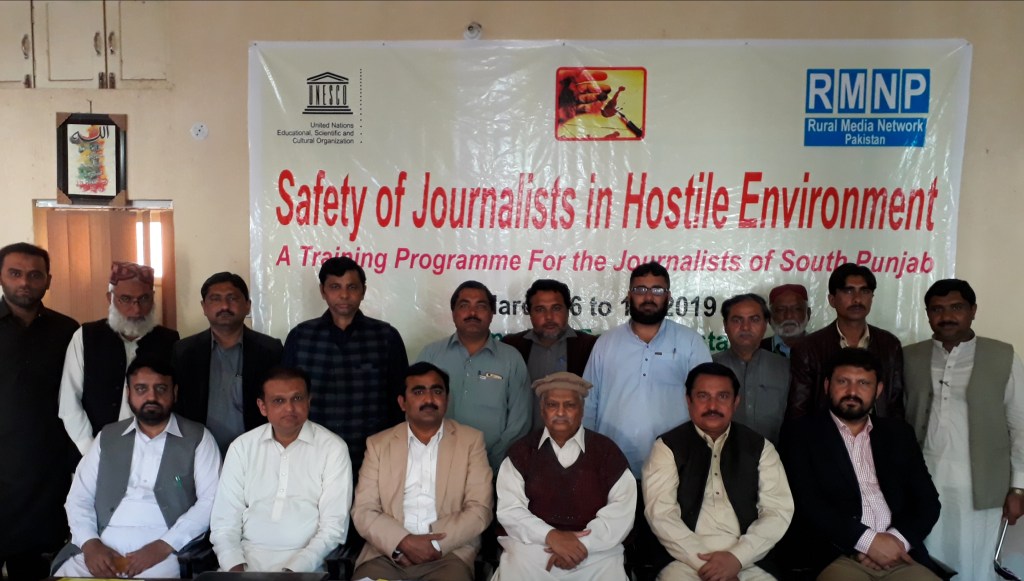
Safety Training for Pakistani journalists

Dear friends and colleagues

I’m saluting you from The Netherlands. As a long time friend of the Rural Media Network Pakistan my thoughts are with you and the important work you’re doing. On World Press Freedom Day (3d of May) we celebrate the fundamental principles of press freedom. Those principles are universal and based on the right to freedom of opinion and expression. According to the Universal Declaration of Human Rights it is each and everyone’s right “to hold opinions without interference, and to seek, receive and impart information and ideas through any media regardless of frontiers.”

On the 3d of May we assess the situation of press freedom in our village, city and country. And we pay tribute to journalists who were injured or even lost their lives in the line of pursuing a story. 

Independent, trusted journalism matters. This is even more true in times of a health crisis. Journalists can counter fake news and misinformation, spread crucial public health messages and encourage people to do the right thing not to get infected with the corona virus. 

So it is especially in these days that my thoughts are with you: brave journalists in rural Pakistan. Please keep up the fight for transparency, good communication and trusted information.

Jan Keulen

1-5-2020 Message to RMNP: http://ruralmedianetworkpk.org/jan-keulen-underlines-the-need-to-fight-for-transparency-good-communication-and-trusted-information/

2015: mes op de keel van onafhankelijke journalistiek

De jaarwisseling is traditioneel aanleiding voor lijstjes. De donkerste dagen van het jaar zijn kennelijk geschikt om de balans op te maken. Van de beste oliebollenbakkers van het AD, de Top 2000 van Radio 2, tot de landen die in de ogen van the Economist er het beste van afbrachten in 2015.

Dat was Myanmar overigens. Vijf jaar geleden mochten media zelfs geen foto van Aung San Suu Kyi publiceren, maar in november 2015 won zij de verkiezingen met 77% van de stemmen. Er is dus licht in de duisternis. Heel soms.

violence-against-journalists

Dat geldt niet voor het geweld tegen journalisten. De Internationale Federatie van Journalisten (IFJ) en andere persvrijheidsorganisaties publiceerden hun macabere lijstjes van journalisten die in 2015 werden gedood bij de uitoefening van hun beroep. De IFJ telde 109 journalisten die werden vermoord of die omkwamen bij gewelddadige incidenten die ze fotografeerden, filmden of anderszins versloegen. Volgens de IFJ, waar journalistenbonden uit de hele wereld bij zijn aangesloten, waren in 2015 Zuid-Amerika en het Midden-Oosten de gevaarlijkste regio’s met respectievelijk 27 en 25 gedode journalisten.

Andere organisaties publiceerden eveneens hun statistieken, die lichtjes van elkaar verschillen, maar uiteindelijk wel dezelfde trends bevestigen: 2015 was een bloedig jaar voor de journalistiek en met name het jihadistisch geweld van IS en aan al Qaeda verbonden groepen eisten een hoge tol.

Het Committee for the Protection of Journalists telde 69 journalisten en drie andere mediawerkers die vanwege hun beroep waren gedood; 25 gevallen van gedode journalisten waren nog in onderzoek. Reporters Without Borders heeft een ‘barometer’ die eind 2015 op 64 bevestigde gevallen van gedode journalisten stond, zes andere mediawerkers (bijvoorbeeld tolken, chauffeurs, fixers) en 18 bloggers en burgerjournalisten werden eveneens vermoord. De Death Watch van International Press Institute telde 98 bevestigde gevallen van moord, waarvan 39 journalisten die door extremistische moslimgroepen waren gedood.

De verschillen in de cijfers worden verklaard doordat de organisaties niet exact dezelfde criteria hebben, niet overal ter wereld even actief en aanwezig zijn (met uitzondering van de IFJ) en journalisten pas toegevoegd worden aan de treurige statistieken als onomstotelijk is vastgesteld dat ze inderdaad bij de uitoefening van hun beroep zijn overleden.

De bij de jaarwisseling gepubliceerde lijstjes zijn nog niet definitief. Volgens IPI is er gerede kans dat het dieptepunt van 2012, toen 133 journalisten vanwege hun werk werden gedood, ook in 2015 wordt gehaald of dat de eindbalans zelfs nog dramatischer wordt.

Het spreekt haast vanzelf dat de IFJ en andere organisaties eind december een beroep deden op regeringen overal ter wereld en op de VN om een einde te maken aan de straffeloosheid. De meeste moorden van journalisten in bijvoorbeeld de Filipijnen en Latijns-Amerika blijven onbestraft. Ook klonk de roep om nationale en internationale wet- en regelgeving toe te passen, die journalisten bescherming moeten bieden. Journalisten zijn burgers die gewoon hun werk doen en ze zijn wel een heel gemakkelijke prooi voor malafide lokale autoriteiten, drugsbaronnen en milities die meestal nog vrijuit gaan ook.

Wat ik de meest beangstigende ontwikkeling vind is de toename van gerichte aanvallen op (burger-) journalisten door organisaties die met al Qaeda verbonden zijn en door de Islamitische Staat-groep. Regimes die weinig op hebben met persvrijheid zijn niets nieuws. Lakse, corrupte bestuurders of criminelen die de pest hebben aan openbaarheid zijn sinds jaar en dag de vijanden van het vrije woord. Maar een jihad tegen de medewerkers van Charlie Hebdo of het gericht vermoorden van Syrische of Iraakse journalisten en media-activisten die de misdaden van IS aan de kaak stellen: dat is relatief nieuw, althans in de omvang van 2015.

Deze jihad belichaamt niet alleen een kolossaal, fysiek gevaar voor kritische journalisten, maar belemmert ook de vrije nieuwsgaring in grote delen van het Midden-Oosten. En dat heeft weer tot gevolg dat de publieke opinie, zowel de lokale en de internationale, minder goed geïnformeerd is.

Onafhankelijke journalistiek die simpelweg wil vertellen wat er gebeurt en waarom, wordt –vergeef mij de morbide metafoor- het mes op de keel gezet. Er is sprake van een fanatieke, ideologische stroming die trots is op het vermoorden van kritische geesten, die vijandig staat ten opzichte van journalistiek, absoluut in zijn eigen propaganda gelooft en op geen enkele manier andersdenkenden duldt.

In de confrontatie met deze stroming staan (burger-) journalisten in de voorste linies. Misschien nog wel meer dan de bommenwerpers van de coalitie. Want uiteindelijk is informatie essentieel en is het vooral een ideeën strijd die gewonnen moet worden.

IFJ CALLS FOR INTERNATIONAL PROTECTION FOR JOURNALISTS AFTER 109 KILLINGS IN 2015

05 January 2016

2015 has been another deadly year for journalists, with at least 109 journalists and media staff killed in targeted killings, bomb attacks and cross-fire incidents, according to the International Federation of Journalists (IFJ).

The IFJ 2015 List names the 109 journalists and media staff killed across 30 countries, together with 3 who died of accidental deaths. It marks a small drop from last year when 118 killings and 17 accidents were recorded.

This year, the killing of journalists in the Americas topped the toll, at 27 dead. For the second year in a row, the Middle East comes second, with 25 deaths. Asia Pacific comes third, with 21– a drop on last year due to the big fall in violence in Pakistan. Africa is in fourth place with 19 dead, followed by Europe with 16.

2015 was marked, in particular, by an increase in targeted terrorist attacks against journalists. French journalists paid a disproportionately high price when terrorists gunned down media workers at the French satirical magazineCharlie Hebdo in Paris. In the United States, the killing by a disgruntled ex-employee of two former colleagues at US TV WDBJ in Virginia took place in front of a global TV audience during a live transmission.

“I reiterate once again my call to UN Secretary General Ban Ki-moon and the heads of UN agencies to enforce international laws protecting journalists. The attacks in Paris shocked the world and put on the world stage the tragedy of the drip-drip slaughter of journalists worldwide, which are today the only professional group that pays so dearly for just doing the job,” said Jim Boumelha, IFJ President. “Sadly, there were scores of unreported killings and unless the journalist is a well-known by-lined correspondent the world barely notices. Journalism is put daily to the sword in many regions of the world, where extremists, drug lords and reckless warring factions continue murdering journalists with impunity.”

In the Middle East, the IFJ has recorded an escalation of violence targeting media professionals by extremists in Iraq and Yemen, where there was a spike in killings and kidnappings, mainly of local journalists covering their cities, communities and countries.

In Latin America, the killings are mostly at the hands of drug lords who operate across borders, particularly in Mexico, putting journalists who investigate drug trafficking in the region at greater risk.

In the Asia Pacific, the IFJ has witnessed a spiraling climate of hostility toward media workers in the Philippines that has seen 7 journalists killed across the country and makes Philippines the deadliest place in the region. The Federation is particularly concerned over the state of impunity that surrounds killings of media workers in the country.

The Federation, which will publish its 25th full report on journalists and media staff killed in January 2016, says the momentum in recent years to promote greater media protection must lead to genuine steps to curb violence on media professionals. The Federation is urging the UN to take concrete measures and a strong stand against impunity for crimes targeting journalists.

The Federation has also been one of the main initiators of the Council of Europe’s Online Platform for the promotion of journalism and the safety of journalists, which has now become one of the most trusted observatories to record violations of journalists’ rights across Europe, with a view to promoting their safety.

“The IFJ reports over the last 25 years have clearly shown that journalists and media staff have become easy targets because there is very little respect for national and international laws that are supposed to protect them,” added Anthony Bellanger, IFJ General Secretary. “The current levels of violence against media workers have served as a wake-up call. They have opened a small window of opportunity to take drastic action to enforce these legal provisions, which should not be missed.”

The statistics on journalists and media staff killed in 2015 are as follows

As of 31 December 2015, the IFJ has recorded the following cases of killings:

– Targeted, bomb attacks and cross-fire killings: 109

– Accidents and Natural Disasters Related Deaths : 3

– Total Number of Deaths: 112

Among countries with the highest numbers of media killings are:

France: 11

Iraq: 10

Yemen: 10

Mexico: 8

India: 7

Philippines: 7

Honduras: 6

South Soudan: 6

Syria: 5


Ali Lmrabet asks Moroccan prime minister to intervene

In a long letter to prime minister Abdelilah Benkirane, journalist Al Lmrabet asked him to intervene in order to get his Moroccan passport and ID-card. According to Lmrabet the Moroccan authorities refuse to grant him the documents. “If you don’t intervene I will be a ‘sans-papier’ in my own country”, Lmrabet wrote. Lmrabet has been on hunger strike since June 24. He tried for months to get his documents in his city of birth Tetouan.

“Morocco is a state of law,” said Mohamed Aujjar, Morocco’s ambassador to the United Nations in Geneva, insisting the journalist had “every right to contest the administrative decision” not to provide him with a certificate needed to renew his passport. “But you don’t get your papers by staging a hunger strike,” he told the French news agency AFP. Aujjar said that if Lmrabet disagreed with the administrative decision he could challenge it, but not in Geneva.

Lmrabet flatly rejected Aujjar’s suggestion to return to Morocco and pursue the case in court, insisting he would then be stuck in the country with no papers and no possibility to work or leave. He is still in front of the UN’s offices in Geneva pursuing his hunger strike. Remy Pagani, one of the five members of Geneva’s Administratice Council, has written a letter to king Mohammed VI insisting that “Ali could obtain his ID-documents as soon as possible and resume his professional activities in his country, the kingdom of Morocco”.

Ambassador Aujjar denied to Moroccan news agency MAP that there was any legal decision to deprive the journalist from his ID documents. Lmrabet simply could not get his residence permit from the authorities in Tetouan because he was not actually living there. “He could have resorted to a legal procedure if there is a conflict between him and the local administration, like any other citizen”, according to Aujjar, who accused Llmrabet to turn a simple administrative dispute in a political and media campaign against Morocco.

Remains the question why the Moroccan authorities permitted this conflict to get out of hand. Llmrabet is no “ordinary citizen” but a journalist with a long record of confrontations with the Moroccan authorities over human rights and media freedom issues. Putting obstacles in Mr Llmrabet’s return to journalistic activity cannot be explained otherwise –in the Moroccan context- than blunt political insensitivity or a clear red line against the freedom of expression of certain “troublesome” critics.

further reading:

http://www.menara.ma/fr

http://www.demainonline.com

http://www.maghrebemergent.com/actualite/maghrebine/49292-maroc-le-journaliste-ali-lmrabet-a-benkirane-je-suis-un-sans-papier-dans-mon-propre-pays.html

Moroccan journalist Lmrabet on hunger strike

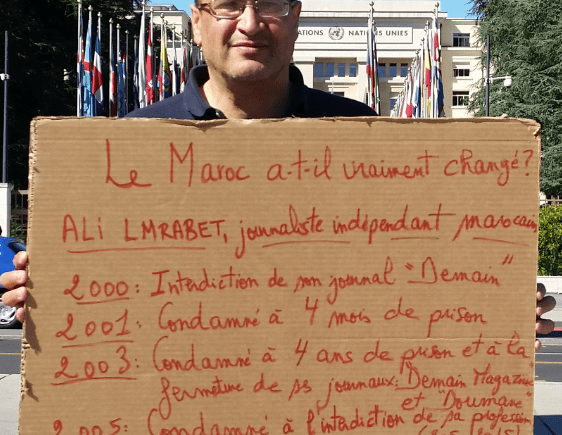
Moroccan journalist Ali Lmrabet has gone on hunger strike Wednesday 24th of June. Lmrabet started a sit-in in front of the UN headquarters in Geneva. Reason of his protest is the refusal by the Moroccan authorities to renew his passport and ID-document. He claims Morocco wants to silence him by turning him into an undocumented person.

Ali Lmrabet on hunger strike in front of the UN Palace of Nations in Geneva

Ali Lmrabet on hunger strike in front of the UN Palace of Nations in Geneva

Earlier Lmrabet, who has dual French and Moroccan nationality, was denied a Moroccan residence certificate in the city of Tetuan, where he was born. Without these documents Lmrabet is not allowed to restart working as a journalist in Morocco and relaunch his two satirical weeklies (one in Arabic and one in French).

This is not Lmrabet’s first hunger strike. Twelve years ago he refused to eat during 50 days. At the time he was in prison, condemned to three years for “insulting” king Mohamed VI. After an international campaign calling for his release he was pardoned in January 2004.

In April 2005 the Moroccan authorities forbade him to exercise the journalistic profession for ten years. This “Berufsverbot” has expired now, but Lmrabet can still not return to journalism is in his home country. For his on-line publication Demain (in French, Spanish and Arabic) see: http://www.demainonline.com/

For an account in French in the Tribune de Geneve see:

http://www.tdg.ch/news/standard/journaliste-marocain-greve-faim/story/17741203?track

Media Freedom under Pressure in Turkey

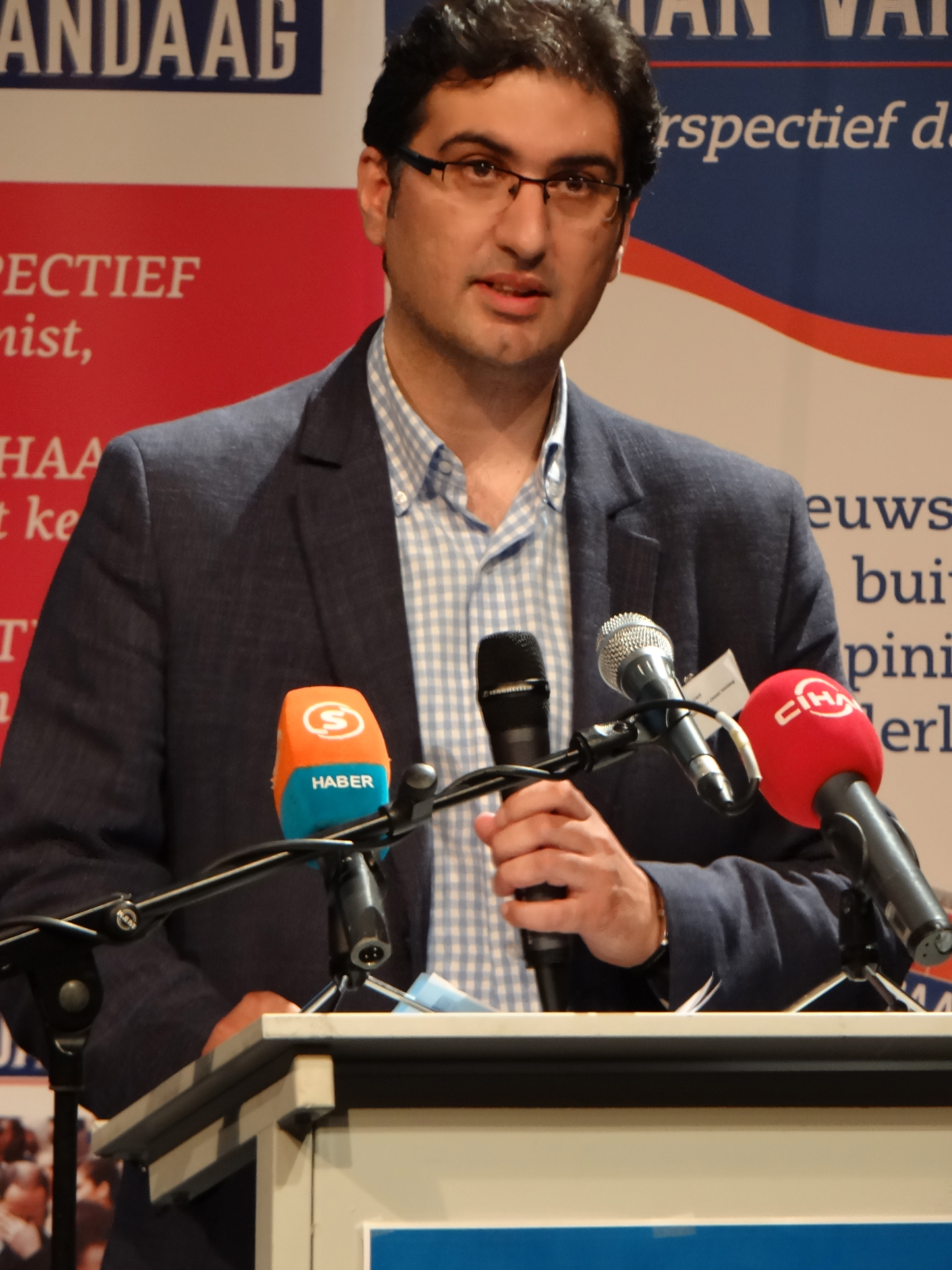
Human Right Watch’ Emma Sinclair-Webb spoke via Skype from Istanbul to the hundred or so attendants of the Press Freedom event in Amsterdam. The meeting on June 4 (on the eve of the Turkish elections on June 7) was organized by Zaman vandaag newspaper in cooperation with the Dutch Association of Journalists (NVJ) and the writers’ association PEN-Nederland.

Zaman Vandaag editor-in-chief  Mehmet Cerit

Mehmet Cerit, editor-in-chief of Zaman Vandaag

Emma Sinclair-Webb stressed that Turkey has a vibrant civil society and the situation regarding media freedom and human rights is not as bad as in Russia or Egypt. However the public detentions in Turkey of journalists that appear to be without sufficient evidence they committed a criminal offense, will harm media freedom and chill free speech. In December last year, the editor of the daily Zaman newspaper was arrested, along with the head of Samanyolu broadcasting group and other media personnel.

DSC02026

Selçuk Gültaşlı, correspondent of Zaman in Brussels

Selçuk Gültaşlı, correspondent of Zaman in Brussels

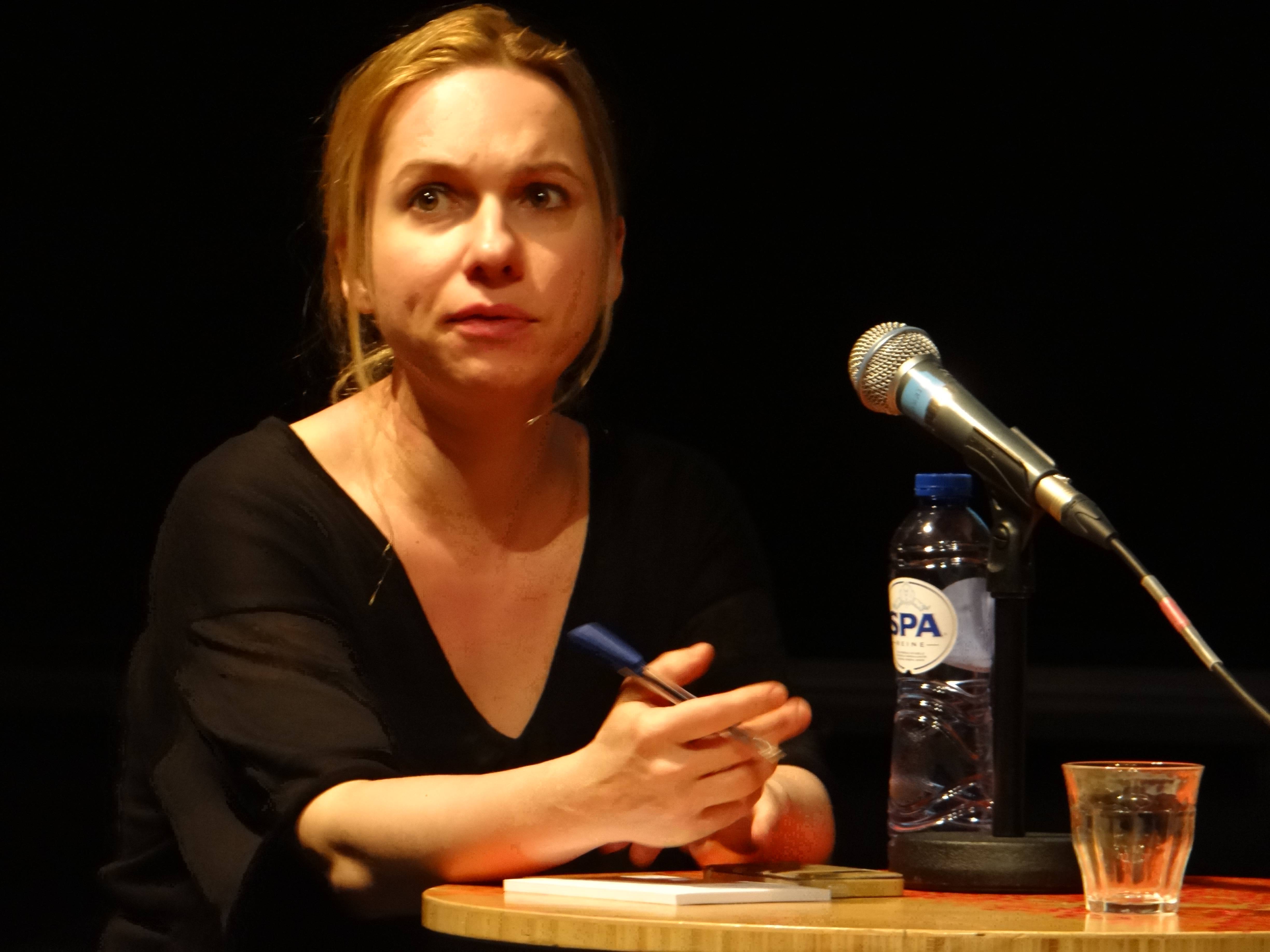
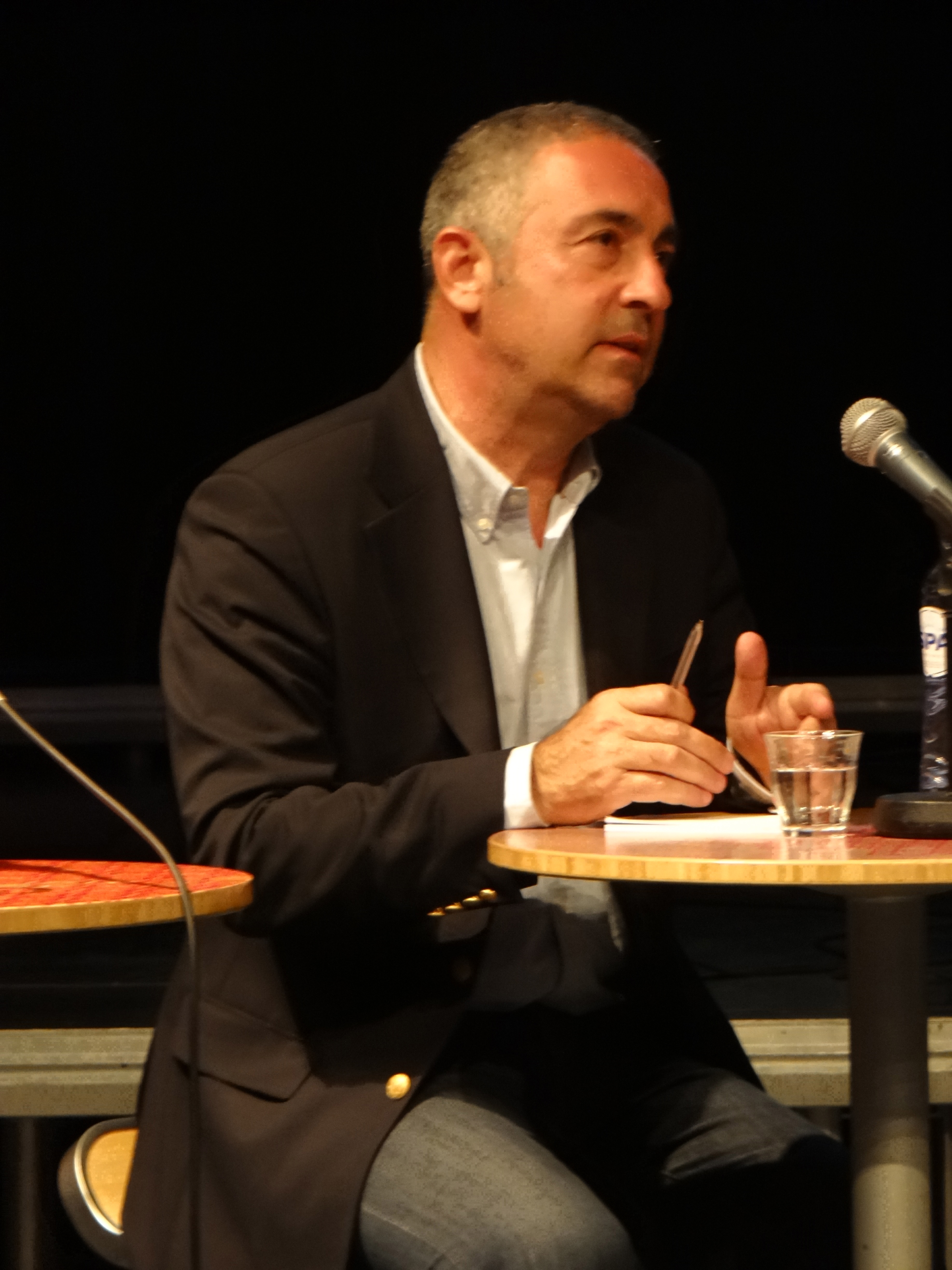
Other speakers during the Amsterdam meeting were Selçuk Gültaşlı, correspondent of Zaman in Brussels; Sezin Öney, columnist for the Taraf newspaper and Ergun Babahan former editor-in-chief of Sabah. Babahan is threatened with a long prison sentence because of a publication about Bilal Erdogan, the presidents’ son.

Sezin Öney stressed the lack of ethical journalism in Turkey. Society and media are extremely polarized. According to Öney the tone of Turkish newspapers should be a bit more neutral. There is a lack of investigative journalism in Turkey. Most revelations about Turkish politics are coming from foreign media, not the local Turkish press.

DSC02022

Ergun Babahan, former editor-in-chief of Sabah newspaper

DSC02027

Marjanne de Haan, spokesperson Amnesty International Netherlands

All photo’s Jan Keulen