Staakt-het-vuren kan niet snel genoeg komen

Voor Mohammed Abu Afash kan zondag niet snel genoeg komen. Zondag 19 januari zal in principe het akkoord tussen Israël en Hamas in werking treden. De Israëlische aanvallen zouden dan in principe moeten stoppen, de eerste gijzelaars vrijkomen en de Rafah-grensovergang tussen Egypte en Gaza heropenen. Dat betekent dat de eerste zieken en zwaargewonden, die urgent medische hulp nodig hebben, Gaza kunnen verlaten en dat er meer humanitaire hulp Gaza binnengelaten kan worden.

‘Beste Jan, ondanks alle pijn en verwoestingen ben ik erg blij,’ schrijft Mohammed me vrijdagochtend. Dit is het staakt-het-vuren waar de bevolking in Gaza al zo lang naar uitkeek. Mohammed verloor zijn huis en zijn winkel tijdens de oorlog. Zijn drie dochtertjes Eiaa, Aliaa en Layan konden niet naar school. De familie moest verschillende keren vluchten en leefde de afgelopen maanden in Mawasi, een tentenkamp in het zuiden van Gaza voor ontheemde Palestijnen. Het kamp was door Israël aangewezen als ‘veilige zone’, maar echt veilig was het er niet. Verschillende keren waren er luchtaanvallen op het kamp, in sommige gevallen gevaarlijk dicht bij de tent van de familie Abu Afash. Daags voor kerst was er nog een aanval waarbij granaatsplinters hun tent beschadigde. Gelukkig kwam het gezin met de schrik vrij, maar enkele meters verderop vonden zeven Palestijnen de dood in brandende tenten.

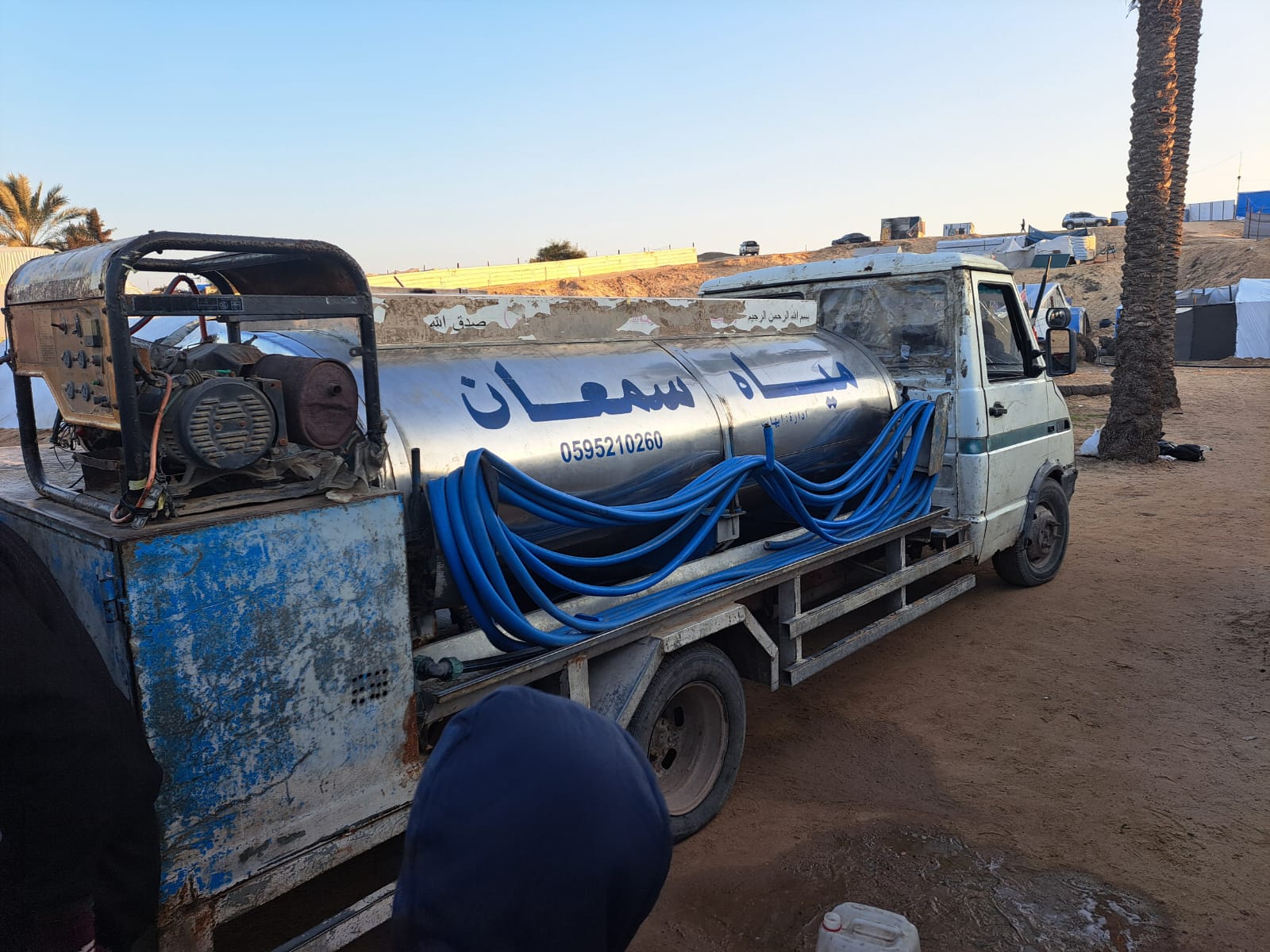
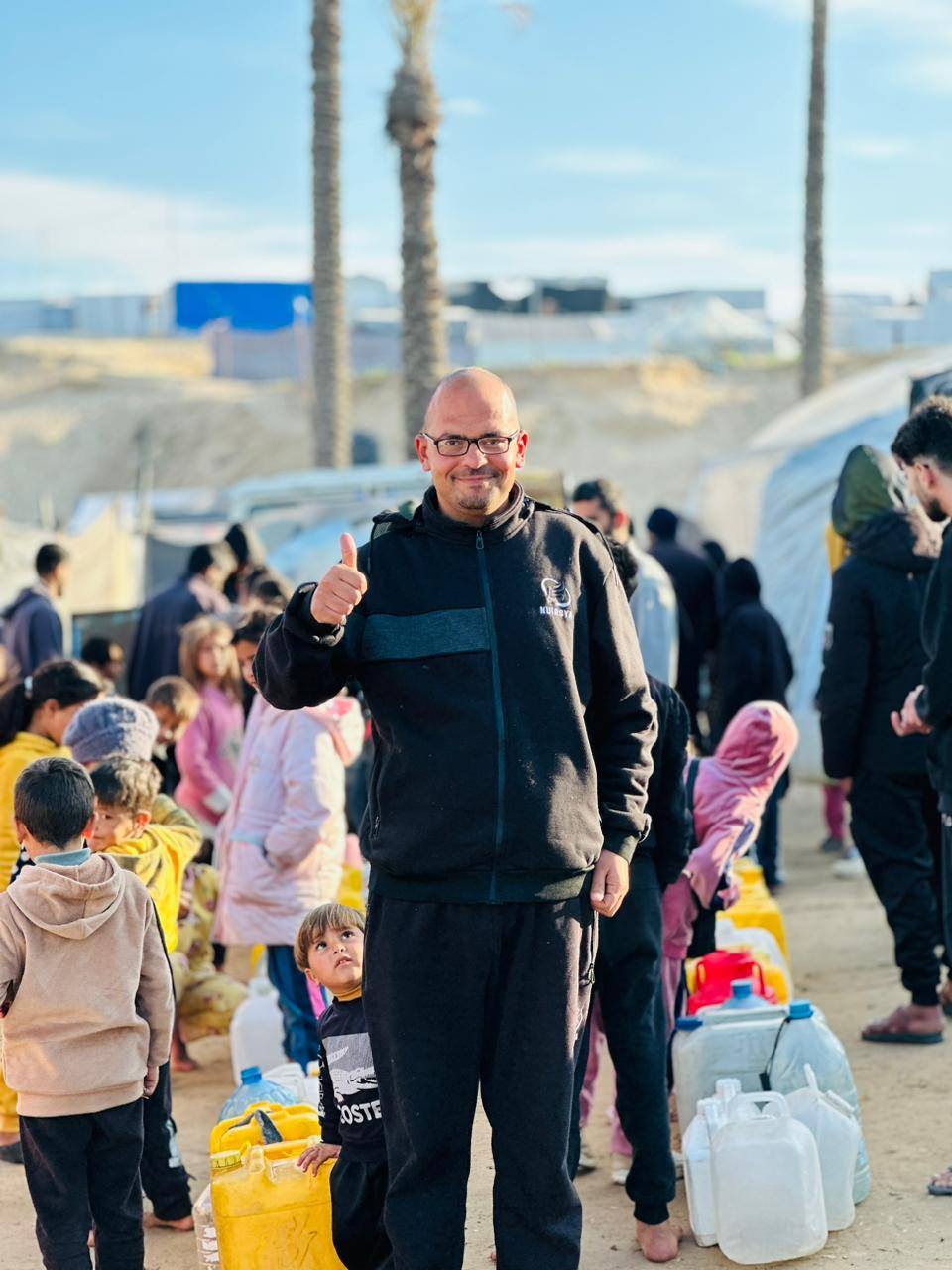
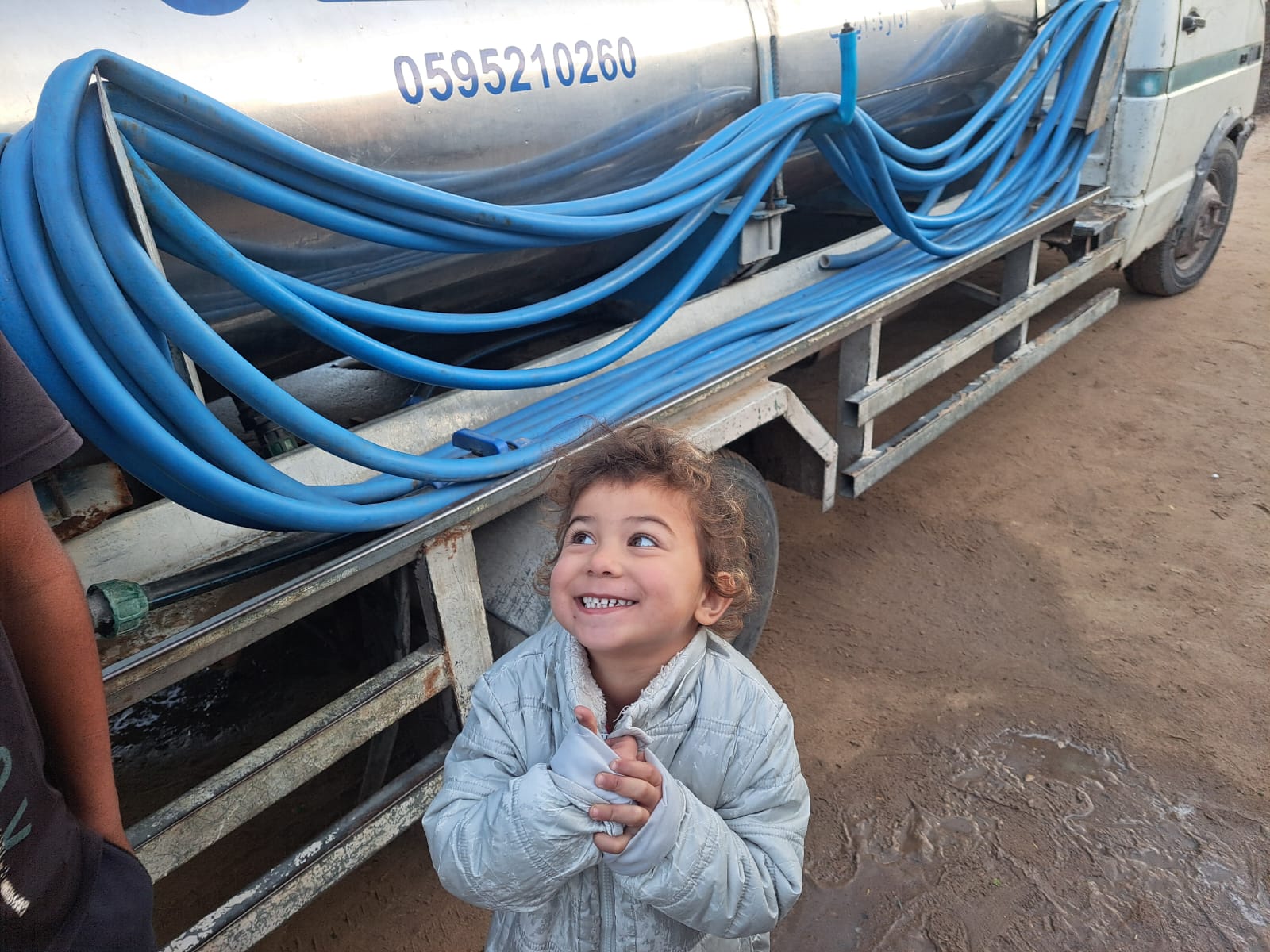
Sinds maart loopt onze crowdfunding voor de familie van Mohammed. Als zijn telefoon bereik had hield hij me, via Whatsapp, op de hoogte van het leven in het vluchtelingenkamp: van de ontberingen, de kou, de vermoeidheid, de onzekerheid en het geweld. Een paar weken geleden liet Mohammed een tankwater met drinkwater komen voor zijn sectie van het kamp (zie de foto’s). Het ingezamelde geld was niet alleen voor hem en zijn gezin, maar ook voor de mensen om hem heen.

Hoe het nu verder gaat is onduidelijk. Al in april hebben we, met de opbrengst van deze crowdfunding, “coördinatiegeld” betaald in Cairo zodat de familie kan uitreizen naar Egypte. Of en wanneer het vertrek naar Egypte alsnog zal plaatsvinden moet in de komende tijd duidelijk worden. Voorlopig blijft de familie in Mawasi en is het gevaar nog niet geweken. In de uren na de bekendmaking van het akkoord voerde Israël nog aanvallen uit waarbij 73 Palestijnse doden vielen. Het akkoord is nog niet van kracht en er zijn nog een aantal losse eindjes, waarbij beide partijen elkaar beschuldigen van kwade trouw.

Op verzoek van Mohammed gaan we door met de crowdfunding. Het ingezamelde geld blijft hij gebruiken voor de aankoop van voedsel, water, dekens enzovoorts, voor zijn gezin en naaste omgeving. En hopelijk blijft er geld over om straks, in een nieuwe, onzekere fase als de wapens eindelijk zwijgen, een nieuw leven op te bouwen.
https://gofund.me/15bf945e (klik voor donaties)

Ceasefire Can’t Come Soon Enough

For Mohammed Abu Afash, Sunday can’t come soon enough. In principle, the agreement between Israel and Hamas will come into effect on Sunday, January 19. The Israeli attacks should then stop, the first hostages should be released and the Rafah border crossing between Egypt and Gaza should reopen. This means that the first sick and seriously injured people who urgently need medical care can leave Gaza and that more humanitarian aid can be allowed into Gaza.

‘Dear Jan, despite all the pain and destruction, I am very happy,’ Mohammed wrote to me on Friday morning. This is the ceasefire that the people of Gaza have been looking forward to for so long. Mohammed lost his home and his shop during the war. His three daughters Eiaa, Aliaa and Layan could not go to school. The family had to flee several times and in recent months they lived in Mawasi, a tent camp in the south of Gaza for displaced Palestinians. The camp had been designated by Israel as a ‘safe zone’, but it was not really safe there. There were several air raids on the camp, in some cases dangerously close to the Abu Afash family’s tent. The day before Christmas there was another attack in which shrapnel damaged their tent. Fortunately, the family escaped unscathed, but a few meters further on seven Palestinians were killed in burning tents.


Our crowdfunding for Mohammed’s family has been running since March. When his phone had reception, he kept me informed, via WhatsApp, about life in the refugee camp: about the hardships, the cold, the fatigue, the uncertainty and the violence. A few weeks ago Mohammed had a tank of drinking water delivered to his section of the camp (see the photos). The money raised was not only for him and his family, but also for the people around him.
It is unclear what will happen next. In April, we already paid “coordination money” in Cairo with the proceeds from this crowdfunding so that the family can travel to Egypt. Whether and when the departure to Egypt will still take place will have to become clear in the coming period. For the time being, the family will remain in Mawasi and the danger has not yet passed. In the hours after the announcement of the agreement, Israel carried out further attacks that killed 73 Palestinians. The agreement has not yet entered into force and there are still a number of loose ends, with both parties accusing each other of bad faith.
At Mohammed’s request, we will continue with the crowdfunding. He will continue to use the money raised to buy food, water, blankets, etc. for his family and immediate surroundings. And hopefully there will be money left over to build a new life in a new, uncertain phase when the guns finally fall silent.

Winter in Mawasi

English below

Het is koud en nat in Mawasi in het zuiden van de Gazastrook waar honderdduizenden Palestijnse vluchtelingen in tenten bivakkeren, die vaak niet goed bestand zijn tegen het gure winterweer. Mawasi is een 16 kilometer lange, zanderige “evacuatiezone” langs de kust. Er zijn geen voorzieningen. Mawasi is al een concentratiekamp genoemd want de mensen, afkomstig uit verschillende delen van de Gazastrook, kunnen geen kant op. Echt veilig is het ook niet want van tijd tot tijd vindt er een Israëlische aanval plaats.
Afgelopen dagen overleden drie babies als gevolg van de kou. Veel mensen zijn verzwakt door gebrek aan goed voedsel. Infectieziektes doen de ronde.
Een paar keer per week ben ik in contact met Mohammed Abu Afash. Hij en zijn familie zijn al meer dan een jaar op de vlucht en verblijven sinds mei in Mawasi. Mohammed houdt me trouw op de hoogte over zijn leven daar. De afgelopen tijd waren er verschillende keren Israelische aanvallen, gevaarlijk dicht bij de tent van de familie Abu Afash.

Hij schrijft:
“Kort daarna was er een grote explosie in de buurt van ons kamp en scherven raakten onze tenten meerdere keren. Door de genade van God raakte niemand in ons gezin fysiek gewond, maar het was angstaanjagend en diende als een nieuwe herinnering aan hoe precair onze omstandigheden zijn.”

“Ondertussen blijven de kosten van voedsel en groenten stijgen en is meel vaak schaars – we zijn de afgelopen drie maanden meerdere keren bijna door ons meel heen. Zelfs het bereiden van eenvoudige maaltijden is een voortdurende uitdaging geworden.”

“Ondanks alles blijven we vasthouden aan de hoop om onze kinderen een betere toekomst te geven. We vragen respectvol om uw steun en vrijgevigheid om ons te helpen deze omstandigheden te doorstaan totdat de Rafah-overgang naar Egypte weer opengaat, zodat we eindelijk veiligheid kunnen zoeken buiten Gaza. Jullie donaties maken een wereld van verschil – ze bieden niet alleen essentiële zaken zoals voedsel en onderdak, maar ook de belofte van een normaal leven waarin mijn kinderen onderwijs, waardigheid en de eenvoudige vrijheden kunnen nastreven die andere kinderen over de hele wereld genieten.
Ik hoop dat jullie blijven delen en doneren, zodat we ons doel zo snel mogelijk kunnen bereiken.
Ik zal jullie regelmati op de hoogte stellen van onze reis. Bedankt dat jullie mijn familie steunen.”

Mohammed

donations: https://gofund.me/d440c5f2

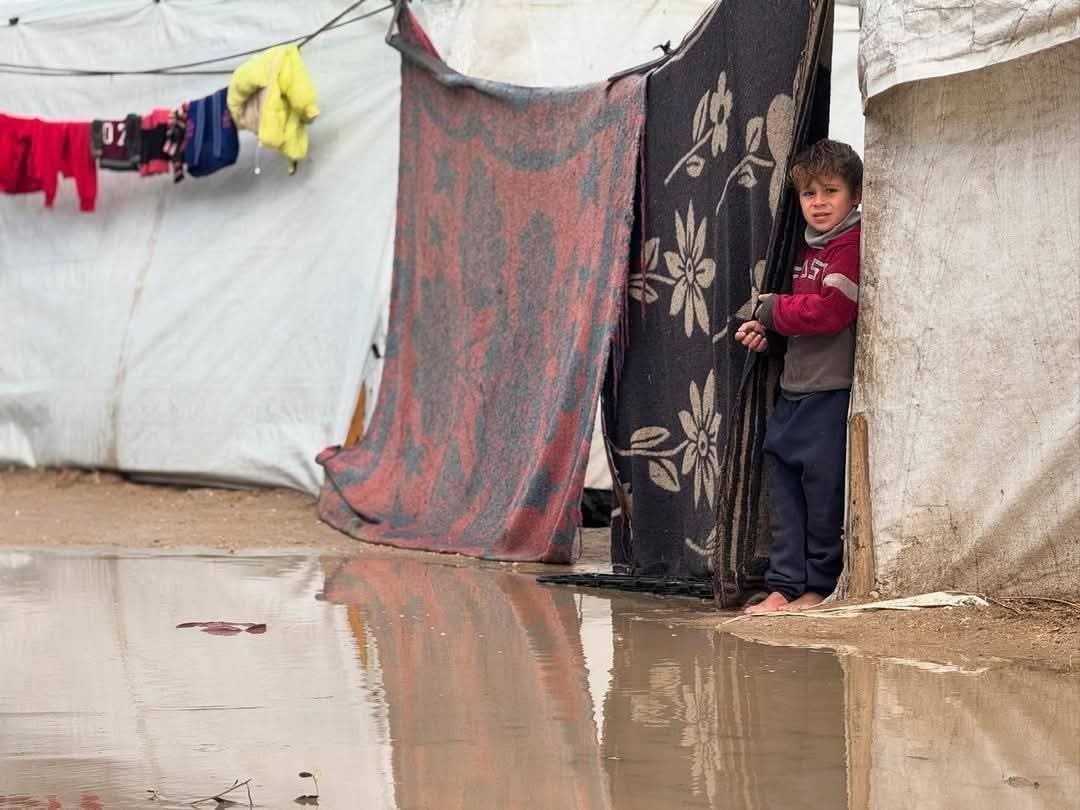
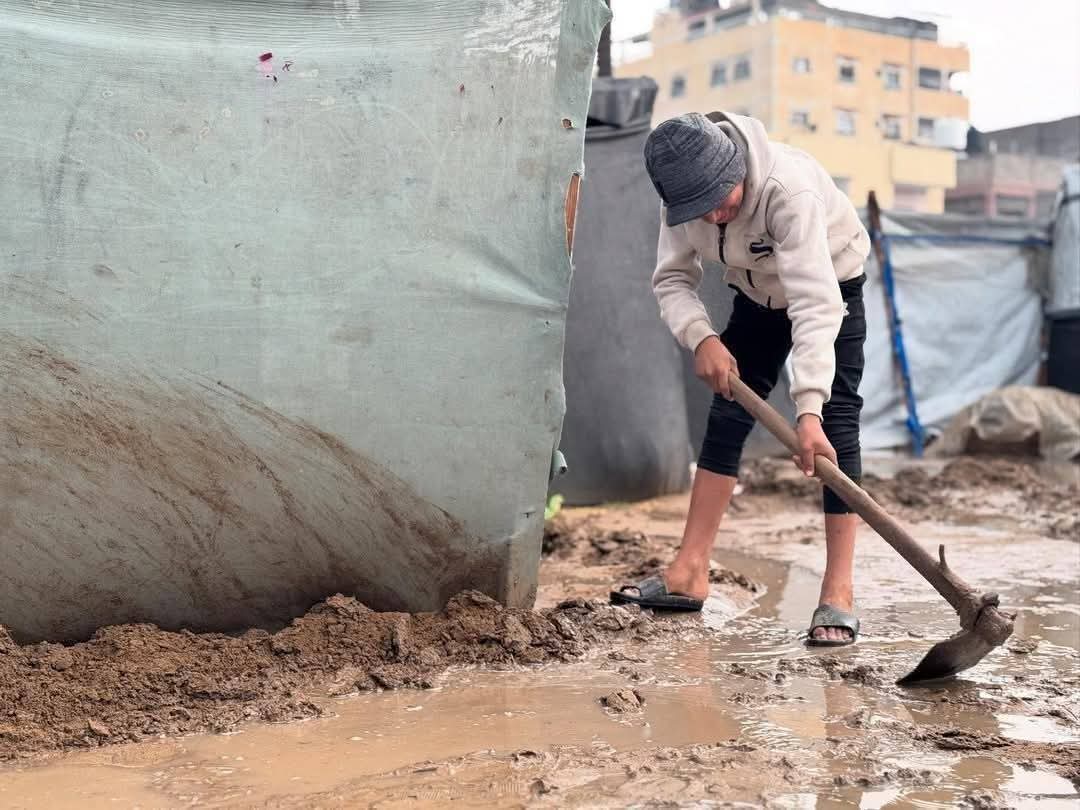
Op 1 januari 2025 stuurde Mohammed mij een aantal foto’s van de wateroverlast in Mawasi. Hij schreef me: Dear Jan, yesterday was a terrifying night, bitter cold, heavy rain, the tent was flooded due to broken poles, today I tried as much as I could to fix it and bought a new awning to protect us from the rain, I don’t know how long this will last!

It is cold and wet in Mawasi in the south of the Gaza Strip where hundreds of thousands of Palestinian refugees are living in tents, which are often not well-equipped to withstand the harsh winter weather. Mawasi is a 16-kilometre-long, sandy “evacuation zone” along the coast. There are no facilities. Mawasi has already been called a concentration camp because the people, who come from different parts of the Gaza Strip, have nowhere to go. It is also not really safe because from time to time an Israeli attack takes place.
In the past few days, three babies have died as a result of the cold. Many people are weakened by a lack of good food. Infectious diseases are doing the rounds.
A few times a week I am in touch with Mohammed Abu Afash. He and his family have been on the run for more than a year and have been living in Mawasi since May. Mohammed keeps me faithfully informed about his life there. There have been several Israeli attacks recently, dangerously close to the Abu Afash family’s tent.

“There was a large explosion near our camp, and shrapnel struck our tents multiple times’” he writes. “By the grace of God, no one in our family was physically hurt, but it was terrifying and served as another reminder of how precarious our circumstances are.”

“Meanwhile, the cost of food and vegetables keeps rising, and flour has often been scarce—we’ve nearly run out multiple times over the last three months. Even preparing basic meals has become an ongoing challenge.”

“Despite everything, we continue to hold onto the hope of giving our children a better future. We respectfully ask for your support and generosity to help us endure these conditions until the Rafah Crossing reopens, so we can finally seek safety beyond Gaza. Your donations and shares make a world of difference—providing not only essentials like food and shelter, but also the promise of a normal life where my children can pursue an education, dignity, and the simple freedoms other children enjoy around the world.
Hope you keep sharing and donating so that we can achieve our goal as soon as possible.
From now on I will try to update you often, so you keep informed about our journey. Thank you for standing with us and supporting my family.
Love and Appreciation.
….
Mohammed and his family”

Don’t leave me, please

English below

Het is inmiddels alweer anderhalve maand geleden dat ik de laatste update publiceerde over de familie van Mohammed Abu Afash. Net als alle 1,9-miljoen ontheemde Palestijnen leven Mohammed, zijn vrouw en drie dochtertjes, nog steeds in een provisorisch tentenkamp. De omstandigheden in het kamp in Mawasi Khan Younis blijven abominabel en gevaarlijk. Het einde van de nachtmerrie is helaas nog niet in zicht. Toch heeft Mohammed, met wie ik praktisch dagelijks contact heb via Whatsapp, de moed nog niet verloren dat hij uiteindelijk zal kunnen vertrekken naar Egypte. Sinds begin mei is de grens tussen Egypte en Gaza door Israel gesloten, maar Mohammed blijft hopen dat er ooit een staakt-het-vuren komt en het mogelijk zal zijn het tentenkamp te verlaten.

Hoe is het leven in het kamp? Een groot deel van de dag wordt besteed aan overleven: het ophalen van water, het zoeken naar eten op de markt, het opladen van de mobiele telefoon enzovoorts. Maar er is soms ook tijd voor plezier. Zo nam Mohammed zijn dochters onlangs mee op een klein uitje met een ezelwagen. Even de zinnen verzetten en even niet aan de oorlog en het geweld denken. We communiceren ook veel over geld. Mohammed, zijn familie en directe omgeving leven van het door ons ingezamelde geld en ik maak geregeld bedragen over. Maar soms duurt het lang voordat een transactie aankomt. Of soms wordt een transactie om onduidelijke reden teruggestort en moet ik het opnieuw proberen. Mijn communicatie met Mohammed gaat ook over de gebeurtenissen in Gaza, over gemeenschappelijke vrienden en Mohammed mag graag herinneringen ophalen over hoe het leven vroeger was, over zijn winkel, vrienden en familieleden. Onlangs vroeg ik of hij ook een boodschap had aan alle donoren die tot dusver deze crowdfunding hebben gesteund.

Dit is zijn boodschap: Dear donors, I thank you all, you have supported me since the beginning of the campaign, and you are still donating for me, my wife and my daughters, I am now still stuck in the places of displacement (Mawasi Khan Yunis) and I am moving from one place to another. I haven’t traveled yet because of the Rafah crossing, as Mr. Jan told you, and he tells you everything that happens to me all the time! I still need you, and I ask you to keep donating to me, my wife and my three daughters, the money Mr. Jan sends me, is the money I spend on my family, and I need more, don’t skimp on me and don’t leave me, please!

To support the crowdfunding: https://gofund.me/d440c5f2

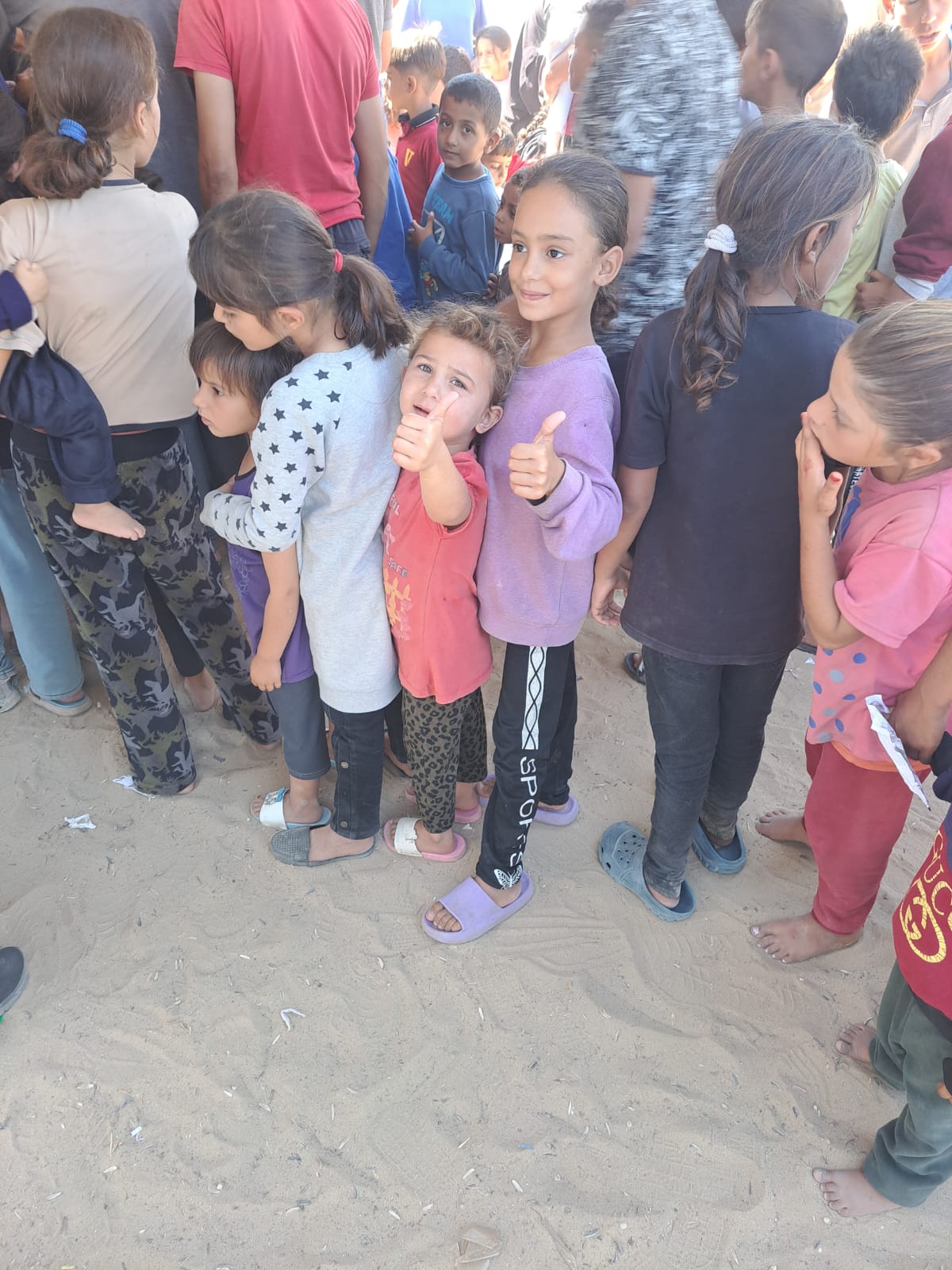
Eiaa, Aliaa en Layan staan tin de rij voor de poliovaccinatie

It has been a month and a half since I last published an update on the family of Mohammed Abu Afash. Like all 1.9 million displaced Palestinians, Mohammed, his wife and three daughters are still living in a makeshift tent camp. The conditions in the camp in Mawasi Khan Younis remain abominable and dangerous. Unfortunately, the end of the nightmare is not yet in sight. However, Mohammed, with whom I have practically daily contact via WhatsApp, has not lost hope that he will eventually be able to leave for Egypt. The border between Egypt and Gaza has been closed by Israel since the beginning of May, but Mohammed continues to hope that there will one day be a ceasefire and it will be possible to leave the tent camp.

What is life like in the camp? A large part of the day is spent surviving: fetching water, looking for food at the market, charging the mobile phone and so on. But sometimes there is also time for fun. For example, Mohammed recently took his daughters on a little outing with a donkey cart. Just to clear my head and not think about the war and violence for a while. We also communicate a lot about money. Mohammed, his family and immediate environment live off the money we have collected, and I regularly transfer amounts. But sometimes it takes a long time for a transaction to arrive. Or sometimes a transaction is refunded for no apparent reason and I have to try again. My communication with Mohammed is also about the events in Gaza, about mutual friends and Mohammed likes to reminisce about how life used to be, about his shop, friends and family members. I recently asked him if he also had a message for all the donors who have supported this crowdfunding so far.

This is his message: Dear donors, I thank you all, you have supported me since the beginning of the campaign, and you are still donating for me, my wife and my daughters, I am now still stuck in the places of displacement (Mawasi Khan Yunis) and I am moving from one place to another. I haven’t traveled yet because of the Rafah crossing, as Mr. Jan told you, and he tells you everything that happens to me all the time! I still need you, and I ask you to keep donating to me, my wife and my three daughters, the money Mr. Jan sends me, is the money I spend on my family, and I need more, don’t skimp on me and don’t leave me, please!

Towards freedom in the Arab world, ten years on

The need for a special rapporteur

The Arab Human Development Report 2004 was published with as subtitle Towards Freedom in the Arab World. The report, published by UNDP, the Arab Fund for Economic and Social development and the Arab Gulf Programme for UN Development Organizations, concluded that freedoms, particularly those of opinion, expression and creativity, were under pressure in most Arab countries.

Journalists were repeatedly targeted for prosecution on the grounds of opinions they had expressed. Political activists and human rights defenders were attacked. There was censorship on literary and artistic works. It was not allowed to organize meetings and gatherings without explicit green light from the authorities.

The freedom to form associations was often violated by denying organisations permission to operate or by dissolving existing ones. Most restrictions had been directed against grassroots human rights organizations. The countries of the Gulf Cooperation Council GCC did and still do not allow the formation of political parties.

Ten years later (and an Arab spring later) the “freedom deficit” is still there. The deficit may even be bigger than 10 years ago.

Some people argue that lack of freedom; despotism is an inherent characteristic of the East and freedom a fundamental quality of the West. Some, like Geert Wilders and other right-wing-politicians in Europe, argue that Arabs or Muslims are not capable of being democrats and that there is a contradiction between Islam and Democracy. I think that the collective clamour for freedom and dignity during the Arab spring revolutions proved the opposite. Egyptians, Syrians, Palestinian, Tunisians, Moroccans, Yemeni’s, and Iraqi’s, people from the Gulf: millions and millions of Arabs called for freedom and dignity. Writers, poets, musicians and journalists in the Arab world yearn for freedom. Not only freedom in the sense of political or civil freedoms, but also the liberation from ignorance, fear, poverty, disease and hunger. Freedom in the narrow political sense and freedom in a more comprehensive form, defined as free from all factors that undermine human dignity, are –by the way- closely related. Good governance and political and civil liberties are very much linked, and without good governance the human dignity, the dignity of the individual, is compromised.

Disaster

Interestingly the Arab Human Development Report 2004 warned for a disaster scenario if the repressive situation in Arab countries would continue. The Report, written by Arab experts and intellectuals, warned for intensified societal conflict. “In the absence of peaceful and effective mechanisms to address injustice and achieve political alternation, some might be tempted to embrace violent protest, with the risk of internal disorder”, according to the Report.

Ten years later we do have bloody conflicts in large parts of the Arab world: in Libya, Egypt, Syria, Iraq and Yemen. It may be a simplification to blame the freedom deficit for all problems and conflicts in the region. But the lack of political and civil participation, the lack of accountability and the lack of fundamental freedoms have certainly contributed to the sorry state the Arab world is in now.

It is sad that a new term entered recently the vocabulary of Human Rights and Freedom of Expression defenders in the Middle East: ‘post Arab spring oppression’. Leaving aside countries in war like Libya, Syria, Iraq and Yemen, this oppression is maybe strongest felt in Egypt where the human rights situation is at its worst since more than 30 years. In the Gulf, especially Bahrain and the United Arab Emirates, freedom of expression is restricted, and human rights activists are frequently targeted. Activists have been imprisoned and in some cases stripped of citizenship.

The anti terror operations against ISIL served in some cases as a pretext to clamp down on political dissent, while the alliance with the US, the EU and other Western powers made it harder for these countries to criticize human right abuses of their Arab allies.

Special Rapporteur

One of the ideas I discussed earlier with Arab press freedom and human rights NGO’s, is the creation of the institution of an Independent Special Rapporteur on Freedom of Expression and Media Freedom in the Arab World. Similar institutions do exist in other parts of the world. There is for instance the OSCE-representative on Freedom of the Media in Europe. There is the Special Rapporteur on Freedom of Expression of the Organization of American States. (OAS) In Africa there is the African Commission on Human and Peoples’ Rights (ACHPR) Special Rapporteur on Freedom of Expression and Access to Information. And the UN-Special Rapporteur on Freedom of Opinion and Expression monitors developments in this field globally.

The question is: why not an Independent Special Rapporteur on Freedom of Expression and Media Freedom in the Arab World, using standardized agreed upon monitoring criteria? Most Arab governments are not keen to have such an institution. But it could be a very useful mechanism for independent human rights and press freedom groups. It could empower them in monitoring and denouncing violations. It could arm them against accusations that they are politicised or serving certain political interests.

I’m aware that the Arab Special Rapporteur on Freedom of Expression and Media Freedom still needs a lot of discussion; a lot of work and maybe this institution will remain unfeasible and unachievable in the coming years. But in the meantime Arab NGO’s could join forces by working on projects like the publishing of a joint annual report about the state of Freedom of Expression and Media Freedom in the Arab world.

(Summary of presentation during Workshop on Freedom of Opinion and Expression and Freedom of Association and Peaceful Assembly, 20-22 April 2015 European Union / League of Arab States, Brussels)