Geen woord van Hoekstra over de tientallen journalisten die in Marokkaanse cellen zitten

In juli 2019 werd de Global Media Freedom Coalition (GMFC) opgericht, een coalitie van regeringen die beloofden te zullen ijveren voor persvrijheid en de veiligheid van journalisten. “Alle mogelijke middelen” zouden worden ingezet om schendingen van mediavrijheid het hoofd te bieden. 51 landen ondertekenden de global pledge, de plechtige belofte om ook diplomatieke middelen in te zetten voor het nobele doel de persvrijheid overal ter wereld te verdedigen.
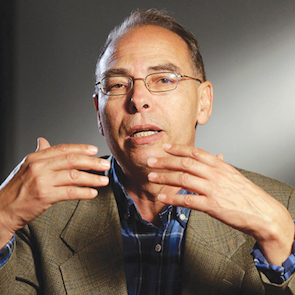
Maati Monjib

In 2022 vervulde Nederland, samen met Canada, het voorzitterschap van de coalitie. Op de jaarlijkse conferentie, in februari 2022 in Talinn, hield minister Hoekstra van Buitenlandse Zaken een vlammend betoog. Vrijheid van meningsuiting is een hoeksteen van het Nederlandse mensenrechtenbeleid, aldus de minister. Hoekstra bepleitte het zoveel mogelijk gebruik maken van ‘de diplomatieke gereedschapskist’ om regeringen verantwoordelijk te stellen als ze persvrijheid schenden.

Op de website van de Global Media Freedom Coalitionkan men lezen wat die diplomatieke activiteiten van de deelnemende landen in 2022 hebben opgeleverd:

  • Op de Filippijnen was de coalitie actief op twitter met een bezorgde tweet over een vermoorde journalist en een positieve tweet over de vrijspraak van Nobelprijswinnaar Maria Ressa. Bij de Britse ambassade vond een receptie plaats met toespraken over persvrijheid.
  • In Bangladesh, waar de persvrijheid ernstig onder druk staat, hield de Zwitserse ambassadeur een exposé over de persvrijheid in Zwitserland tijdens een door de VN georganiseerd rondetafeldiscussie.
  • In Mexico, waar 14 journalisten werden vermoord in 2022, organiseerde de coalitie een seminar over het veranderen van de perswet. De Nederlandse ambassade tweette daarover.
  • In Slowakije hielpen de Canadese en Nederlandse ambassades met het organiseren van een TV-debat over de veiligheid van journalisten.

En dat was dat. Niet echt een overtuigende lijst met successen. Maar wie weet. Je hebt ook nog geheime diplomatie. Misschien dat hier en daar ook nog wat stille diplomatie werd bedreven. We zullen het nooit weten.

Zou de Nederlandse ambassade of een van de diplomatieke vertegenwoordigingen van andere GMFC-lidstaten vorige week in het geweer zijn gekomen voor de Marokkaanse journalist en mensenrechtenactivist Maati Monjib? Of voor een van de

Marokkaanse journalisten die na een schertsproces lange gevangenisstraffen uitzitten?

Monjib kondigde aan in hongerstaking te gaan nadat hij ontslagen werd als docent aan een universiteit in Rabat. Hij is al jarenlang het slachtoffer van politieke repressie, heeft een uitreisverbod en er loopt een proces tegen hem wegens het “witwassen van fondsen”. Het Europees Parlement en verschillende internationale mensenrechtenorganisaties hebben kritiek geleverd op de jarenlange “justitiële intimidatie” van Monjib.

De maatregel om Monjib te ontslaan kwam kort nadat hij en een groep andere Marokkaanse mensenrechtenactivisten, advocaten en journalisten een collectief vormden dat in België een civiele rechtszaak wil aanspannen tegen een aantal Europarlementariërs die ervan worden verdacht Marokkaanse steekpenningen te hebben aangenomen. Daardoor werd telkenmale verhinderd dat de belabberde situatie op het gebied van mensenrechten en persvrijheid in het Europees Parlement zelfs maar ter sprake gebracht kon worden, laat staan veroordeeld.

Pas na de onthullingen van het Qatargate-netwerk, waarbij ook Marokko nauw betrokken bleek, nam het Europarlement op 19 januari een kritische tekst aan over “de situatie van journalisten in Marokko”. De journalisten Maati Monjib, Omar Radi, Taoufic Bouachrine en Sulaiman Raissouni worden met name genoemd. Radi, een onderzoeksjournalist die berichtte over corruptie in de hoogste politieke kringen en Bouachrine en Raissouni, verbonden aan een populair dagblad dat veel kritiek leverde op de regering, zitten beide lange gevangenisstraffen uit. In de verklaring van het Europarlement wordt er fijntjes aan herinnerd dat die straffen werden opgelegd na processen die aan alle kanten rammelden.

De Nijmeegse arabist en Marokko-deskundige Jan Hoogland herinnerde er vorige week aan dat Maati Monjib jarenlang samenwerkte met de Nederlandse NGO Free Press Unlimited (FPU) bij het opleiden van Marokkaanse onderzoeksjournalisten. Hoogland kan het weten want hij was tussen 2009 en 2015 directeur van het NIMAR, het Nederlands Instituut in Marokko. Het programma voor de onderzoeksjournalisten werd uitgevoerd door Press Now, de organisatorische voorganger van FPU, en gefinancierd door het Nederlandse ministerie van Buitenlandse Zaken. Kan Monjib nu ook rekenen op steun van dat ministerie of van de Nederlandse ambassade in Marokko, vroeg Hoogland zich af.

Het was wellicht een retorische vraag. Nederland en Marokko hebben immers een deal gesloten, in het officiële jargon ‘actieplan’ geheten. In dit Marokkaans-Nederlandse document, dat al in juli 2021 door beide landen werd getekend maar tot eind november 2022 geheimgehouden, staat dat beide landen zich niet zullen mengen in elkaars binnenlandse aangelegenheden. Den Haag zal melden bij de Marokkaanse autoriteiten als een Nederlandse NGO activiteiten in het land wil opzetten.

Voor Nederland zijn de belangrijkste onderdelen van de deal de samenwerking en coördinatie op het gebied van migratie en terrorismebestrijding. Er staan ook paragrafen in over onder andere sociale zekerheid, handel, klimaat en cultuur. Wat opvallend ontbreekt zijn termen als mensenrechten en persvrijheid.

Inmiddels is de Marokkaans-Nederlandse deal van verschillende kanten en op een groot aantal onderdelen bekritiseerd. Bottomline bij dit alles is natuurlijk de vraag of je wel moet willen samenwerken met autocratisch regimes zoals het Marokkaanse. Die vraag is des te meer prangend als we inzoomen op het thema persvrijheid.

Op maandag 19 juli 2021, elf dagen na ondertekening van het actieplan, werd journalist Omar Radi tot zes jaar gevangenisstraf veroordeeld wegen ‘verkrachting en spionage’. Human Rights Watch en andere mensenrechtenorganisaties hebben vernietigende kritiek geleverd op de procesgang en op de bewijsgronden voor deze zware straf. Let wel: Omar Radi, ooit ook deelnemer aan het programma van Press Now voor onderzoekjournalisten, werd ervan beschuldigd een Nederlandse spion te zijn.

Kamerleden Piri (PvdA) en Van der Lee (GroenLinks) stelden in februari Kamervragen over de inspanningen van Buitenlandse Zaken “om de aantijging te ontkrachten dat Radi een spion van Nederland zou zijn”. Hoekstra’s antwoord is ontluisterend. “Nederland heeft de ontwikkelingen in het proces van Omar Radi nauwgezet gevolgd. Voorafgaand aan de veroordeling is meermaals navraag gedaan naar de aanklacht en, na de veroordeling, ook naar het vonnis.”

Die navraag leverde kennelijk niets op. In de Marokkaanse media, die grotendeels door de overheid worden gecontroleerd, werd Radi al maandenlang gedemoniseerd als seksueel delinquent en Nederlands spion. Maar de ambassade hulde zich publiekelijk in stilzwijgen. Als enig wapenfeit kon Hoekstra aan de Kamerleden melden dat haast drie maanden na het vonnis Nederland “inzage kreeg in een werkvertaling van het vonnis”. Inzage. Een werkvertaling. En daarbij gaf Hoekstra aan teleurgesteld te zijn “daar waar het de aanklacht voor spionage voor Nederland betreft”.

Teleurgesteld, het zal, maar geen woord over het schertsproces. Geen woord over de tientallen journalisten en mensenrechtenactivisten die in Marokkaanse cellen zitten. De global pledge om de diplomatieke gereedschapskist in te zetten ten faveure van persvrijheid en journalisten in de verdrukking voor het gemak even vergeten. Hoekstra’s linkerhand weet voor het diplomatieke gemak even niet waar de rechterhand mee bezig is. Aan de ene kant miljoenen uitgeven voor conferenties en cocktailparty’s van het Global Media Freedom Coalition, aan de andere kant geen poot uitsteken voor de journalistiek en persvrijheid in Marokko.

Dit artikel werd op 14 maart 2023 gepubliceerd door VILLAMEDIA
Algeria and Morocco on collision course

In recent months, North Africa has seen a crescendo of accusations, moves and measures that leave no doubt: Morocco and Algeria are on a collision course. The big question is whether the cold war in the Maghreb will end in an armed conflict. Both neighboring countries have engaged in an arms race and are armed to the teeth.

In August, Algeria broke off diplomatic relations with Morocco. A month later, Algerian airspace was closed to all Moroccan aviation and on November 1, the Europa-Maghreb gas pipeline, which transports Algerian gas through Moroccan territory to Spain, was closed.

The steps were taken after the Moroccan ambassador to the United Nations publicly expressed his support for “the right of self-determination for the heroic people of Kabylie” in July. Earlier, the Algerian authorities had accused Morocco of “sowing discord among the Algerian population” by supporting the MAK, the Mouvement pour l’autodétermination de la Kabylie.

Algiers was not amused (to say the least) when in July an international consortium of investigative journalists revealed in the Pegasus Papers that the Moroccan intelligence service, using Israel’s NSO software, had bugged thousands of Algerian politicians, activists, journalists, diplomats and army officers.

Issue of the Western Sahara is biggest bone of contention between Morocco and Algeria

The biggest bone of contention between Morocco and Algeria, however, is the issue of Western Sahara, an immense desert area the size of the United Kingdom. Morocco has controlled about 85% of the territory of this former Spanish colony since the late 1970s. The Saharawi liberation movement, the Front Polisario, controls the remainder east of the Berm, the 2,700-kilometer-long “defensive wall” Morocco has erected to keep out the Saharawi independence fighters.

Since 1991, when Morocco and the Polisario Front agreed to a United Nations plan to hold a referendum and a ceasefire came into effect, the conflict has been more or less dormant. But that changed at the end of 2020 when the ceasefire, which had lasted for almost thirty years, was broken by the Moroccan army. 

The referendum envisaged in the UN plan whereby the Saharawi could exercise their right to self-determination was never held and Morocco established more and more facts on the ground in its “southern provinces”.

The final blow to a diplomatic solution to the conflict was inflicted in December 2020 by US President Donald Trump. In a tweet, he announced that the United States recognized Moroccan sovereignty over Western Sahara. In return, Morocco normalized its diplomatic relations with Israel and awarded a massive $1 billion arms deal to the US. The Americans were going to supply drones and other high-quality military equipment to Morocco.

The Trump deal marked a major diplomatic victory for Morocco. No significant country had so far recognized Moroccan sovereignty over Western Sahara. After all, according to international law, the area still had to be decolonized and the local Saharawi population had to be given a chance to determine its own future.

That, much to Rabat’s anger, also remained the view of European countries and sparked a series of conflicts with Spain, Germany and the EU in 2021. The stance of Morocco’s European allies, who continued to look at the issue of Western Sahara through the prism of international law and did not align themselves with Trump’s recognition of the “Moroccan Sahara”, was seen in Rabat as an insult. “It was like a wedding where none of the friends and acquaintances showed up,” said an observer.

While Trump’s move was criticized by quite a few Democrats and Republicans alike, his recognition of the “Moroccan” Sahara was not reversed after he left the presidency. The Biden administration did not want to jeopardize its relations with either Israel or Morocco.

These relations were apparently more important than the letter of international law and the Saharawi’s right to self-determination. 

In addition, a withdrawal of the recognition of the Sahara as Moroccan could open the door to the cancellation of other questionable Trump decisions, such as his recognition of the Israeli sovereignty over the occupied Golan and East Jerusalem. 

The formal ties between Morocco and Israel forged by the Trump administration had a number of far-reaching implications, not least for relations between Morocco

and Algeria.

First, it strengthened Morocco’s international diplomatic position, which could now rely on the influential pro-Israel lobby, especially in the United States. The assertive, almost aggressive attitude towards Europe seems to have everything to do with the Moroccan self-awareness supported by the Israel lobby.

Second, and more importantly, the Trump deal launched Israel as a heavyweight player on the North African chessboard, both politically and militarily. The ever-closer cooperation between the Israeli and Moroccan intelligence services is also seen as threatening by Algeria. Israeli Foreign Minister Yair Lapid added fuel to the fire on his first official visit to Morocco this year by strongly criticizing Algeria. According to Lapid, Algeria is dangerously close to Israel’s nemesis Iran. For the Algerians, enough was enough: it was unheard of for an Israeli minister to criticize them from their Arab neighbor Morocco.

The Israeli factor has heightened distrust between Algeria and Morocco and disturbed the precarious status-quo in Algerian-Moroccan relations of recent decades. Those relations have been problematic since Algerian independence in 1962. The neighboring countries fought a short border war in 1963. Moroccan troops invaded Algeria during the “sand war” and attempted to capture parts of Algeria’s western provinces of Bechar and Tindouf.

In the end, the attempt to take a part of “historic Morocco” by force turned out to be a huge political and military blunder. Arab countries and Cuba came to the aid of Algeria and the Algerian population condemned the Moroccan aggression. Morocco’s traditional allies France and the United States also had little understanding for the expansionist adventure of the then young King Hassan II.

This military adventure of Morocco was ultimately based on the same irredentist delusion of Greater Morocco, which would lead to the conflict over the Spanish Sahara in the 1970s. Nationalist leaders such as Allal al-Fassi were not satisfied with the territory of the Kingdom of Morocco as it emerged in 1956 after independence from France. Fassi included the Spanish Sahara, parts of Algeria, Mauritania and Mali in his Greater Morocco.

According to independent historians, it is a myth that the Western Sahara was once part of the sultanate of Morocco. In 1975, the International Court of Justice found that while a number of tribes in the area had historical ties to Morocco, there were no ties of territorial sovereignty between Western Sahara and Morocco.

Mauritania gained independence in 1960, but it was only recognized by Morocco nine years later. Since then, there have been ups and downs in Moroccan Mauritanian relations, not least because Nouakchott recognizes the Sahrawi Arab Democratic Republic, proclaimed by the Front Polisario.

Almost sixty years after the ‘sand war’, it can be concluded that things have never really worked out between Morocco and Algeria. Although there were periods of relative relaxation and even a friendship treaty was signed in 1969, mutual mistrust persisted, and neighbor disputes continued to flare up. The Algerian-Moroccan border has been closed since 1994 and the government-controlled media of both countries never tire of taunting the regime on the other side of the border.

The tension in the North African region has meanwhile led to an increasingly intense arms race. In addition to the United States, Israel and France, Morocco has also placed large military orders in Turkey, including drones. Algeria is a major buyer of Russian, Chinese and German weaponry. It is expected that the strategic marriage of convenience between Morocco and Israel will prompt Algeria to further increase military cooperation with the Russian Federation.

If it really comes to war, it will mostly produce losers. War would further strain the perspectives of young people in the Maghreb and lead to further emigration and brain drain. Already, the geopolitical tension is a pretext to curtail civil liberties, including freedom of expression and press freedom. For example, it is a taboo in the Moroccan media to report critically about the Sahara issue or about the royal family.  In Algeria, the Hirak movement, which aims to democratize the Algerian political system, is under heavy pressure.

An armed conflict would be catastrophic for the peoples of the region. Wars have ravaged the economies of Libya, Syria, Iraq and Yemen over the past decade. Morocco and Algeria could then be added to that infamous list of Arab countries.

https://www.getrevue.co/profile/jan_keulen?via=twitter-profile-webview

Moroccan journalist Lmrabet on hunger strike

Moroccan journalist Ali Lmrabet has gone on hunger strike Wednesday 24th of June. Lmrabet started a sit-in in front of the UN headquarters in Geneva. Reason of his protest is the refusal by the Moroccan authorities to renew his passport and ID-document. He claims Morocco wants to silence him by turning him into an undocumented person.

Ali Lmrabet on hunger strike in front of the UN Palace of Nations in Geneva

Ali Lmrabet on hunger strike in front of the UN Palace of Nations in Geneva

Earlier Lmrabet, who has dual French and Moroccan nationality, was denied a Moroccan residence certificate in the city of Tetuan, where he was born. Without these documents Lmrabet is not allowed to restart working as a journalist in Morocco and relaunch his two satirical weeklies (one in Arabic and one in French).

This is not Lmrabet’s first hunger strike. Twelve years ago he refused to eat during 50 days. At the time he was in prison, condemned to three years for “insulting” king Mohamed VI. After an international campaign calling for his release he was pardoned in January 2004.

In April 2005 the Moroccan authorities forbade him to exercise the journalistic profession for ten years. This “Berufsverbot” has expired now, but Lmrabet can still not return to journalism is in his home country. For his on-line publication Demain (in French, Spanish and Arabic) see: http://www.demainonline.com/

For an account in French in the Tribune de Geneve see:

http://www.tdg.ch/news/standard/journaliste-marocain-greve-faim/story/17741203?track

Moroccan authorities persecute journalist Ali Lmrabet

Reporters Without Borders is appalled by the way the Moroccan authorities continue to persecute Ali Lmrabet, a satirical newspaper editor who wants to resume publishing newspapers in Morocco now that his ten-year ban on working as journalist has expired.

Ali Lmrabet, who has dual French and Moroccan nationality, is being denied the residence certificate he needs to get a new national ID card and to renew his passport, which expires on 24 June. Without these documents, he cannot move ahead with his declared intention to relaunch his newspapers.

A Reporters Without Borders “Information Hero” and winner of the Reporters Without Borders – Fondation de France Prize in 2003, Lmrabet used to edit Demain and Demain Magazine, publications that were banned in 2003.

Officially, he has been able to resume working as a journalist in Morocco since 11 April. He wasbanned from working for ten years after being convicted of libel.

But the authorities in the northern city of Tétouan have been refusing to give him a residence certificate since 20 April. In a statement issued on 5 May, quoting the interior minister, the Tétouan local administration said it had been established that Lmrabet does not live at the Tétouan address he gave, which is his father’s home.

The Tétouan 2nd district police station had nonetheless issued the certificate to Lmrabet on 22 April, only to demand it back the next day.

According to the information obtained by Reporters Without Borders, Lmrabet possesses all the documentation he needs to get a residence certificate. His address is indeed his father’s and it is the one that appears in his passport.

We are perplexed by the series of bureaucratic obstacles that are being imposed on Ali Lmrabet,” Reporters Without Borders deputy programme director Virginie Dangles said.

It is not clear why the Moroccan authorities are refusing to issue him this certificate. We urge them to provide him with the requested certificate so that he can renew his documents.”

Journalism blocked

The Moroccan Association for Human Rights (AMDH) – which is backing him and whose president testified on his behalf – has asked the Moroccan government to intercede at the national and local level but has not received an answer.

Lmrabet is convinced that the authorities are refusing him a residence certificate in order to prevent him from publishing again.

“I am going to become Morocco’s first undocumented Moroccan,” he told Reporters Without Borders. “I would like to think that, although this government does not like me, it cannot prevent me from having identity papers.”

His lawyer, Lahbib Mohamed Hajji, confirmed that Lmrabet’s papers had the same address as his fathers. Denying him a residence certificate is a violation of his right as a citizen, Hajji said.

Reporters Without Borders has repeatedly phoned and emailed the communication ministry in an attempt to get its version, but the ministry has not as yet responded.

Morocco is ranked 130th out of 180 countries in the 2015 Reporters Without Borders press freedom index.

See also: http://www.demainonline.com